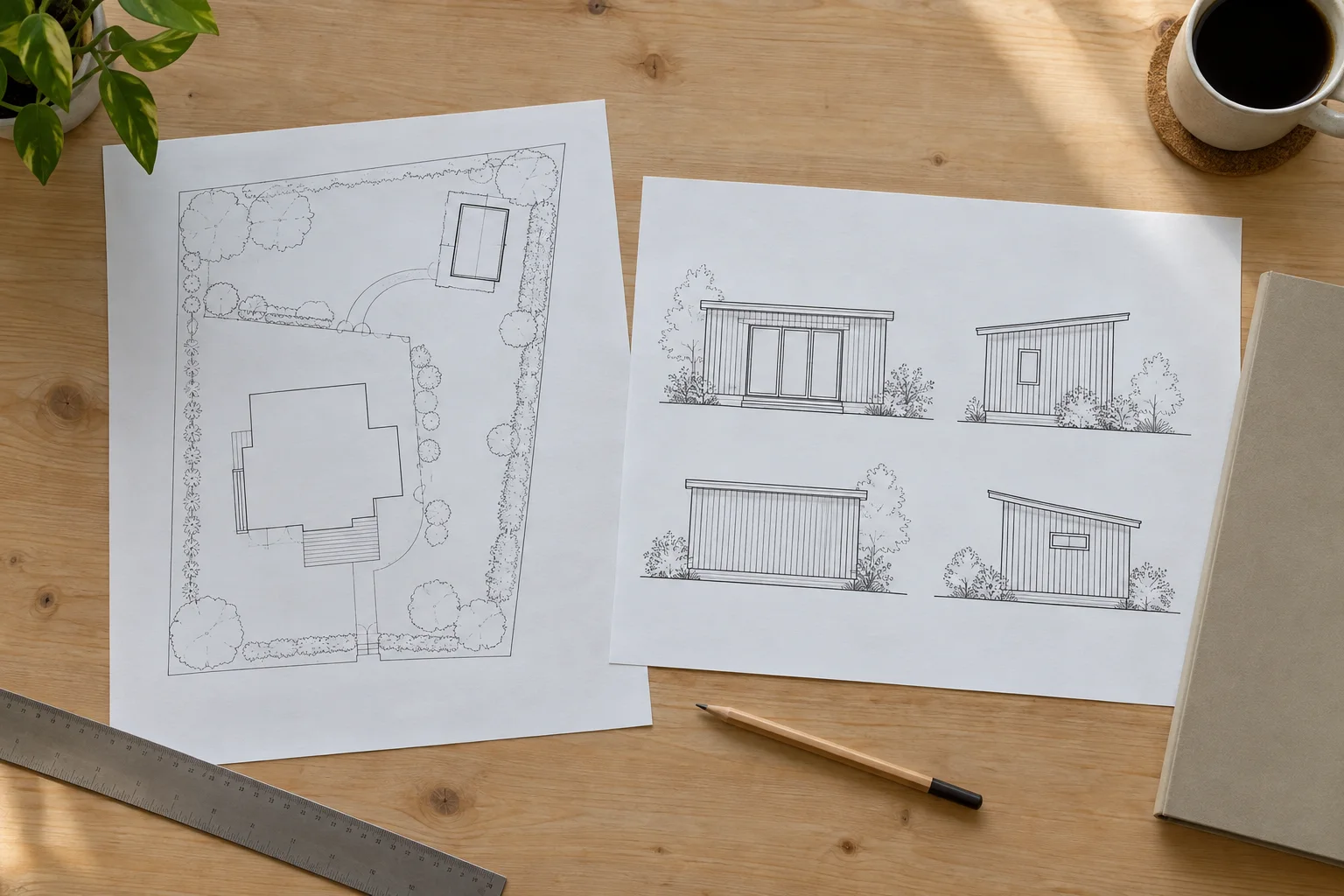
Cabin payment milestones should describe an observable event, the evidence required and the process for resolving a disputed result. Distinguish design approval, production progress, dispatch and destination acceptance. A payment instrument can manage transaction risk, but it does not replace technical inspection or guarantee the cabin meets the agreed specification.
Introduction: describe milestones as events, not calendar labels
A purchaser may be asked to pay a deposit immediately and the balance when production is complete. Those phrases leave important questions unanswered: what is complete, who verifies it, and what happens if the inspected package differs from the approved drawings? The useful discussion starts with evidence and responsibility rather than an assumed standard deposit percentage.
Cabin payment milestones should describe an observable event, the evidence required and the process for resolving a disputed result. Distinguish design approval, production progress, dispatch and destination acceptance. A payment instrument can manage transaction risk, but it does not replace technical inspection or guarantee the cabin meets the agreed specification.
This guide is written for buyers discussing an overseas cabin contract with commercial, banking and legal advisers. Its examples are hypothetical purchasing and operating situations. Use the checks to prepare a precise brief for the cabin supplier and destination team; they do not establish that an unspecified cabin meets a particular performance level or local approval route.
Further reading: International Trade Administration: Trade Finance Guide.
1. Describe milestones as events, not calendar labels
A calendar date can be useful for planning but may arrive before the underlying work is ready. Define the event that makes a payment due and the documents demonstrating it. Design approval, procurement of specified materials and completed inspected production are different events. If the schedule includes an advance payment, agree its purpose and treatment of changes before sending funds. There is no universally correct percentage for every cabin order.
A useful starting record is a payment schedule naming the event, evidence, reviewer and dispute process for each stage. Ask the person producing it to identify the cabin model, affected component and drawing revision. A document describing a different construction system may explain a principle, but it cannot establish acceptance of this package. Keep the answer with the quotation so that purchasing and technical reviewers are working from the same basis.
The error to avoid is assuming a standard deposit percentage fits every order and risk profile. Resolve the gap before the adjoining work is purchased or concealed. Where two options look similar in the catalogue, compare the evidence, access for correction and effect on the rest of the package rather than treating the photograph as the specification.
A question to put in the buyer brief
What exact event and supporting record make each proposed payment due?
2. Distinguish approval from manufacturing progress
Drawing approval confirms a design baseline; it does not demonstrate that the goods have been made. A production photograph can show visible progress without proving the completeness of concealed work or the whole batch. Ask the parties to define the role of each approval and whether it triggers payment, authorizes repetition or simply records progress. Combining all three in one signature can create avoidable disagreement later.
Compare the proposed approach using separate drawing-release and production-progress records with identified unit or batch scope. The important question is not whether a supplier can send more photographs; it is whether the information resolves this decision. Identify what can be checked before an order and what requires a site observation. If there is a limitation, record it alongside the proposal rather than hiding it in a later email.
The error to avoid is interpreting a design approval signature as acceptance of future manufactured goods. Resolve the gap before the adjoining work is purchased or concealed. Where two options look similar in the catalogue, compare the evidence, access for correction and effect on the rest of the package rather than treating the photograph as the specification.
Further reading: ISO: quality management principles.
A question to put in the buyer brief
Does this approval authorize design, release production, or confirm an inspected milestone?
3. Set inspection and discrepancy handling
Where payment follows inspection, agree who inspects, what is sampled and which acceptance criteria apply. Define how discrepancies are recorded and how corrected work is reviewed. A technical issue should be routed to the competent reviewer instead of becoming an informal argument between sales and accounts. Do not invent a contractual right to withhold money; have the intended process written into the actual agreement with suitable advice.
Before approving this detail, request an agreed inspection protocol, discrepancy log and correction-verification process. Evidence should have a clear scope and a named reviewer, especially when the manufacturer and local installer perform different parts of the work. Record the accepted outcome and keep any conditional items open. This prevents a preliminary assumption from becoming a repeated production instruction without a deliberate decision.
The error to avoid is using an undefined satisfactory inspection clause without an accepted review method. Resolve the gap before the adjoining work is purchased or concealed. Where two options look similar in the catalogue, compare the evidence, access for correction and effect on the rest of the package rather than treating the photograph as the specification.
A question to put in the buyer brief
Who decides whether the milestone evidence satisfies the agreed inspection criteria?
4. Choose a payment method with professional advice
Advance transfers, documentary collections and letters of credit create different obligations and risks. The International Trade Administration describes these mechanisms, including the documentary nature of letters of credit. Discuss suitability, fees and document consistency with the participating banks. A banking instrument is not a substitute for an independent condition assessment; documentary conformity and technical conformity are separate questions that need separate controls.
A useful starting record is bank-reviewed payment terms and a realistic list of documents the parties can produce. Ask the person producing it to identify the cabin model, affected component and drawing revision. A document describing a different construction system may explain a principle, but it cannot establish acceptance of this package. Keep the answer with the quotation so that purchasing and technical reviewers are working from the same basis.
The error to avoid is expecting a bank to inspect physical cabin quality through a documentary payment process. Resolve the gap before the adjoining work is purchased or concealed. Where two options look similar in the catalogue, compare the evidence, access for correction and effect on the rest of the package rather than treating the photograph as the specification.
A question to put in the buyer brief
Which documents, dates and conditions must match for the selected payment mechanism?
Turn these questions into a project brief
Send your destination, quantity, intended use and this specification question. Ask for a clearly bounded quotation and document list.
5. Keep delivery, title and acceptance distinct
Shipment, transfer of transport risk, transfer of title and acceptance of installed work may occur at different times. Incoterms address defined delivery responsibilities, not every ownership or payment issue. Ask advisers to reconcile these events in the contract. If the purchaser arranges assembly locally, the supplier’s dispatch payment cannot silently become a promise that unrelated destination work is complete. Map the responsibilities to the actual supply boundary.
Compare the proposed approach using a contract event map linking delivery terms, ownership provisions and acceptance stages. The important question is not whether a supplier can send more photographs; it is whether the information resolves this decision. Identify what can be checked before an order and what requires a site observation. If there is a limitation, record it alongside the proposal rather than hiding it in a later email.
The error to avoid is assuming the delivery term automatically defines every payment and ownership condition. Resolve the gap before the adjoining work is purchased or concealed. Where two options look similar in the catalogue, compare the evidence, access for correction and effect on the rest of the package rather than treating the photograph as the specification.
Further reading: ICC: Incoterms rules.
A question to put in the buyer brief
How do payment events relate to the agreed delivery point and destination acceptance?
6. Verify account changes independently
A last-minute email changing bank details should trigger verification through a previously established contact route. Confirm the contracting entity, beneficiary and invoice relationship before release. Do not send sensitive payment information through a public inquiry form. Keep a controlled record of authorized changes and involve accounts personnel in the process. Technical progress checks cannot protect against a transfer sent to an unverified destination.
Before approving this detail, request an approved beneficiary record and independently verified account-change procedure. Evidence should have a clear scope and a named reviewer, especially when the manufacturer and local installer perform different parts of the work. Record the accepted outcome and keep any conditional items open. This prevents a preliminary assumption from becoming a repeated production instruction without a deliberate decision.
The error to avoid is accepting new bank details solely because an email uses a familiar project name. Resolve the gap before the adjoining work is purchased or concealed. Where two options look similar in the catalogue, compare the evidence, access for correction and effect on the rest of the package rather than treating the photograph as the specification.
A question to put in the buyer brief
Who is authorized to change beneficiary information, and how is that change verified?
Use a decision matrix to compare the complete proposal
A buyer can turn the questions above into a comparison sheet for cabin payment milestones. Keep the original requirement in one column and each supplier's proposed answer in another. Compare like-for-like scope first; then assess how convincing the supporting evidence is. A missing answer should appear as pending, not as a zero-cost inclusion or an assumed pass.
Use three practical statuses: accepted with evidence, accepted subject to a named condition, and unresolved. Conditional acceptance needs an owner and a deadline before the affected work begins. It may be sensible to proceed with unrelated work while a detail is developed, but the team should explicitly identify the boundary. That is different from letting an unresolved detail silently spread across a multi-unit order.
Further reading: Related CabinWild buyer guide; Related CabinWild buyer guide; Browse cabin options; Discuss a project.
| Review item | Evidence to compare | Question that closes the gap |
|---|---|---|
| Describe milestones as events, not calendar labels | A payment schedule naming the event, evidence, reviewer and dispute process for each stage | What exact event and supporting record make each proposed payment due? |
| Distinguish approval from manufacturing progress | Separate drawing-release and production-progress records with identified unit or batch scope | Does this approval authorize design, release production, or confirm an inspected milestone? |
| Set inspection and discrepancy handling | An agreed inspection protocol, discrepancy log and correction-verification process | Who decides whether the milestone evidence satisfies the agreed inspection criteria? |
| Choose a payment method with professional advice | Bank-reviewed payment terms and a realistic list of documents the parties can produce | Which documents, dates and conditions must match for the selected payment mechanism? |
| Keep delivery, title and acceptance distinct | A contract event map linking delivery terms, ownership provisions and acceptance stages | How do payment events relate to the agreed delivery point and destination acceptance? |
| Verify account changes independently | An approved beneficiary record and independently verified account-change procedure | Who is authorized to change beneficiary information, and how is that change verified? |
Worked buyer scenario: an illustrative decision sequence
In a hypothetical first cabin order, the buyer proposes one payment after drawing approval and another after pre-dispatch review. The supplier needs funds for specified materials. Instead of arguing over an assumed industry-standard percentage, the parties define what each payment supports, what evidence is available and which changes would require a revised schedule. Their advisers review the terms.
At the production milestone, the inspector records a missing component and a drawing discrepancy. The contract process identifies which issue needs correction before the milestone can be accepted and which separately agreed item can be completed later. The records distinguish correction of the goods from destination assembly, which is performed by another company.
Before releasing a transfer, the accounts team verifies a proposed beneficiary update using the established contact channel. That check is independent of the inspector accepting the technical work. This is an illustrative risk-control sequence, not a CabinWild payment offer, bank arrangement or customer transaction. Actual rights depend on the signed agreement and applicable law.
Separate factory checks, delivery condition and the installed result
For this product application, identify which decisions can be confirmed from the accepted brief and which require physical evidence. Factory testing, if specified and actually performed, should have a defined method, sample and acceptance criterion. A supplier's demonstration is not automatically an independent test, and a component result does not prove the installed cabin's performance. Ask for the scope before putting any test wording in a purchase order.
At shipment inspection, compare the supplied items with the evidence list below. The purpose is to confirm the agreed package and condition at the stated stage, not to predict every destination outcome. Installation preparation should identify access, responsible trades and any hold point needed before an interface is covered. A gap found at that stage is often easier to correct than one found after a finished room has been furnished.
For repeated cabins, use an identified first unit or agreed representative sample before authorizing repetition of a new detail. Record what was checked, who checked it and what remains for site verification. Do not call the whole batch approved merely because one attractive unit has been photographed. Equally, do not impose unrelated checks that add delay without resolving the specific customer requirements.
- A payment schedule naming the event, evidence, reviewer and dispute process for each stage.
- Separate drawing-release and production-progress records with identified unit or batch scope.
- An agreed inspection protocol, discrepancy log and correction-verification process.
- Bank-reviewed payment terms and a realistic list of documents the parties can produce.
- A contract event map linking delivery terms, ownership provisions and acceptance stages.
- An approved beneficiary record and independently verified account-change procedure.
Frequently asked questions
What deposit percentage is normal for a cabin order?
There is no universal percentage appropriate to every package, supplier and risk profile. Discuss the purpose of the deposit, material commitments, cancellation terms and evidence with commercial advisers. Do not treat an unsourced industry percentage as a protective rule.
Does a letter of credit guarantee cabin quality?
No. It is a documentary payment mechanism with defined conditions. Physical inspection and technical acceptance need their own agreed process. Ask the bank and legal advisers to ensure the documents and contract work together.
Can a buyer pay after factory inspection?
The parties can negotiate a milestone connected to an agreed inspection event. Specify method, scope, discrepancy handling and acceptance authority. Whether funds can be withheld or released is determined by the actual agreement, not by this article.
Are payment terms included in Incoterms?
Incoterms define important delivery obligations and risk allocation but do not supply a complete payment agreement. State the payment mechanism, triggers and supporting documents separately, and reconcile them with the named delivery place.
What if bank details change before shipment?
Pause release until the change is independently verified through an established channel and approved internally. Check the beneficiary against the contracting and invoicing entities. A plausible email or urgent shipping deadline is insufficient verification.
Conclusion: make each payment event understandable
A workable payment schedule connects money to a defined event and realistic evidence. Keep banking checks, physical inspection and destination acceptance distinct. Agree the discrepancy process before production so that the parties have a clear route when progress differs from the plan.
Send CabinWild your destination, intended use, quantity, drawing stage and the questions that remain open. Include the evidence you need in the quotation rather than asking only for a model price. Contact info@CabinWild.com to discuss the proposed cabin supply boundary and supporting documents. Local design, installation and approval responsibilities should be agreed with the destination professionals.
Discuss cabin payment milestones
Send your destination, quantity, intended use and this specification question. Ask for a clearly bounded quotation and document list.
Prepared with AI assistance for CabinWild Editorial using the linked public sources. Examples are illustrative, not customer results or verified CabinWild test data. Project-specific design and local requirements need review by the appropriate professionals.