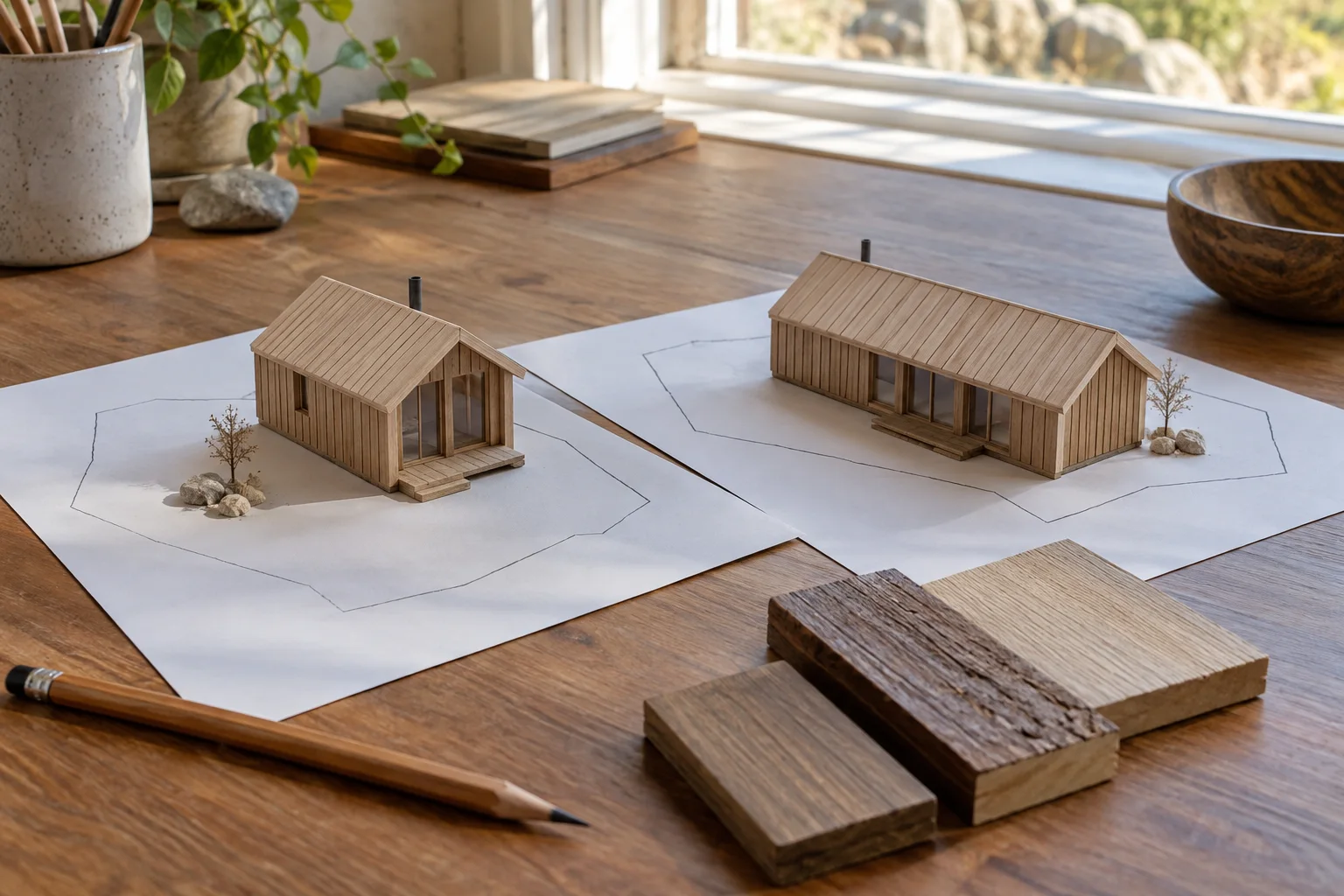
Control cabin design changes through one current drawing register, a written impact assessment and a named approval route. Evaluate structure, openings, services, packaging, cost and programme together before releasing a revision. Never rely on an informal message to tell the factory which version governs the affected units.
Introduction: establish the approved baseline
Changing a door position looks simple on a floor plan. It can also alter framing, cladding cuts, electrical routes, packing labels and destination work. Overseas orders make these consequences harder to see because different teams may work from different files. A practical change-control process keeps the decision and its downstream effects together.
Control cabin design changes through one current drawing register, a written impact assessment and a named approval route. Evaluate structure, openings, services, packaging, cost and programme together before releasing a revision. Never rely on an informal message to tell the factory which version governs the affected units.
This guide is written for buyers and project coordinators managing customized or repeated cabin packages. Its examples are hypothetical purchasing and operating situations. Use the checks to prepare a precise brief for the cabin supplier and destination team; they do not establish that an unspecified cabin meets a particular performance level or local approval route.
Further reading: ISO: quality management principles.
1. Establish the approved baseline
Give the accepted drawing set a date and revision register. Include layouts, sections, openings, finish schedule and supply boundary, not just the attractive plan. Identify what remains preliminary and whether production can proceed around it. A specification freeze means the stated baseline governs release; it does not mean later changes are impossible. It means later changes follow a visible process rather than silently replacing the accepted requirement.
A useful starting record is a baseline register listing accepted and preliminary documents by revision. Ask the person producing it to identify the cabin model, affected component and drawing revision. A document describing a different construction system may explain a principle, but it cannot establish acceptance of this package. Keep the answer with the quotation so that purchasing and technical reviewers are working from the same basis.
The error to avoid is calling the floor plan final while component schedules remain inconsistent. Resolve the gap before the adjoining work is purchased or concealed. Where two options look similar in the catalogue, compare the evidence, access for correction and effect on the rest of the package rather than treating the photograph as the specification.
A question to put in the buyer brief
Which drawings and schedules form the approved manufacturing baseline?
2. Record the reason and affected units
Every change request should state what changes, why it changes and which units it affects. A resort may alter only accessible units or only the next production phase. Use unit identifiers rather than phrases such as all new cabins when work is already in progress. Record whether the request corrects a discrepancy, changes a preference or responds to a destination requirement; the commercial treatment may differ.
Compare the proposed approach using a change request showing reason, unit range and current production status. The important question is not whether a supplier can send more photographs; it is whether the information resolves this decision. Identify what can be checked before an order and what requires a site observation. If there is a limitation, record it alongside the proposal rather than hiding it in a later email.
The error to avoid is applying a local adjustment to the whole order without identifying affected units. Resolve the gap before the adjoining work is purchased or concealed. Where two options look similar in the catalogue, compare the evidence, access for correction and effect on the rest of the package rather than treating the photograph as the specification.
Further reading: HSE: construction planning.
A question to put in the buyer brief
Does this request apply to completed units, work in progress, or a later batch?
3. Assess adjacent technical interfaces
A changed opening can affect bracing and furniture; a changed floor buildup can affect thresholds and plumbing. Ask each relevant reviewer to assess the adjoining work before approval. Keep structural and regulatory questions with competent destination designers. A manufacturer’s willingness to make a component does not establish that the revised assembly meets local requirements. The impact assessment should include what needs to be redesigned or resubmitted.
Before approving this detail, request an interface review covering structure, envelope, services, access and local design inputs. Evidence should have a clear scope and a named reviewer, especially when the manufacturer and local installer perform different parts of the work. Record the accepted outcome and keep any conditional items open. This prevents a preliminary assumption from becoming a repeated production instruction without a deliberate decision.
The error to avoid is approving a single component without checking the details that connect to it. Resolve the gap before the adjoining work is purchased or concealed. Where two options look similar in the catalogue, compare the evidence, access for correction and effect on the rest of the package rather than treating the photograph as the specification.
A question to put in the buyer brief
Which adjoining drawings, calculations or installation details must change with this request?
4. Make substitutions explicit
When a specified material is unavailable, request the replacement’s identity, dimensions, performance evidence and installation implications. Similar appearance is insufficient where the item affects structure, moisture control or maintenance. Keep the proposed substitute separate from the approved materials list until accepted. If the replacement requires a different fastening or finish system, those details should be reviewed and priced together rather than left for the installer to discover.
A useful starting record is a substitution comparison with product identity and revised interface requirements. Ask the person producing it to identify the cabin model, affected component and drawing revision. A document describing a different construction system may explain a principle, but it cannot establish acceptance of this package. Keep the answer with the quotation so that purchasing and technical reviewers are working from the same basis.
The error to avoid is accepting equivalent as a description without an identified replacement product. Resolve the gap before the adjoining work is purchased or concealed. Where two options look similar in the catalogue, compare the evidence, access for correction and effect on the rest of the package rather than treating the photograph as the specification.
A question to put in the buyer brief
What evidence and interface changes support the proposed substitute?
Turn these questions into a project brief
Send your destination, quantity, intended use and this specification question. Ask for a clearly bounded quotation and document list.
5. Agree cost and programme consequences
A change may have design, rework, procurement, packing or site consequences. Ask for an itemized explanation and revised milestones before releasing it. Do not assume that a small drawing edit is commercially neutral after materials have been cut. Conversely, do not accept a broad delay statement without identifying the affected activity. The parties should decide whether to proceed, defer the change or retain the original baseline.
Compare the proposed approach using a change impact statement covering price, already committed work and revised release dates. The important question is not whether a supplier can send more photographs; it is whether the information resolves this decision. Identify what can be checked before an order and what requires a site observation. If there is a limitation, record it alongside the proposal rather than hiding it in a later email.
The error to avoid is approving a drawing first and negotiating the consequences after production resumes. Resolve the gap before the adjoining work is purchased or concealed. Where two options look similar in the catalogue, compare the evidence, access for correction and effect on the rest of the package rather than treating the photograph as the specification.
Further reading: HSE: construction planning.
A question to put in the buyer brief
What work is already committed, and how does this revision alter the agreed milestones?

6. Release and verify the revised version
Once approved, update the drawing register, bill of materials, package labels and inspection checklist as required. Withdraw superseded instructions from active production use while retaining them in the history. Verify the first affected unit before repeating the change. The purpose of revision control is not a more elaborate filing system; it is to ensure the actual supplied parts follow the decision that the buyer approved.
Before approving this detail, request a revision release record and first-affected-unit verification tied to package identifiers. Evidence should have a clear scope and a named reviewer, especially when the manufacturer and local installer perform different parts of the work. Record the accepted outcome and keep any conditional items open. This prevents a preliminary assumption from becoming a repeated production instruction without a deliberate decision.
The error to avoid is changing the drawing archive without updating active shop-floor instructions. Resolve the gap before the adjoining work is purchased or concealed. Where two options look similar in the catalogue, compare the evidence, access for correction and effect on the rest of the package rather than treating the photograph as the specification.
A question to put in the buyer brief
How will you verify that the affected packages follow the newly approved revision?
Use a decision matrix to compare the complete proposal
A buyer can turn the questions above into a comparison sheet for cabin design change control. Keep the original requirement in one column and each supplier's proposed answer in another. Compare like-for-like scope first; then assess how convincing the supporting evidence is. A missing answer should appear as pending, not as a zero-cost inclusion or an assumed pass.
Use three practical statuses: accepted with evidence, accepted subject to a named condition, and unresolved. Conditional acceptance needs an owner and a deadline before the affected work begins. It may be sensible to proceed with unrelated work while a detail is developed, but the team should explicitly identify the boundary. That is different from letting an unresolved detail silently spread across a multi-unit order.
Further reading: Related CabinWild buyer guide; Related CabinWild buyer guide; Browse cabin options; Discuss a project.
| Review item | Evidence to compare | Question that closes the gap |
|---|---|---|
| Establish the approved baseline | A baseline register listing accepted and preliminary documents by revision | Which drawings and schedules form the approved manufacturing baseline? |
| Record the reason and affected units | A change request showing reason, unit range and current production status | Does this request apply to completed units, work in progress, or a later batch? |
| Assess adjacent technical interfaces | An interface review covering structure, envelope, services, access and local design inputs | Which adjoining drawings, calculations or installation details must change with this request? |
| Make substitutions explicit | A substitution comparison with product identity and revised interface requirements | What evidence and interface changes support the proposed substitute? |
| Agree cost and programme consequences | A change impact statement covering price, already committed work and revised release dates | What work is already committed, and how does this revision alter the agreed milestones? |
| Release and verify the revised version | A revision release record and first-affected-unit verification tied to package identifiers | How will you verify that the affected packages follow the newly approved revision? |
Worked buyer scenario: an illustrative decision sequence
Imagine a hypothetical holiday operator moving a bathroom window after the initial cabin layout is approved. Some framing components have already been prepared, while later units are still at drawing stage. The project team records the reason for the change and the exact units involved rather than asking the factory to update the design for everything.
The review finds effects on framing, exterior flashing and a planned ventilation route. The destination designer checks the revised arrangement; the supplier describes rework and packing consequences. The buyer decides to keep the first units unchanged and release the revised arrangement only for an identified later group. The quotation and programme are updated at the same time.
The first revised package is checked against the new opening schedule before the remaining affected units proceed. Superseded drawings remain in the history but are clearly withdrawn from active use. This example is a fictional coordination exercise, not a CabinWild project or evidence of a production system already in operation.
Separate factory checks, delivery condition and the installed result
For this product application, identify which decisions can be confirmed from the accepted brief and which require physical evidence. Factory testing, if specified and actually performed, should have a defined method, sample and acceptance criterion. A supplier's demonstration is not automatically an independent test, and a component result does not prove the installed cabin's performance. Ask for the scope before putting any test wording in a purchase order.
At shipment inspection, compare the supplied items with the evidence list below. The purpose is to confirm the agreed package and condition at the stated stage, not to predict every destination outcome. Installation preparation should identify access, responsible trades and any hold point needed before an interface is covered. A gap found at that stage is often easier to correct than one found after a finished room has been furnished.
For repeated cabins, use an identified first unit or agreed representative sample before authorizing repetition of a new detail. Record what was checked, who checked it and what remains for site verification. Do not call the whole batch approved merely because one attractive unit has been photographed. Equally, do not impose unrelated checks that add delay without resolving the specific customer requirements.
- A baseline register listing accepted and preliminary documents by revision.
- A change request showing reason, unit range and current production status.
- An interface review covering structure, envelope, services, access and local design inputs.
- A substitution comparison with product identity and revised interface requirements.
- A change impact statement covering price, already committed work and revised release dates.
- A revision release record and first-affected-unit verification tied to package identifiers.
Frequently asked questions
Can I change a cabin after placing the order?
Potentially, depending on production stage and the agreement. Request a written assessment of design, committed materials, rework, cost and programme. Approve the whole consequence before releasing the revised instructions.
What is a cabin specification freeze?
It is an identified baseline used to release design and manufacturing work. Later changes remain possible through a controlled approval process. It should make unresolved items visible instead of implying that every document is complete.
Who should approve material substitutions?
The buyer’s authorized representative and relevant technical reviewers should assess the substitute according to its role. Structural or regulatory matters require appropriate professional review. A sales description alone is not acceptance evidence.
How do I prevent old drawings being used?
Maintain one active revision register and an explicit release record. Update the shop instructions and affected package information, and verify the first revised unit. Keeping a new PDF in a shared folder is insufficient by itself.
Should every change affect the whole order?
No. Identify the units and stages affected. Applying a change only to later units may avoid unnecessary rework, but differences must be recorded so installers and maintenance teams can identify which version they receive.
Conclusion: release one coherent revision
A good change process connects the buyer decision with manufacturing, documents and destination interfaces. Identify affected units, review the complete consequence and verify the first revised package. That discipline supports customization without letting informal instructions become a source of preventable errors.
Send CabinWild your destination, intended use, quantity, drawing stage and the questions that remain open. Include the evidence you need in the quotation rather than asking only for a model price. Contact info@CabinWild.com to discuss the proposed cabin supply boundary and supporting documents. Local design, installation and approval responsibilities should be agreed with the destination professionals.
Discuss cabin design change control
Send your destination, quantity, intended use and this specification question. Ask for a clearly bounded quotation and document list.
Prepared with AI assistance for CabinWild Editorial using the linked public sources. Examples are illustrative, not customer results or verified CabinWild test data. Project-specific design and local requirements need review by the appropriate professionals.