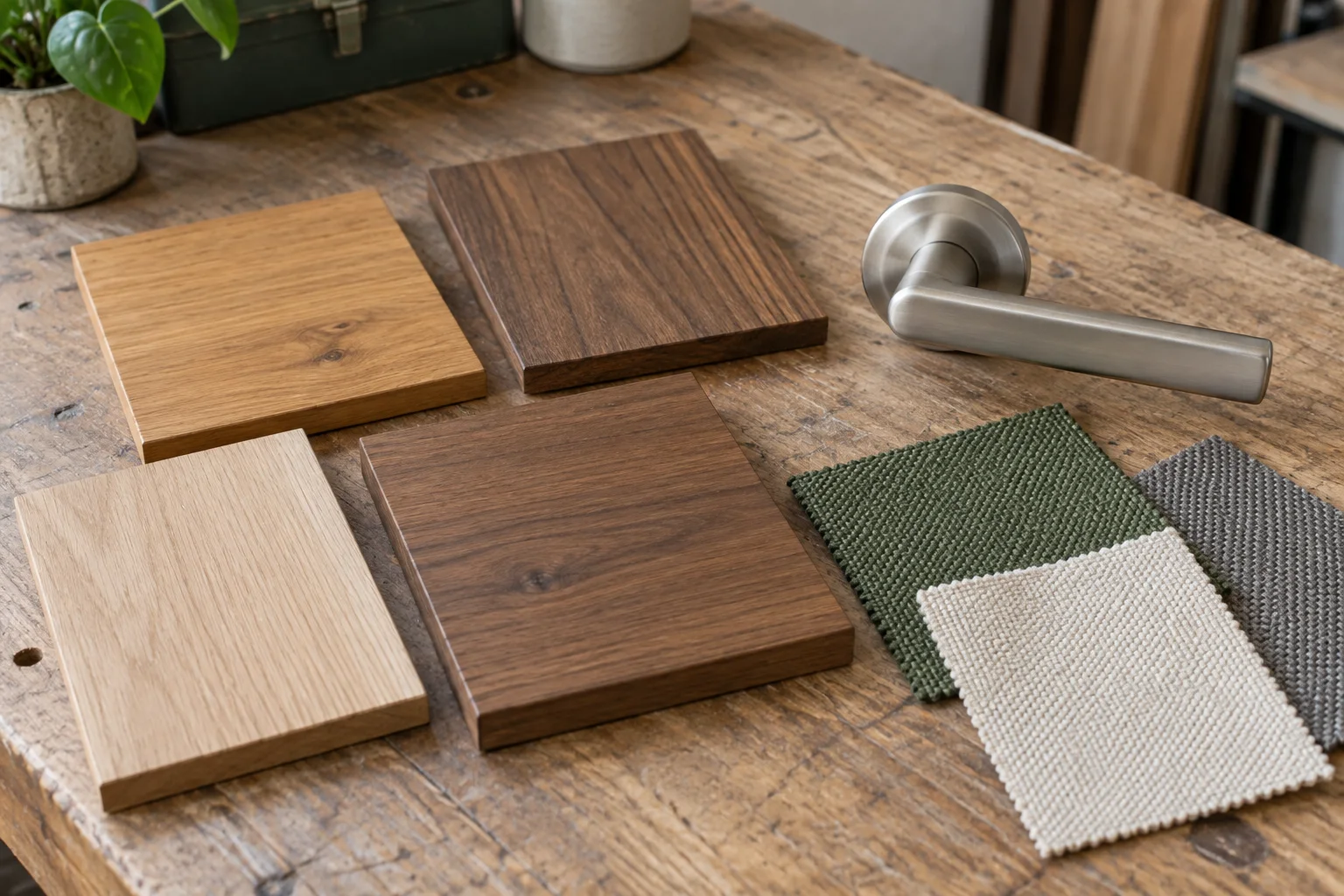
Approve cabin finish colour using representative timber, the identified coating system, actual preparation and suitable viewing conditions. Keep colour acceptance separate from coating protection or durability claims. Natural grain and exposure can change appearance, so retain the approved sample and a bounded visual standard rather than promising every board will look identical.
Introduction: identify the whole finish system
A warm photograph can make two finishes appear almost the same, while the delivered timber reveals different grain and undertones. Overseas buyers need a repeatable sample process, especially for several cabins or later replacement parts. The goal is an understood appearance and traceable finish system, not an impossible promise of perfect uniformity.
Approve cabin finish colour using representative timber, the identified coating system, actual preparation and suitable viewing conditions. Keep colour acceptance separate from coating protection or durability claims. Natural grain and exposure can change appearance, so retain the approved sample and a bounded visual standard rather than promising every board will look identical.
This guide is written for buyers approving visible timber finishes for repeated cabin orders. Its examples are hypothetical purchasing and operating situations. Use the checks to prepare a precise brief for the cabin supplier and destination team; they do not establish that an unspecified cabin meets a particular performance level or local approval route.
Further reading: US Forest Service: weathering of coated timber.
1. Identify the whole finish system
Record substrate, preparation, coating product, colour reference and application method. A colour name alone does not establish the visible result or protective function. Solid and translucent finishes reveal the timber differently. Keep exterior and interior use distinct and ask for the relevant product instructions. The accepted sample should represent the proposed order, not a decorative board prepared with an unidentified showroom process.
A useful starting record is a finish-system record identifying timber, preparation, coating and application method. Ask the person producing it to identify the cabin model, affected component and drawing revision. A document describing a different construction system may explain a principle, but it cannot establish acceptance of this package. Keep the answer with the quotation so that purchasing and technical reviewers are working from the same basis.
The error to avoid is approving a colour name without identifying how the sample was produced. Resolve the gap before the adjoining work is purchased or concealed. Where two options look similar in the catalogue, compare the evidence, access for correction and effect on the rest of the package rather than treating the photograph as the specification.
A question to put in the buyer brief
Which substrate and complete coating process produced the proposed approval sample?
2. Use representative timber samples
Timber varies in grain, colour and surface characteristics. Ask for enough representative material to explain the expected range rather than only the most uniform piece. Different component types may need separate samples if their substrates or machining differ. The buyer should decide which variation is acceptable and which observations need further review. Do not treat every natural difference as a defect or use one attractive sample to conceal a broader range.
Compare the proposed approach using representative samples showing the expected timber variation for visible component types. The important question is not whether a supplier can send more photographs; it is whether the information resolves this decision. Identify what can be checked before an order and what requires a site observation. If there is a limitation, record it alongside the proposal rather than hiding it in a later email.
The error to avoid is choosing one unusually uniform sample as a promise for every supplied board. Resolve the gap before the adjoining work is purchased or concealed. Where two options look similar in the catalogue, compare the evidence, access for correction and effect on the rest of the package rather than treating the photograph as the specification.
Further reading: US Forest Service: Wood Handbook.
A question to put in the buyer brief
What normal substrate variation should the accepted sample set represent?
3. Review under appropriate light and viewing conditions
Compare physical samples under agreed conditions and consider the intended interior or exterior setting. Digital screens, camera processing and warm lighting can change perceived colour. Photographs are useful for communication but should not become the only reference where appearance is important. If a quantitative colour method is requested, define its scope with appropriate specialists; a number alone does not replace the agreed visual and substrate context.
Before approving this detail, request an agreed sample viewing procedure and retained physical reference where practical. Evidence should have a clear scope and a named reviewer, especially when the manufacturer and local installer perform different parts of the work. Record the accepted outcome and keep any conditional items open. This prevents a preliminary assumption from becoming a repeated production instruction without a deliberate decision.
The error to avoid is judging final colour only from a filtered photograph or an uncalibrated screen. Resolve the gap before the adjoining work is purchased or concealed. Where two options look similar in the catalogue, compare the evidence, access for correction and effect on the rest of the package rather than treating the photograph as the specification.
A question to put in the buyer brief
Under which lighting and viewing conditions will the colour sample be assessed?
4. Separate appearance from protection evidence
An attractive sample does not establish weathering life, coating compatibility or maintenance interval. Review those requirements through the identified product and application evidence. Forest Service research demonstrates that coating and exposure conditions can affect appearance change, but results for studied samples should not be presented as predictions for this order. Avoid unsupported promises that a translucent finish will retain exactly the original colour indefinitely.
A useful starting record is separate visual acceptance and product suitability records for the specified exposure. Ask the person producing it to identify the cabin model, affected component and drawing revision. A document describing a different construction system may explain a principle, but it cannot establish acceptance of this package. Keep the answer with the quotation so that purchasing and technical reviewers are working from the same basis.
The error to avoid is using a colour approval as proof of durability or unchanged long-term appearance. Resolve the gap before the adjoining work is purchased or concealed. Where two options look similar in the catalogue, compare the evidence, access for correction and effect on the rest of the package rather than treating the photograph as the specification.
A question to put in the buyer brief
Which evidence supports protective use, separately from the approved visual appearance?
Turn these questions into a project brief
Send your destination, quantity, intended use and this specification question. Ask for a clearly bounded quotation and document list.
5. Control batch changes and application records
Record material or coating substitutions before they reach production. Where repeated units need visual consistency, identify the batch and application conditions and agree how a first completed area is reviewed. Keep limits realistic: natural timber and changing light can create differences even with a controlled process. The acceptance standard should distinguish expected variation from a process error without inventing a universal tolerance that the parties cannot measure or interpret.
Compare the proposed approach using a batch and application record with an agreed first-area visual review. The important question is not whether a supplier can send more photographs; it is whether the information resolves this decision. Identify what can be checked before an order and what requires a site observation. If there is a limitation, record it alongside the proposal rather than hiding it in a later email.
The error to avoid is changing coating products mid-order while keeping the same informal colour description. Resolve the gap before the adjoining work is purchased or concealed. Where two options look similar in the catalogue, compare the evidence, access for correction and effect on the rest of the package rather than treating the photograph as the specification.
Further reading: ISO: quality management principles.
A question to put in the buyer brief
How will product or application changes be approved and reflected in the finish record?
6. Plan repair and later replacement matching
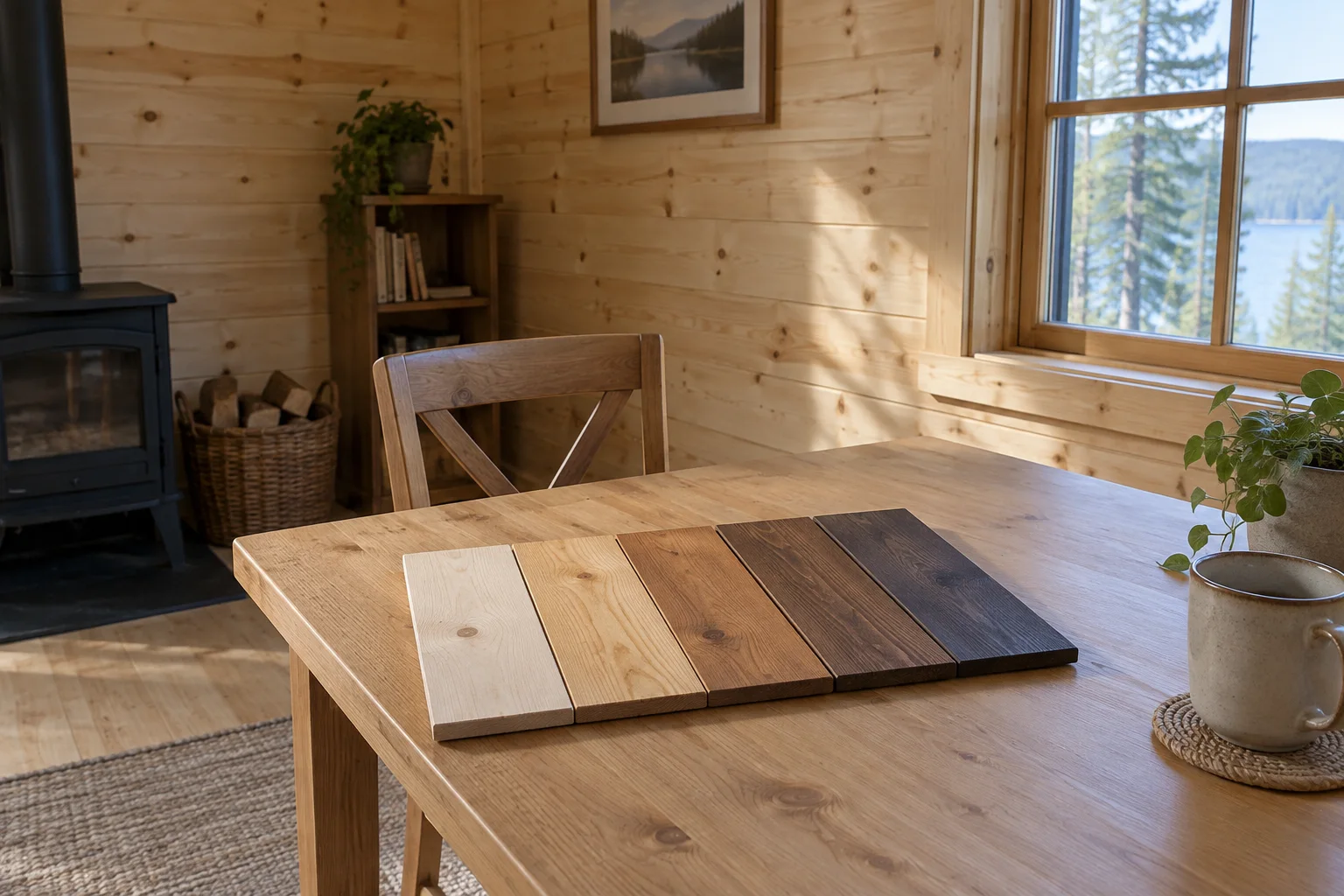
Retain samples, product references and suitable spare material where useful. A newly coated replacement can differ from weathered timber, so the operator needs a realistic repair approach. Identify preparation and permitted recoating methods with the coating provider. Do not promise invisible repairs under every exposure condition. The purchasing decision should consider how the finish will be maintained across time, not only how the first cabin appears on delivery.
Before approving this detail, request a retained reference set and coating-specific repair and recoating instructions. Evidence should have a clear scope and a named reviewer, especially when the manufacturer and local installer perform different parts of the work. Record the accepted outcome and keep any conditional items open. This prevents a preliminary assumption from becoming a repeated production instruction without a deliberate decision.
The error to avoid is promising perfect matching between new replacement timber and weathered surfaces. Resolve the gap before the adjoining work is purchased or concealed. Where two options look similar in the catalogue, compare the evidence, access for correction and effect on the rest of the package rather than treating the photograph as the specification.
A question to put in the buyer brief
How should later repairs be prepared and assessed against the aged installed finish?
Use a decision matrix to compare the complete proposal
A buyer can turn the questions above into a comparison sheet for cabin finish colour approval. Keep the original requirement in one column and each supplier's proposed answer in another. Compare like-for-like scope first; then assess how convincing the supporting evidence is. A missing answer should appear as pending, not as a zero-cost inclusion or an assumed pass.
Use three practical statuses: accepted with evidence, accepted subject to a named condition, and unresolved. Conditional acceptance needs an owner and a deadline before the affected work begins. It may be sensible to proceed with unrelated work while a detail is developed, but the team should explicitly identify the boundary. That is different from letting an unresolved detail silently spread across a multi-unit order.
Further reading: Related CabinWild buyer guide; Related CabinWild buyer guide; Browse cabin options; Discuss a project.
| Review item | Evidence to compare | Question that closes the gap |
|---|---|---|
| Identify the whole finish system | A finish-system record identifying timber, preparation, coating and application method | Which substrate and complete coating process produced the proposed approval sample? |
| Use representative timber samples | Representative samples showing the expected timber variation for visible component types | What normal substrate variation should the accepted sample set represent? |
| Review under appropriate light and viewing conditions | An agreed sample viewing procedure and retained physical reference where practical | Under which lighting and viewing conditions will the colour sample be assessed? |
| Separate appearance from protection evidence | Separate visual acceptance and product suitability records for the specified exposure | Which evidence supports protective use, separately from the approved visual appearance? |
| Control batch changes and application records | A batch and application record with an agreed first-area visual review | How will product or application changes be approved and reflected in the finish record? |
| Plan repair and later replacement matching | A retained reference set and coating-specific repair and recoating instructions | How should later repairs be prepared and assessed against the aged installed finish? |
Worked buyer scenario: an illustrative decision sequence
A hypothetical resort buyer approves a dark translucent finish from an online image. Before production, the supplier provides representative boards made with the identified timber and process. Under ordinary daylight, the buyer notices a range of grain and undertones that was not clear in the photograph and agrees a bounded visual reference set.
The first completed area is reviewed against that set, while product suitability for exterior use is assessed separately. A proposed coating substitution is not accepted solely because it has the same colour name. The finish record and maintenance instructions stay connected to the actual supplied system.
For future repairs, the operator retains references and understands that newly finished timber may not immediately match a weathered surface. This fictional example reports no CabinWild coating test or colour guarantee. It illustrates how samples support an honest repeatable specification.
Separate factory checks, delivery condition and the installed result
For this product application, identify which decisions can be confirmed from the accepted brief and which require physical evidence. Factory testing, if specified and actually performed, should have a defined method, sample and acceptance criterion. A supplier's demonstration is not automatically an independent test, and a component result does not prove the installed cabin's performance. Ask for the scope before putting any test wording in a purchase order.
At shipment inspection, compare the supplied items with the evidence list below. The purpose is to confirm the agreed package and condition at the stated stage, not to predict every destination outcome. Installation preparation should identify access, responsible trades and any hold point needed before an interface is covered. A gap found at that stage is often easier to correct than one found after a finished room has been furnished.
For repeated cabins, use an identified first unit or agreed representative sample before authorizing repetition of a new detail. Record what was checked, who checked it and what remains for site verification. Do not call the whole batch approved merely because one attractive unit has been photographed. Equally, do not impose unrelated checks that add delay without resolving the specific customer requirements.
- A finish-system record identifying timber, preparation, coating and application method.
- Representative samples showing the expected timber variation for visible component types.
- An agreed sample viewing procedure and retained physical reference where practical.
- Separate visual acceptance and product suitability records for the specified exposure.
- A batch and application record with an agreed first-area visual review.
- A retained reference set and coating-specific repair and recoating instructions.
Frequently asked questions
Can I approve a timber colour from a photograph?
Photographs can support discussion but may alter perceived colour through light, camera processing and screens. Where appearance matters, use representative identified samples and an agreed viewing method rather than relying only on the image.
Will every board match the sample exactly?
Natural timber variation makes an unconditional identity promise unrealistic. Agree representative variation and a bounded visual acceptance standard. Keep the substrate and application process identified.
Does colour approval prove exterior durability?
No. Visual acceptance and protective suitability require separate evidence. Review the identified coating, preparation, exposure and instructions. A good-looking sample is not a weathering test for the proposed cabin.
Can the coating be substituted by colour name?
Do not assume equivalence. Product chemistry, preparation, appearance and maintenance may differ. Review the complete proposed substitute and record approval before application.
Will replacement timber match weathered surfaces?
Not necessarily. Retain finish references and obtain a coating-specific repair approach. Describe the limitations honestly instead of promising invisible repairs under every exposure and ageing condition.
Conclusion: approve a repeatable process and a realistic appearance
A finish sample is useful when it represents the actual timber and application system. Define viewing conditions and expected variation, keep protection evidence separate and retain references for repairs. That approach gives the buyer a clearer result than a colour name or a polished photograph alone.
Send CabinWild your destination, intended use, quantity, drawing stage and the questions that remain open. Include the evidence you need in the quotation rather than asking only for a model price. Contact info@CabinWild.com to discuss the proposed cabin supply boundary and supporting documents. Local design, installation and approval responsibilities should be agreed with the destination professionals.
Discuss cabin finish colour approval
Send your destination, quantity, intended use and this specification question. Ask for a clearly bounded quotation and document list.
Prepared with AI assistance for CabinWild Editorial using the linked public sources. Examples are illustrative, not customer results or verified CabinWild test data. Project-specific design and local requirements need review by the appropriate professionals.