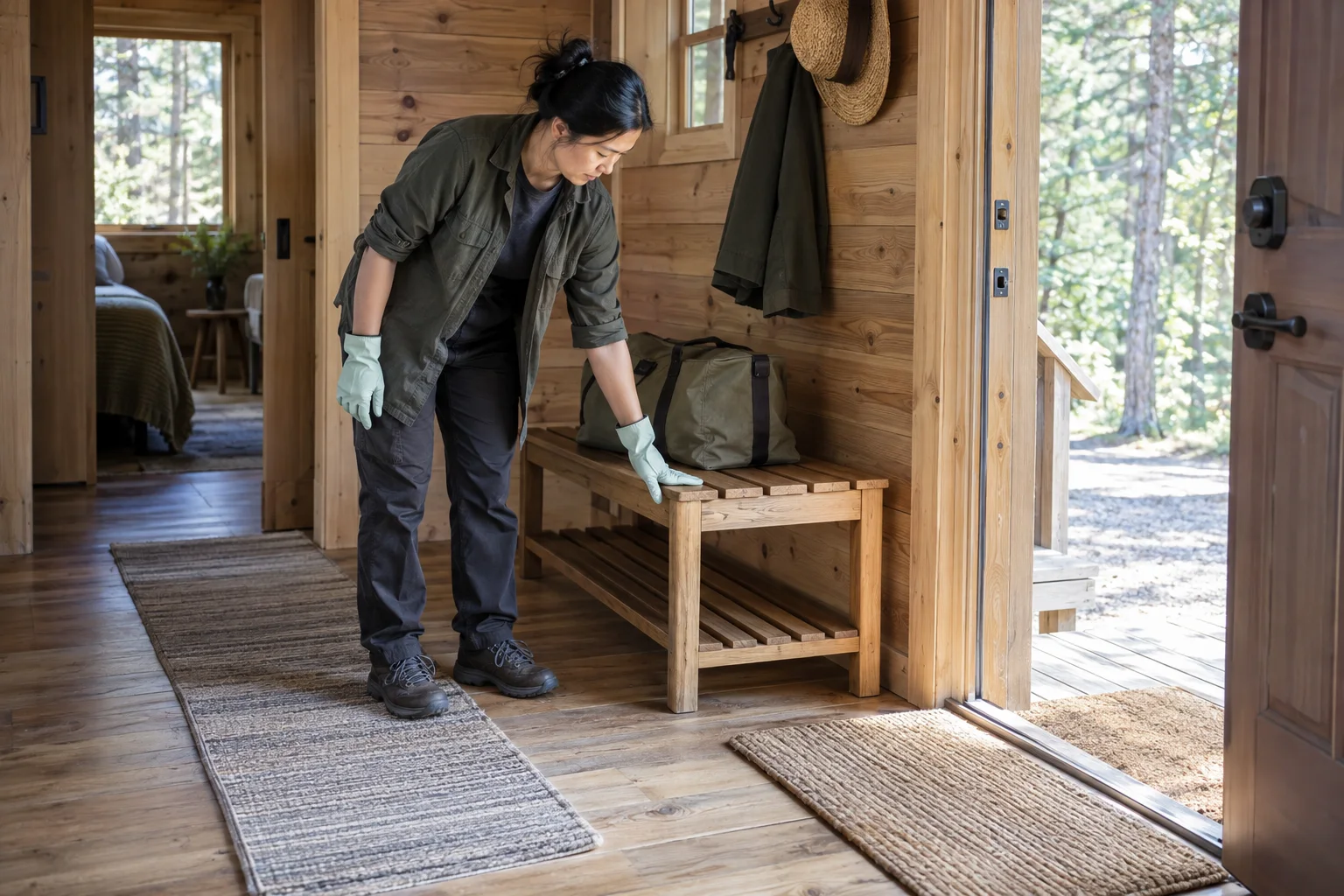
A cabin that is easier to turn over has accessible surfaces, clear linen and waste routes, appropriate storage and repairable finishes. Review the furnished layout with operating staff before release. A compact floor plan is not automatically efficient, and no cleaning-time promise is credible without a defined procedure and observed operation.
Introduction: map the actual turnover sequence
Rental cabin procurement often focuses on guest photographs while staff movement remains unplanned. Housekeepers then discover heavy furniture, unreachable corners and nowhere to place clean linen. Including turnover requirements in the design brief can improve repeatability without pretending that a layout alone determines cleaning speed or hygiene.
A cabin that is easier to turn over has accessible surfaces, clear linen and waste routes, appropriate storage and repairable finishes. Review the furnished layout with operating staff before release. A compact floor plan is not automatically efficient, and no cleaning-time promise is credible without a defined procedure and observed operation.
This guide is written for resort and glamping operators purchasing repeated furnished cabin units. Its examples are hypothetical purchasing and operating situations. Use the checks to prepare a precise brief for the cabin supplier and destination team; they do not establish that an unspecified cabin meets a particular performance level or local approval route.
Further reading: EPA: identifying greener cleaning products.
1. Map the actual turnover sequence
Describe arrival, linen removal, waste collection, cleaning, replenishment and final inspection in the order staff intend to perform them. Identify where clean and used supplies travel and are stored. Different operating models need different arrangements: daily serviced stays differ from cabins cleaned only between bookings. The brief should record staffing and equipment assumptions before furniture and storage are fixed. Do not invent a universal minutes-per-cabin target.
A useful starting record is an operator-approved turnover sequence with supply, waste and inspection routes. Ask the person producing it to identify the cabin model, affected component and drawing revision. A document describing a different construction system may explain a principle, but it cannot establish acceptance of this package. Keep the answer with the quotation so that purchasing and technical reviewers are working from the same basis.
The error to avoid is copying a cleaning-time benchmark without matching the actual service model. Resolve the gap before the adjoining work is purchased or concealed. Where two options look similar in the catalogue, compare the evidence, access for correction and effect on the rest of the package rather than treating the photograph as the specification.
A question to put in the buyer brief
What sequence and equipment will staff use to prepare this cabin between stays?
2. Review reach and furniture access
Show the actual bed, sofa, tables and cabinets on the plan. Check access to surfaces behind and beneath them and how staff reach windows or high finishes. Heavy furniture can make a seemingly open layout difficult to clean. Where movable items are expected, identify their movement and storage arrangement. Avoid solving access by asking staff to perform unsafe lifting or reach from improvised platforms.
Compare the proposed approach using a furnished access review covering hard-to-reach surfaces and safe furniture movement. The important question is not whether a supplier can send more photographs; it is whether the information resolves this decision. Identify what can be checked before an order and what requires a site observation. If there is a limitation, record it alongside the proposal rather than hiding it in a later email.
The error to avoid is assuming every visible surface is safely reachable in a finished layout. Resolve the gap before the adjoining work is purchased or concealed. Where two options look similar in the catalogue, compare the evidence, access for correction and effect on the rest of the package rather than treating the photograph as the specification.
Further reading: EPA: moisture control guidance.
A question to put in the buyer brief
Which surfaces can staff reach safely without repeatedly moving heavy furniture?
3. Separate supplies and linen storage
Provide suitable places for fresh linen, used items and cleaning materials within the operating model. Not every cabin needs a large cupboard if support storage is nearby, but the movement and replenishment route must be realistic. Avoid using guest circulation or service inspection areas as overflow storage. Product and safety instructions govern cleaning-material storage. The aim is a clear repeatable arrangement that staff can maintain during busy periods.
Before approving this detail, request a storage schedule showing clean supplies, used linen and cleaning materials by location. Evidence should have a clear scope and a named reviewer, especially when the manufacturer and local installer perform different parts of the work. Record the accepted outcome and keep any conditional items open. This prevents a preliminary assumption from becoming a repeated production instruction without a deliberate decision.
The error to avoid is letting operating supplies occupy guest routes or concealed-service access. Resolve the gap before the adjoining work is purchased or concealed. Where two options look similar in the catalogue, compare the evidence, access for correction and effect on the rest of the package rather than treating the photograph as the specification.
A question to put in the buyer brief
Where are clean linen, used items and cleaning supplies stored during each stage?
4. Specify finish compatibility with the routine
Identify permitted cleaning methods for flooring, timber coatings, fittings and upholstery. A finish described as easy-clean still needs actual instructions. EPA guidance is useful for considering cleaning-product selection, but it does not certify compatibility with the cabin surfaces. Record the approved routine and test proposed products on representative samples as appropriate. Keep finish references so future repairs do not require staff to guess the original coating.
A useful starting record is a surface-by-surface cleaning schedule tied to identified products and finish records. Ask the person producing it to identify the cabin model, affected component and drawing revision. A document describing a different construction system may explain a principle, but it cannot establish acceptance of this package. Keep the answer with the quotation so that purchasing and technical reviewers are working from the same basis.
The error to avoid is using one cleaner indiscriminately across different materials and coatings. Resolve the gap before the adjoining work is purchased or concealed. Where two options look similar in the catalogue, compare the evidence, access for correction and effect on the rest of the package rather than treating the photograph as the specification.
A question to put in the buyer brief
Which method is approved for each finish, and where are the product references kept?
Turn these questions into a project brief
Send your destination, quantity, intended use and this specification question. Ask for a clearly bounded quotation and document list.
5. Integrate defect reporting and service access
Housekeeping staff often observe the first signs of a loose fitting, leak or damaged finish. Give them a clear reporting route and accessible checks that do not require technical diagnosis. Keep service panels reachable without dismantling guest furniture. Distinguish a room-ready inspection from electrical, plumbing or structural acceptance. A simple location-based defect record helps the maintenance team assess recurring issues and plan repairs between stays.
Compare the proposed approach using a room-ready checklist and location-based defect reporting procedure with accessible service panels. The important question is not whether a supplier can send more photographs; it is whether the information resolves this decision. Identify what can be checked before an order and what requires a site observation. If there is a limitation, record it alongside the proposal rather than hiding it in a later email.
The error to avoid is asking cleaning staff to diagnose technical faults or conceal them for a booking. Resolve the gap before the adjoining work is purchased or concealed. Where two options look similar in the catalogue, compare the evidence, access for correction and effect on the rest of the package rather than treating the photograph as the specification.
Further reading: EPA: moisture control guidance.
A question to put in the buyer brief
Which observations stop room release, and who assesses reported technical defects?
6. Trial the operating arrangement before repetition
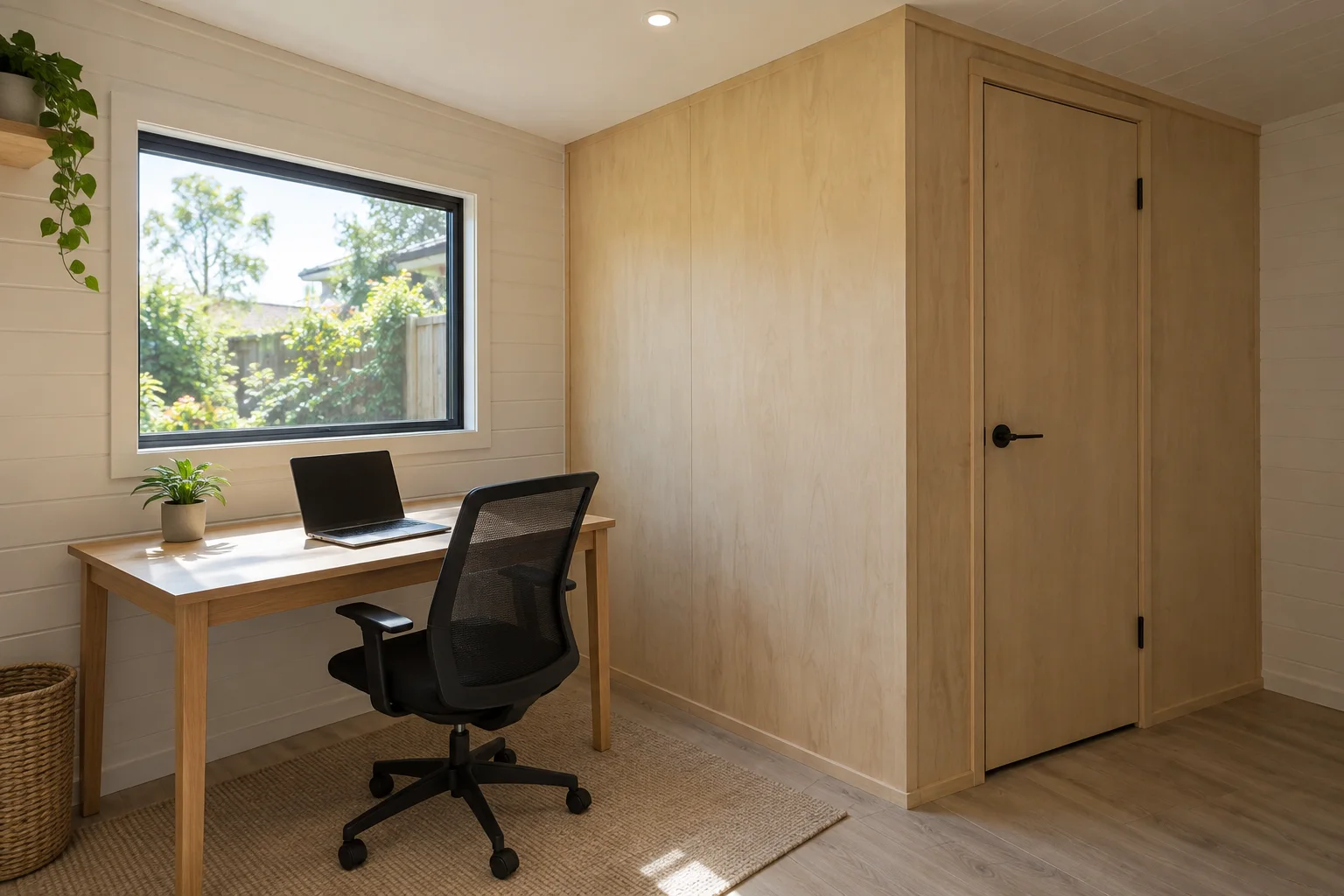
A sample furnished unit or mockup can help staff assess routes, storage and access before a large order. Observe the proposed procedure and record the specific changes needed. Do not turn one trial into a universal productivity claim. Differences in occupancy, soil conditions and staffing affect performance. Use the trial to improve the layout and instructions, then retain the accepted arrangement for repeated units.
Before approving this detail, request a staff-reviewed mockup record with layout corrections and accepted operating instructions. Evidence should have a clear scope and a named reviewer, especially when the manufacturer and local installer perform different parts of the work. Record the accepted outcome and keep any conditional items open. This prevents a preliminary assumption from becoming a repeated production instruction without a deliberate decision.
The error to avoid is promising a fixed turnover time from an unobserved drawing alone. Resolve the gap before the adjoining work is purchased or concealed. Where two options look similar in the catalogue, compare the evidence, access for correction and effect on the rest of the package rather than treating the photograph as the specification.
A question to put in the buyer brief
What will the staff trial assess before this layout is repeated across the order?
Use a decision matrix to compare the complete proposal
A buyer can turn the questions above into a comparison sheet for rental cabin housekeeping design. Keep the original requirement in one column and each supplier's proposed answer in another. Compare like-for-like scope first; then assess how convincing the supporting evidence is. A missing answer should appear as pending, not as a zero-cost inclusion or an assumed pass.
Use three practical statuses: accepted with evidence, accepted subject to a named condition, and unresolved. Conditional acceptance needs an owner and a deadline before the affected work begins. It may be sensible to proceed with unrelated work while a detail is developed, but the team should explicitly identify the boundary. That is different from letting an unresolved detail silently spread across a multi-unit order.
Further reading: Related CabinWild buyer guide; Related CabinWild buyer guide; Browse cabin options; Discuss a project.
| Review item | Evidence to compare | Question that closes the gap |
|---|---|---|
| Map the actual turnover sequence | An operator-approved turnover sequence with supply, waste and inspection routes | What sequence and equipment will staff use to prepare this cabin between stays? |
| Review reach and furniture access | A furnished access review covering hard-to-reach surfaces and safe furniture movement | Which surfaces can staff reach safely without repeatedly moving heavy furniture? |
| Separate supplies and linen storage | A storage schedule showing clean supplies, used linen and cleaning materials by location | Where are clean linen, used items and cleaning supplies stored during each stage? |
| Specify finish compatibility with the routine | A surface-by-surface cleaning schedule tied to identified products and finish records | Which method is approved for each finish, and where are the product references kept? |
| Integrate defect reporting and service access | A room-ready checklist and location-based defect reporting procedure with accessible service panels | Which observations stop room release, and who assesses reported technical defects? |
| Trial the operating arrangement before repetition | A staff-reviewed mockup record with layout corrections and accepted operating instructions | What will the staff trial assess before this layout is repeated across the order? |
Worked buyer scenario: an illustrative decision sequence
A fictional glamping operator plans several identical cabins and reviews a furnished mockup with housekeeping staff. The bed placement blocks one wall junction, and the cleaning cart cannot stop outside the unit without narrowing the guest path. The operator revises access and the supply route before repeating the layout.
Staff also identify a cupboard intended for both fresh linen and cleaning chemicals. The storage schedule is separated according to the operating requirements, and finishes receive a product-specific cleaning list. A service panel is kept accessible so a reported plumbing issue does not require dismantling fitted furniture.
The mockup review records practical changes rather than a guaranteed turnover time. This hypothetical scenario reports no measured productivity, hygiene outcome or CabinWild operating history. It illustrates how staff requirements become reviewable layout and maintenance decisions.
Separate factory checks, delivery condition and the installed result
For this product application, identify which decisions can be confirmed from the accepted brief and which require physical evidence. Factory testing, if specified and actually performed, should have a defined method, sample and acceptance criterion. A supplier's demonstration is not automatically an independent test, and a component result does not prove the installed cabin's performance. Ask for the scope before putting any test wording in a purchase order.
At shipment inspection, compare the supplied items with the evidence list below. The purpose is to confirm the agreed package and condition at the stated stage, not to predict every destination outcome. Installation preparation should identify access, responsible trades and any hold point needed before an interface is covered. A gap found at that stage is often easier to correct than one found after a finished room has been furnished.
For repeated cabins, use an identified first unit or agreed representative sample before authorizing repetition of a new detail. Record what was checked, who checked it and what remains for site verification. Do not call the whole batch approved merely because one attractive unit has been photographed. Equally, do not impose unrelated checks that add delay without resolving the specific customer requirements.
- An operator-approved turnover sequence with supply, waste and inspection routes.
- A furnished access review covering hard-to-reach surfaces and safe furniture movement.
- A storage schedule showing clean supplies, used linen and cleaning materials by location.
- A surface-by-surface cleaning schedule tied to identified products and finish records.
- A room-ready checklist and location-based defect reporting procedure with accessible service panels.
- A staff-reviewed mockup record with layout corrections and accepted operating instructions.
Frequently asked questions
Can cabin design guarantee faster cleaning?
Design can remove obstacles, but staffing, procedure, occupancy and condition also matter. Observe the proposed operation before making any timing claim. Use mockups to identify access and storage improvements rather than promise a universal result.
Should housekeepers review the floor plan?
Yes, where they will operate the accommodation. Show actual furniture, routes, storage and service access. Their practical observations can reveal conflicts that a guest-focused rendering misses.
Does every cabin need a linen cupboard?
Not necessarily. Nearby support storage may serve some operations. What matters is a realistic route and arrangement for clean supplies, used linen and replenishment under the actual service model.
What belongs in the room-ready checklist?
Include observable condition, replenishment and defects that affect room release. Do not ask housekeeping to certify technical systems. Establish who assesses leaks, electrical issues or other specialist concerns.
How should finish repairs be managed?
Retain product identity, accepted samples and repair instructions. Stock appropriate replacement materials and log recurring damage. Consistent records make small repairs easier to repeat across multiple units.
Conclusion: include staff use in the purchasing brief
Turnover design is part of the product application, not an afterthought. Review the furnished layout, storage and cleaning instructions with the operator before repetition. Keep observable room checks distinct from specialist acceptance, and use evidence instead of unsupported productivity promises.
Send CabinWild your destination, intended use, quantity, drawing stage and the questions that remain open. Include the evidence you need in the quotation rather than asking only for a model price. Contact info@CabinWild.com to discuss the proposed cabin supply boundary and supporting documents. Local design, installation and approval responsibilities should be agreed with the destination professionals.
Discuss rental cabin housekeeping design
Send your destination, quantity, intended use and this specification question. Ask for a clearly bounded quotation and document list.
Prepared with AI assistance for CabinWild Editorial using the linked public sources. Examples are illustrative, not customer results or verified CabinWild test data. Project-specific design and local requirements need review by the appropriate professionals.