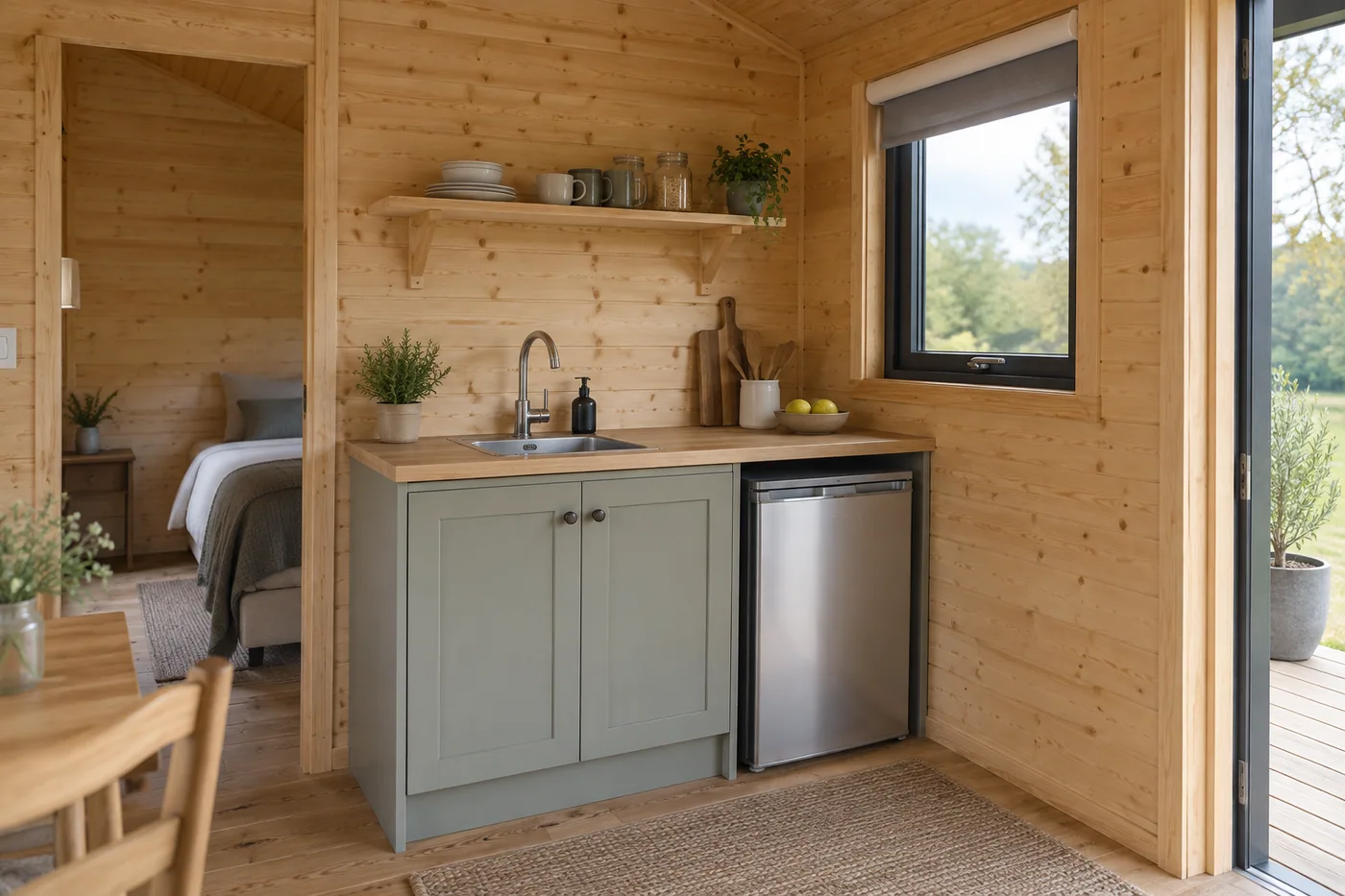
Specify a cabin kitchenette by the food activities the operator intends to support, not by a photograph of appliances. Define preparation, cooking, washing, storage and waste tasks, then coordinate equipment and services with competent local advisers. Keep guest self-catering separate from food prepared or supplied by the operator. The accepted brief should match both the supplied fit-out and the guest description.
Introduction: a kitchenette is an operating promise
A listing that advertises a cabin with kitchenette creates expectations. Guests may assume they can prepare a meal, keep food chilled or wash cookware, even when the supplied package only contains a kettle and a small sink. That mismatch begins as an unclear procurement brief and later becomes an operating problem.
The useful starting point is not a favourite cabinet style. It is a written description of the food activities the cabin will support. A drinks station, a reheating arrangement and a self-catering kitchen place different demands on space, equipment, cleaning and services. None of those descriptions should be treated as a formal legal classification without local advice.
This guide provides a buyer's operating brief and comparison method. It is not food-safety, plumbing or electrical design advice. Qualified local professionals and the relevant authority should review the actual operation. The scenarios are illustrative and do not describe CabinWild customer outcomes or establish that a particular appliance package is available.
1. Define permitted food activities before selecting appliances
List what guests are expected to do: make drinks, store breakfast items, reheat purchased food or cook a complete meal. Include whether food is supplied by the operator and whether preparation occurs inside the cabin or in a separate facility. Do not assume the word kitchenette communicates these decisions consistently to suppliers or visitors.
Describe the intended occupancy and stay pattern as project inputs, not as approved capacity. A brief stay with supplied breakfast may require a different storage and washing arrangement from a longer self-catering visit. The design team needs the actual operating assumptions to assess the proposed layout and services.
Also list activities the offer will not support. If the operator does not intend guests to use particular cooking equipment, the physical arrangement and guest information should be consistent with that policy. Avoid relying on a small disclaimer to correct a listing that prominently promises a full kitchen.
2. Compare operating models through tasks
The following comparison is a planning tool, not a legal or food-safety classification. Its purpose is to show why a single appliance list cannot define every cabin with kitchen. Have the relevant advisers review the chosen model for the location and business arrangement.
A more extensive fit-out is not automatically a better purchase. Additional equipment creates service, cleaning and maintenance questions. Conversely, omitting essential tasks from a low-cost package can leave the operator buying incompatible items later. Compare the complete proposed activity, not the number of appliances visible in the photograph.
| Illustrative offer | Tasks to define | Procurement questions |
|---|---|---|
| Drinks and light breakfast | Drink preparation, limited storage and washing | What is supplied, replenished and cleaned? |
| Reheating | Food storage, appliance use and utensil washing | Which equipment and work surfaces are required? |
| Guest self-catering | Preparation, cooking, washing and waste handling | Can the coordinated space and services support the brief? |
| Operator-supplied meals | Food sourcing, handling and service arrangements | Which local food-business requirements apply? |
| Shared camp kitchen | Cabin storage and access to communal facilities | What belongs in each cabin and what is provided elsewhere? |
3. Separate guest self-catering from operator food provision
An operator preparing or supplying food needs to understand the requirements for that activity. GOV.UK's current starting-a-food-business guidance addresses matters including premises and hygiene in its stated jurisdictions. Use it as a route to the relevant local advice, not as permission to operate a food service from any cabin kitchenette.
Do not automatically equate ordinary guest self-catering with running a food business inside each unit. Describe the actual activities to the appropriate local authority or adviser. The distinction depends on the operation, and a generic blog cannot determine the classification of an individual accommodation business.
Keep the resulting responsibilities in the operating brief. If staff prepare breakfast elsewhere, identify where cabin equipment fits into that process and who cleans or replenishes it. A supplier can quote a physical package, but it cannot infer every operating obligation from a request for a sink and refrigerator.
Further reading: GOV.UK: starting a food business.
4. Walk through preparation, washing and storage
Use the actual proposed equipment dimensions to examine the activity sequence. Where does food arrive, where is it stored, where is preparation intended and where do used items go? The exercise should expose conflicts before cabinetry is ordered. It should not be described as a professional hygiene approval or a substitute for the necessary review.
Include the occupied conditions rather than an empty-room photograph. Place the intended chairs, luggage and waste containers in the review. A cabinet door or appliance opening may use circulation space that looked available on the plan. Record the issue and ask the design team to evaluate an appropriate response.
Avoid solving every problem by adding storage. More cabinets can reduce usable work area or conceal service access. Compare the activity benefit with the effect on cleaning, maintenance and circulation. The goal is a coherent operating arrangement rather than the largest possible fit-out in the smallest footprint.
5. Create an appliance and supply responsibility schedule
For every proposed appliance or fixture, record the exact model when selected, supplier, installation responsibility and information needed by the local team. Mark illustrative items in renderings as illustrative. The buyer should not discover that the pictured appliance was never included when the cabin package arrives.
Have qualified professionals assess the relevant utility requirements and compatibility. This article does not provide electrical-load calculations, circuit design or water-service specifications. Procurement can collect the manufacturer's information and the operating brief, then ensure the competent team receives both before the equipment is approved.
Keep replacement and service considerations visible. Ask whether model information and instructions will be retained in the handover pack. Avoid claims that a particular model will always be available. The practical objective is to identify what was installed and how a future suitable replacement would be reviewed.
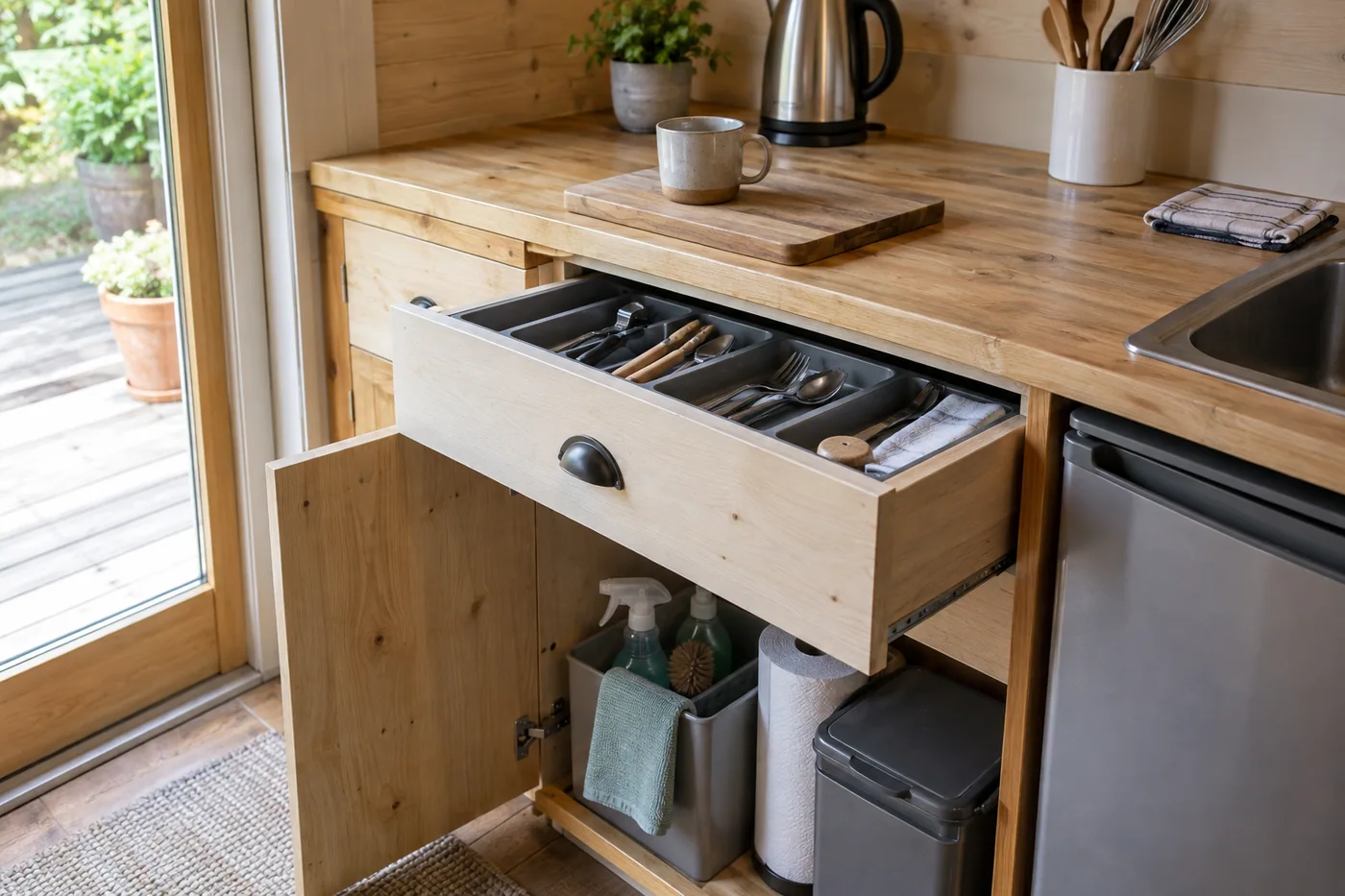
Turn these questions into a project brief
Send your intended guest offer, equipment list, location and known service conditions. Ask for an itemized cabin fit-out proposal with clear local-work exclusions.
6. Coordinate washing and sanitary facilities with the whole cabin
A cabin with kitchen and toilet contains several service interfaces that should be reviewed together. Identify who supplies the internal systems, who completes external connections and who verifies the completed installation. A fitted sink is not evidence that the site has suitable water and wastewater arrangements.
In England, Approved Document G is a relevant official reference for sanitation and water-related requirements within its scope. The actual design and applicable edition need local professional review. Do not apply an English requirement universally or assume that a compact accommodation label supplies an exemption.
Ask the team to preserve access for maintenance and cleaning when coordinating cabinets and services. A visually continuous cabinet front may conceal equipment that needs attention. The accepted arrangement should make the access method and responsible service route understandable to the operator after the installation team leaves.
Further reading: England: sanitation and water requirements in Approved Document G; Coordinate cabin bathroom and kitchen systems.
7. Design the reset between guests
Cleaning access and material information
Ask the operator's cleaning team to review the proposed surfaces, joins, removable items and storage. Identify tasks that require dismantling or moving equipment. The aim is to understand the real reset process before the fit-out is fixed, not to invent a universal cleaning duration or claim that a material is maintenance-free.
Request the relevant care information for the supplied finishes and equipment. Keep approved cleaning products and methods within their manufacturers' instructions and local requirements. A generic statement that a surface is easy to clean does not establish compatibility with every chemical or cleaning technique.
Consumables, utensils and waste
Decide what the operator supplies and what guests bring. Record the inventory needed for the declared meal activities, including how missing or damaged items are handled. A supplier's cabinet quotation may exclude all loose equipment, so keep those purchases in the complete operating budget.
Describe the waste route and storage arrangement for review by the appropriate team. Do not leave bins as an afterthought that blocks a service panel or circulation route. The selected operating model should work both during a stay and while the cabin is being prepared for the next one.
8. Match the brief to camp-house and outdoor kit formats
Camp house kits may be purchased for accommodation that relies on communal facilities. In that case, the cabin's food-related scope should complement the shared service rather than accidentally duplicate it. Make clear which tasks occur in the unit and which require a journey to another building.
Outdoor cabin kits can also be sold as shells with substantial local fit-out work remaining. Ask what wall, floor and service information is available before choosing cabinetry or appliances. The local designers and installers need to coordinate the actual system rather than treat the shell as an empty box with unlimited flexibility.
Compare fitted and locally completed options using the same accepted meal-service brief. Include coordination, installation, verification and operating equipment as separate scope lines. Do not claim a general cost advantage for either route without project-specific quotations and a consistent completion boundary.
Further reading: Plan camp cabins using shared facilities.
9. Request relevant factory and handover evidence
Factory testing and shipment inspection should be defined around the supplied scope. Ask which records relate to the actual unit and what remains for destination checks. A completed cabinet inspection does not establish the final electrical or plumbing installation, and a component manual does not prove that the component was installed as intended.
During installation preparation, reconcile the appliance schedule with local service information and the accepted layout. If a selected item changes, review its consequences before fitting it. Similar external dimensions do not prove identical service needs, clearances or maintenance arrangements.
At handover, retain the as-installed equipment information, relevant records and outstanding actions. The operator should know what can be used, what still requires attention and whom to contact. Keep this operational decision separate from the commercial fact that a package has been delivered.
10. Hypothetical example: breakfast service changes the fit-out decision
Imagine an operator initially requests a complete kitchenette in every cabin. A review of the proposed guest offer shows that breakfast will be supplied from a separate facility and that full self-catering is not part of the intended service. The original appliance list was copied from a competitor's photograph rather than derived from the operation.
The team compares a smaller in-cabin arrangement with the original package. It reviews guest expectations, food handling responsibilities, cleaning, storage and utility implications with the appropriate advisers. It also checks whether the revised offer can be described clearly and honestly in booking information.
The final choice might retain the larger package or adopt a different arrangement. This example does not prescribe the answer or claim a saving. It demonstrates how the meal-service brief can guide procurement before unnecessary or inadequate equipment becomes part of a repeated order.
A later decision to offer full self-catering would reopen the brief. The operator should not simply add portable equipment and assume the existing services and layout remain suitable. Treat a material change in activities as a reason for coordinated review, not merely a change in the guest welcome message.
11. Keep the guest description aligned with the supplied offer
Write the public equipment description from the accepted as-installed schedule, not from an early rendering. Distinguish a kitchenette from a complete kitchen by explaining the actual supported equipment and activities in clear language. Avoid claims that imply a service or facility the operator has not arranged.
Keep information consistent across the website, booking channels and onsite instructions. If a unit differs from the standard configuration, identify that difference accurately. A mixed cabin order may contain several fit-out versions, and a single generic description can create expectations that one of them cannot meet.
Review the description after equipment replacement or a change in the operating model. Configuration control is useful beyond construction: it helps the business describe the current product honestly. The update should follow the completed and reviewed change, not announce an improvement that is still only proposed.
Frequently asked questions
Is a sink and refrigerator a complete kitchenette?
It may support some activities, but the term alone does not define a complete operating offer. Describe what guests can actually do and coordinate the necessary space, equipment, cleaning and services. The appropriate package depends on the intended meal model and the applicable local review.
What changes if the operator supplies meals?
The actual food activity may bring additional business and hygiene responsibilities. Explain the operation to the relevant local authority or adviser rather than assuming guest self-catering guidance applies. Keep preparation, storage, service and cleaning responsibilities explicit in the brief and the resulting supplier scope.
Who checks appliance electrical requirements?
The competent local electrical and design professionals should assess the actual equipment and installation. Procurement can obtain the selected models' information and operating assumptions, but should not invent a circuit or capacity solution. Review substitutions before installation because similar-looking appliances can have different requirements.
Should utensils and cleaning supplies be included in the kit quote?
They should be explicitly included or excluded from the complete procurement plan. The cabin supplier may not provide loose operating equipment. Assign each item to a buyer or supplier scope so the declared meal service can be delivered without relying on an unplanned last-minute shopping list.
Can a shared camp kitchen reduce the in-cabin fit-out?
It may change which activities the cabin needs to support, but the decision should follow the actual guest offer and local requirements. Review access, operating arrangements and honest guest descriptions. Do not remove facilities solely to reduce the product price without checking the resulting accommodation experience.
Conclusion: purchase a supported meal experience
A cabin with kitchenette should be specified through the activities it supports and the responsibilities needed to keep it operating. Define the meal model, coordinate equipment and services, and retain a clear cleaning and handover plan. More appliances are not a substitute for a coherent brief.
Send CabinWild the location, intended guest offer and proposed equipment list. Ask for a package description that identifies what is supplied and what remains with local contractors or the operator, so the finished cabin can match the promise made to guests.
Specify your kitchenette package
Send your intended guest offer, equipment list, location and known service conditions. Ask for an itemized cabin fit-out proposal with clear local-work exclusions.
Prepared with AI assistance for CabinWild Editorial using the linked public sources. Examples are illustrative, not customer results or verified CabinWild test data. Project-specific design and local requirements need review by the appropriate professionals.