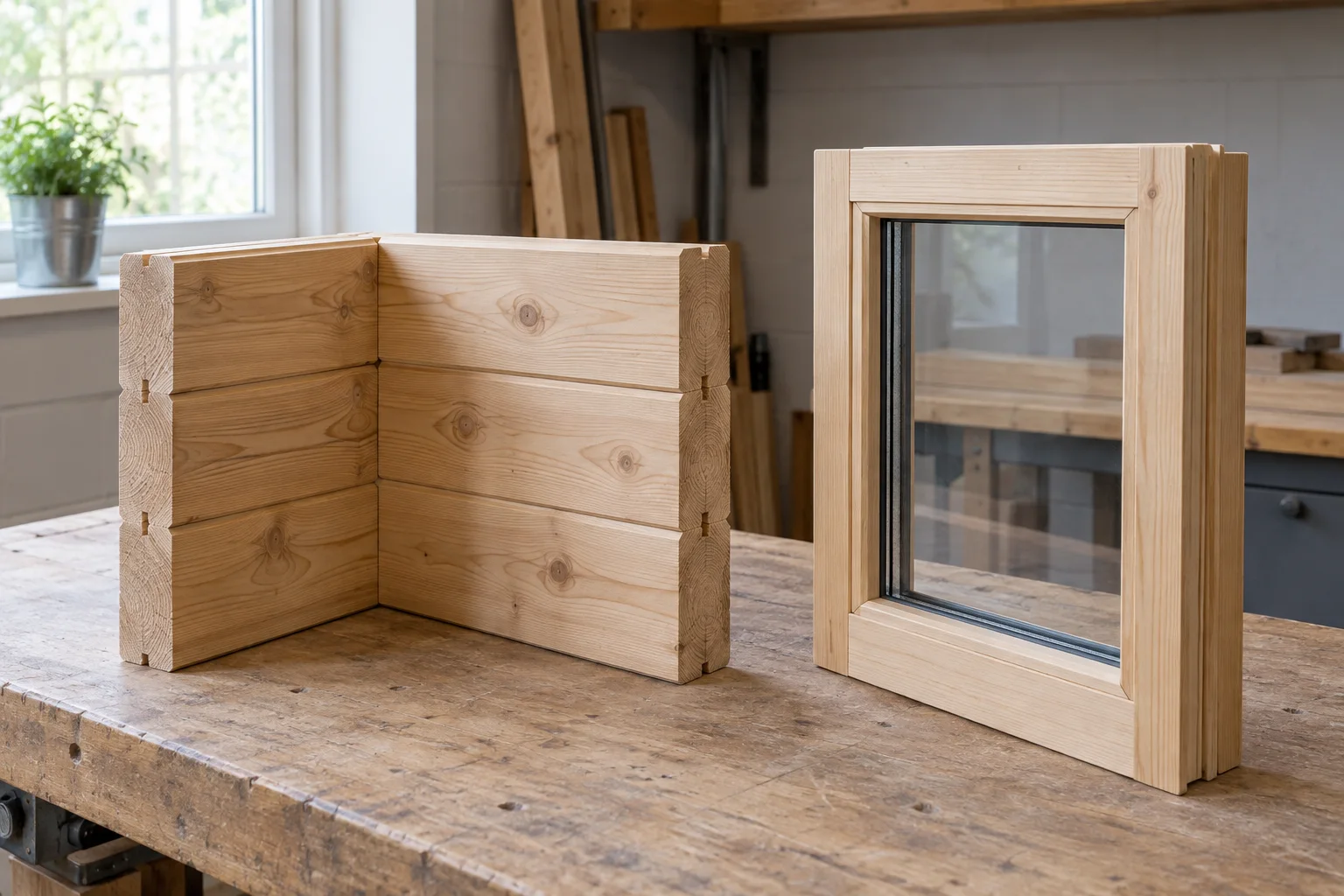
Cabin weather-tightness review should distinguish the window product from the installed opening, wall drainage and adjoining seals. Agree a suitable inspection or test method with competent specialists, including its limits. A casual hose demonstration cannot establish performance for every storm, and a product certificate does not verify the site-installed flashing.
Introduction: identify the source and type of moisture
Rainwater reaching the interior can originate above an opening, at a roof junction or through a service penetration rather than through the window itself. Buyers should ask for the water path and installation detail before assigning blame or ordering a new sealant. The aim is a reviewable envelope and a safe, agreed method of assessing it.
Cabin weather-tightness review should distinguish the window product from the installed opening, wall drainage and adjoining seals. Agree a suitable inspection or test method with competent specialists, including its limits. A casual hose demonstration cannot establish performance for every storm, and a product certificate does not verify the site-installed flashing.
This guide is written for buyers coordinating factory openings with destination envelope installation. Its examples are hypothetical purchasing and operating situations. Use the checks to prepare a precise brief for the cabin supplier and destination team; they do not establish that an unspecified cabin meets a particular performance level or local approval route.
Further reading: PNNL: windows and doors are fully flashed.
1. Identify the source and type of moisture
Separate rain entry from condensation, plumbing leaks and moisture retained during construction. Record timing, weather, location and whether the symptom appears on the surface or behind a lining. A damp patch does not automatically identify its source. The investigator should examine plausible paths before deciding which product or trade is responsible. This distinction matters when a purchaser compares product evidence with the installed condition.
A useful starting record is a location and timing record distinguishing observed rain entry from other moisture sources. Ask the person producing it to identify the cabin model, affected component and drawing revision. A document describing a different construction system may explain a principle, but it cannot establish acceptance of this package. Keep the answer with the quotation so that purchasing and technical reviewers are working from the same basis.
The error to avoid is calling every wet window surface a failed window product. Resolve the gap before the adjoining work is purchased or concealed. Where two options look similar in the catalogue, compare the evidence, access for correction and effect on the rest of the package rather than treating the photograph as the specification.
A question to put in the buyer brief
What observations support rain entry rather than condensation or a nearby service leak?
2. Review the installed water path
An opening detail should show how incidental water is directed outward without being trapped in the wall. PNNL explains integration of sill, jamb and head flashing with the water-control layer. The precise assembly still needs to match the product and wall system. Ask how the detail drains at its lowest point and remains compatible with trim, movement and cladding. Sealing everything indiscriminately can obstruct an intended drainage path.
Compare the proposed approach using an opening section showing flashing integration and the intended outward drainage route. The important question is not whether a supplier can send more photographs; it is whether the information resolves this decision. Identify what can be checked before an order and what requires a site observation. If there is a limitation, record it alongside the proposal rather than hiding it in a later email.
The error to avoid is closing a drainage path while trying to make every visible gap look sealed. Resolve the gap before the adjoining work is purchased or concealed. Where two options look similar in the catalogue, compare the evidence, access for correction and effect on the rest of the package rather than treating the photograph as the specification.
Further reading: EPA: moisture control guidance.
A question to put in the buyer brief
Where does water drain if it reaches the concealed part of this opening?
3. Keep product performance evidence in scope
A tested window product has defined dimensions, configuration and installation assumptions. Verify that the offered item matches the evidence and that any limitations are understood. Product evidence does not automatically cover the surrounding cabin wall or site-applied flashing. Ask which parts of the performance statement belong to the product and which require installed assembly review. Avoid transferring a rating from a different opening configuration.
Before approving this detail, request identified window evidence with its configuration and installation limitations. Evidence should have a clear scope and a named reviewer, especially when the manufacturer and local installer perform different parts of the work. Record the accepted outcome and keep any conditional items open. This prevents a preliminary assumption from becoming a repeated production instruction without a deliberate decision.
The error to avoid is using a certificate for another window size or system as universal envelope evidence. Resolve the gap before the adjoining work is purchased or concealed. Where two options look similar in the catalogue, compare the evidence, access for correction and effect on the rest of the package rather than treating the photograph as the specification.
A question to put in the buyer brief
Which offered opening configuration is covered, and what surrounding work is excluded?
4. Agree a safe and meaningful test method
If testing is required, have competent specialists define method, conditions, acceptance and protection of unfinished work. A hose sprayed randomly at a completed cabin is not automatically a standardized test. An unsuitable procedure can damage finishes or produce a misleading result. Identify the purpose: locating a leak, verifying a corrected junction or meeting a specified acceptance requirement. Those purposes may call for different procedures and reporting.
A useful starting record is a specialist-agreed test protocol stating purpose, conditions and limitations. Ask the person producing it to identify the cabin model, affected component and drawing revision. A document describing a different construction system may explain a principle, but it cannot establish acceptance of this package. Keep the answer with the quotation so that purchasing and technical reviewers are working from the same basis.
The error to avoid is treating an improvised hose demonstration as proof of universal storm resistance. Resolve the gap before the adjoining work is purchased or concealed. Where two options look similar in the catalogue, compare the evidence, access for correction and effect on the rest of the package rather than treating the photograph as the specification.
A question to put in the buyer brief
What recognized or agreed method answers the specific acceptance question without unnecessary damage?
Turn these questions into a project brief
Send your destination, quantity, intended use and this specification question. Ask for a clearly bounded quotation and document list.
5. Inspect before concealed interfaces are closed
Photograph and record the actual opening installation while flashing laps and drainage paths remain visible. Confirm that adjoining products and substrates match the accepted detail. A final exterior photograph cannot show a missing concealed junction. Where factory and destination teams complete different stages, assign a handover inspection between them. Record corrections before trim rather than asking the later investigator to infer what lies behind it.
Compare the proposed approach using pre-concealment opening photographs linked to unit, location and accepted detail. The important question is not whether a supplier can send more photographs; it is whether the information resolves this decision. Identify what can be checked before an order and what requires a site observation. If there is a limitation, record it alongside the proposal rather than hiding it in a later email.
The error to avoid is relying on finished cladding photographs to prove concealed flashing continuity. Resolve the gap before the adjoining work is purchased or concealed. Where two options look similar in the catalogue, compare the evidence, access for correction and effect on the rest of the package rather than treating the photograph as the specification.
Further reading: PNNL: flashing wall penetrations.
A question to put in the buyer brief
Who checks the concealed flashing and drainage interfaces before trim is completed?
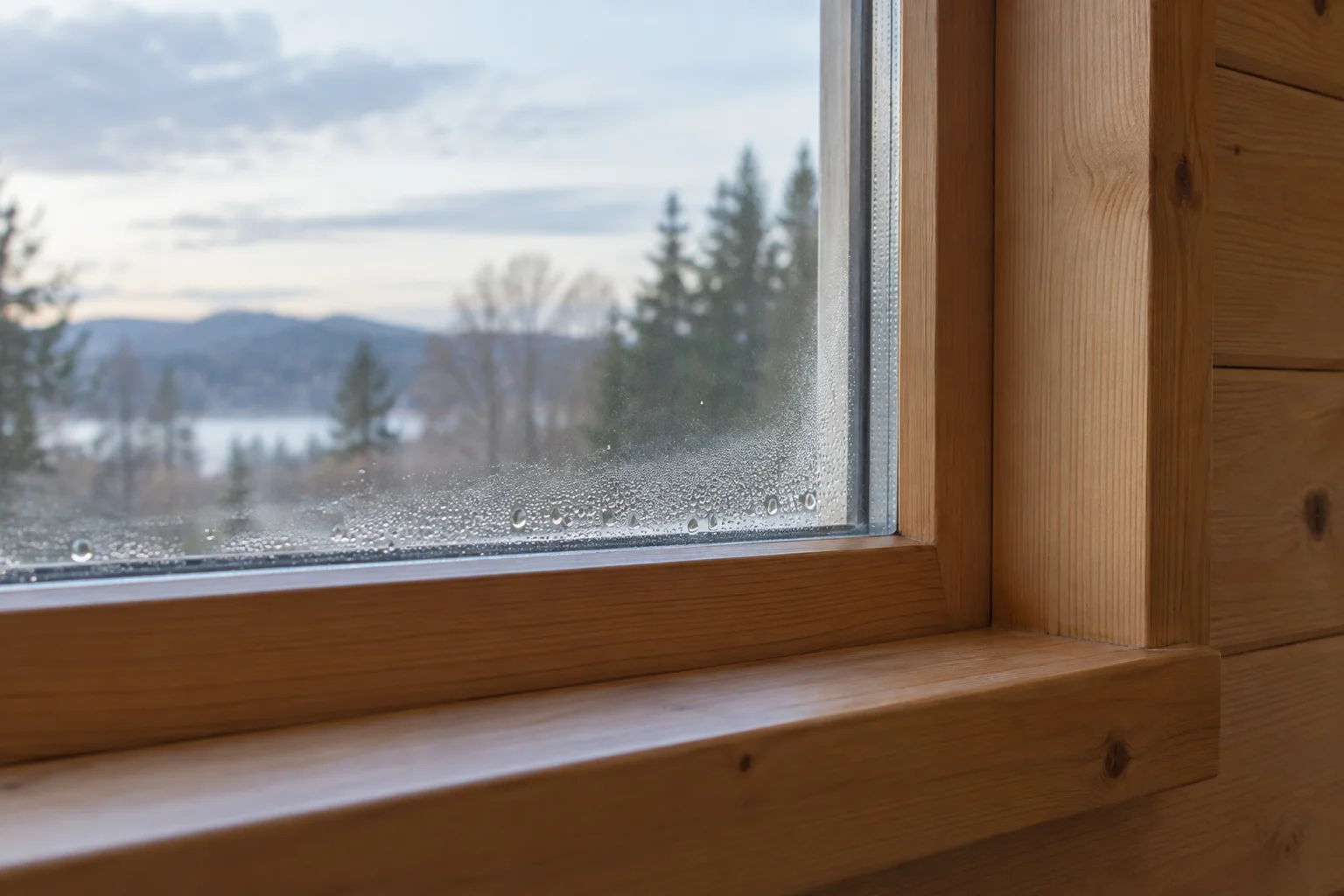
6. Investigate and verify repairs systematically
When water is observed, preserve evidence and assess the route before removing parts or applying a broad bead of sealant. Agree the repair with the responsible technical reviewer and retain the corrected detail. Verification should address the identified cause under the agreed method. A dry interior on one calm day is not equivalent to closure of a rain-entry problem. Keep limitations and follow-up observations visible.
Before approving this detail, request a cause assessment, accepted repair detail and verification record for the affected opening. Evidence should have a clear scope and a named reviewer, especially when the manufacturer and local installer perform different parts of the work. Record the accepted outcome and keep any conditional items open. This prevents a preliminary assumption from becoming a repeated production instruction without a deliberate decision.
The error to avoid is masking a symptom with sealant without establishing the original water path. Resolve the gap before the adjoining work is purchased or concealed. Where two options look similar in the catalogue, compare the evidence, access for correction and effect on the rest of the package rather than treating the photograph as the specification.
A question to put in the buyer brief
How will the repair address the identified cause and be checked under the agreed method?
Use a decision matrix to compare the complete proposal
A buyer can turn the questions above into a comparison sheet for cabin rain leakage checks. Keep the original requirement in one column and each supplier's proposed answer in another. Compare like-for-like scope first; then assess how convincing the supporting evidence is. A missing answer should appear as pending, not as a zero-cost inclusion or an assumed pass.
Use three practical statuses: accepted with evidence, accepted subject to a named condition, and unresolved. Conditional acceptance needs an owner and a deadline before the affected work begins. It may be sensible to proceed with unrelated work while a detail is developed, but the team should explicitly identify the boundary. That is different from letting an unresolved detail silently spread across a multi-unit order.
Further reading: Related CabinWild buyer guide; Related CabinWild buyer guide; Browse cabin options; Discuss a project.
| Review item | Evidence to compare | Question that closes the gap |
|---|---|---|
| Identify the source and type of moisture | A location and timing record distinguishing observed rain entry from other moisture sources | What observations support rain entry rather than condensation or a nearby service leak? |
| Review the installed water path | An opening section showing flashing integration and the intended outward drainage route | Where does water drain if it reaches the concealed part of this opening? |
| Keep product performance evidence in scope | Identified window evidence with its configuration and installation limitations | Which offered opening configuration is covered, and what surrounding work is excluded? |
| Agree a safe and meaningful test method | A specialist-agreed test protocol stating purpose, conditions and limitations | What recognized or agreed method answers the specific acceptance question without unnecessary damage? |
| Inspect before concealed interfaces are closed | Pre-concealment opening photographs linked to unit, location and accepted detail | Who checks the concealed flashing and drainage interfaces before trim is completed? |
| Investigate and verify repairs systematically | A cause assessment, accepted repair detail and verification record for the affected opening | How will the repair address the identified cause and be checked under the agreed method? |
Worked buyer scenario: an illustrative decision sequence
A fictional purchaser sees a wet patch below a cabin window after rainfall. The project team records weather and location, then checks the roof, wall and opening rather than immediately ordering replacement glazing. The review distinguishes the window product evidence from the concealed installation details completed at the destination.
Pre-concealment records indicate a questionable flashing interface. A competent reviewer defines a focused investigation and accepted repair; the team does not use an uncontrolled high-pressure spray as a shortcut. The repair preserves the outward drainage route and is verified for the specific problem under the agreed conditions.
The unit record retains the symptom, cause assessment and correction. The team reviews corresponding details on repeated units without asserting that every window has failed. This hypothetical example reports no CabinWild leak, test result or certified weather-tightness level.
Separate factory checks, delivery condition and the installed result
For this product application, identify which decisions can be confirmed from the accepted brief and which require physical evidence. Factory testing, if specified and actually performed, should have a defined method, sample and acceptance criterion. A supplier's demonstration is not automatically an independent test, and a component result does not prove the installed cabin's performance. Ask for the scope before putting any test wording in a purchase order.
At shipment inspection, compare the supplied items with the evidence list below. The purpose is to confirm the agreed package and condition at the stated stage, not to predict every destination outcome. Installation preparation should identify access, responsible trades and any hold point needed before an interface is covered. A gap found at that stage is often easier to correct than one found after a finished room has been furnished.
For repeated cabins, use an identified first unit or agreed representative sample before authorizing repetition of a new detail. Record what was checked, who checked it and what remains for site verification. Do not call the whole batch approved merely because one attractive unit has been photographed. Equally, do not impose unrelated checks that add delay without resolving the specific customer requirements.
- A location and timing record distinguishing observed rain entry from other moisture sources.
- An opening section showing flashing integration and the intended outward drainage route.
- Identified window evidence with its configuration and installation limitations.
- A specialist-agreed test protocol stating purpose, conditions and limitations.
- Pre-concealment opening photographs linked to unit, location and accepted detail.
- A cause assessment, accepted repair detail and verification record for the affected opening.
Frequently asked questions
Does a window certificate prove the cabin is weather-tight?
It supports the identified product within its tested or declared scope. It does not automatically verify wall flashing, site joints or the whole cabin envelope. Review the offered configuration and surrounding installation separately.
Can I test a cabin with a garden hose?
Use a procedure agreed by competent specialists for the specific purpose. Random spraying may be misleading or damaging and is not automatically a recognized acceptance test. Clarify conditions and limitations before relying on any demonstration.
Should every gap around a window be sealed?
Follow the accepted assembly detail. Some openings are part of an intended drainage or movement strategy. Filling them indiscriminately can interfere with water management. Have the installation reviewer identify the function before alteration.
How can I distinguish rain leakage from condensation?
Record weather, timing, location and the surface or concealed condition, then investigate plausible sources. A wet patch alone is insufficient diagnosis. Use competent assessment where the cause is unclear or concealed damage may be present.
When should flashing be inspected?
Inspect and record important interfaces before trim or cladding conceals them. Assign responsibility across factory and destination work. Finished photographs cannot establish the completeness of a hidden drainage detail.
Conclusion: verify the water path and the installed detail
A useful weather-tightness review starts with the source of moisture and the complete drainage path. Keep product evidence, concealed installation and any test procedure in their proper scope. Investigate causes and retain correction records instead of relying on an unexplained spray demonstration.
Send CabinWild your destination, intended use, quantity, drawing stage and the questions that remain open. Include the evidence you need in the quotation rather than asking only for a model price. Contact info@CabinWild.com to discuss the proposed cabin supply boundary and supporting documents. Local design, installation and approval responsibilities should be agreed with the destination professionals.
Discuss cabin rain leakage checks
Send your destination, quantity, intended use and this specification question. Ask for a clearly bounded quotation and document list.
Prepared with AI assistance for CabinWild Editorial using the linked public sources. Examples are illustrative, not customer results or verified CabinWild test data. Project-specific design and local requirements need review by the appropriate professionals.