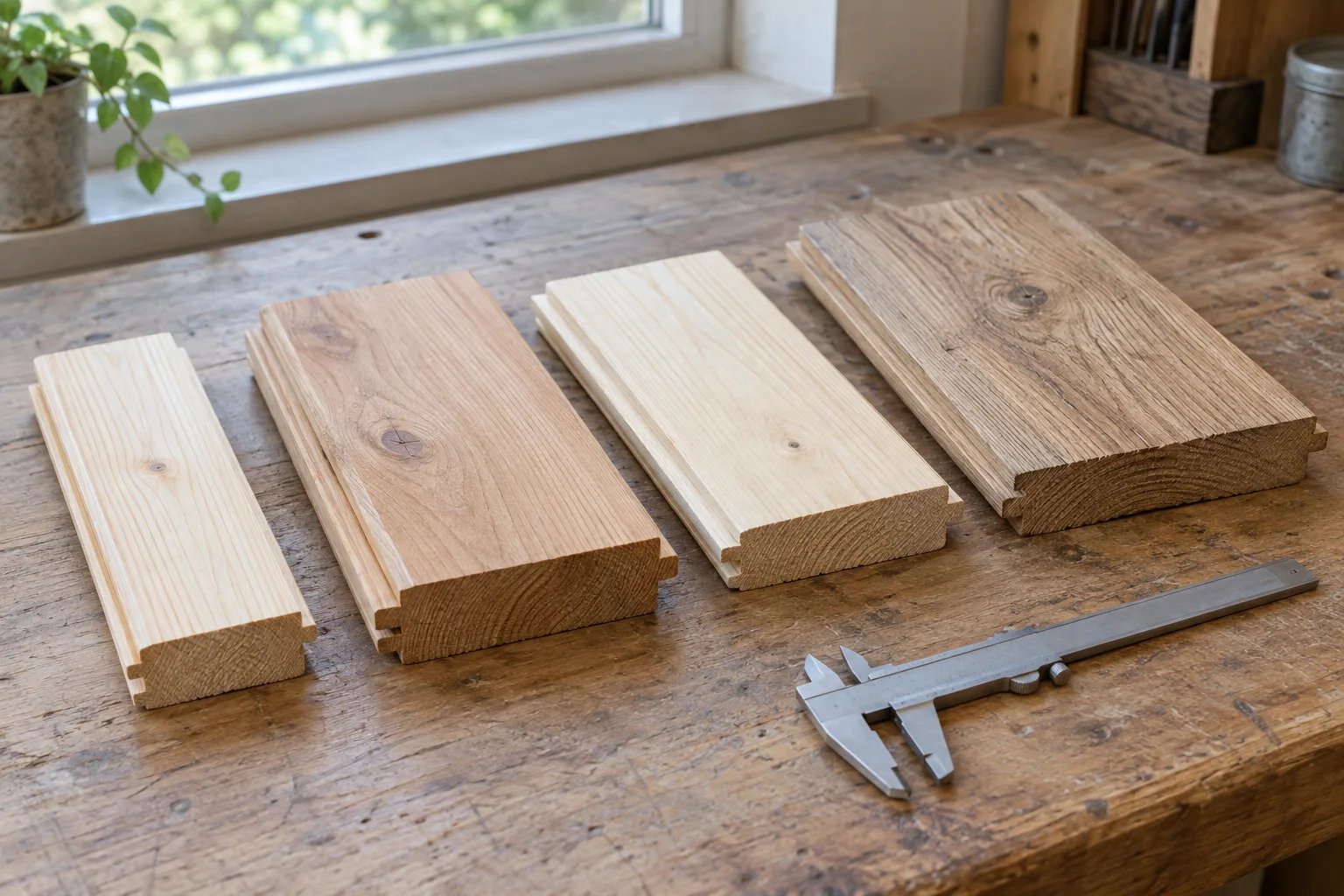
Compare engineered and solid timber by the job of each component, accepted design evidence, exposure conditions and connection details. Glulam, LVL and solid-sawn members are not interchangeable labels. A substitution needs review of dimensions, design values, service conditions and installation instructions rather than a general claim that one material is always better.
Introduction: compare identified products at component level
A quotation may offer engineered beams as an upgrade while another emphasizes solid wood. Neither description tells a buyer whether the specified members suit the proposed span, connections and destination approval route. The practical question is which identified product performs the required job with usable evidence and a suitable protection strategy.
Compare engineered and solid timber by the job of each component, accepted design evidence, exposure conditions and connection details. Glulam, LVL and solid-sawn members are not interchangeable labels. A substitution needs review of dimensions, design values, service conditions and installation instructions rather than a general claim that one material is always better.
This guide is written for buyers comparing material schedules or reviewing a proposed structural substitution. Its examples are hypothetical purchasing and operating situations. Use the checks to prepare a precise brief for the cabin supplier and destination team; they do not establish that an unspecified cabin meets a particular performance level or local approval route.
Further reading: APA: Engineered Wood Construction Guide.
1. Compare identified products at component level
Identify which parts are solid-sawn timber, glued laminated timber, structural composite lumber or panels. Keep structural members separate from decorative laminations. A broad description such as engineered timber cabin can conceal several distinct products with different documentation. Ask for the exact material schedule and product identification. Evaluate the beam, joist or panel in its actual role rather than awarding the entire building one material score.
A useful starting record is a component map identifying product type, manufacturer and structural or decorative role. Ask the person producing it to identify the cabin model, affected component and drawing revision. A document describing a different construction system may explain a principle, but it cannot establish acceptance of this package. Keep the answer with the quotation so that purchasing and technical reviewers are working from the same basis.
The error to avoid is assuming every laminated-looking item has the same structural product classification. Resolve the gap before the adjoining work is purchased or concealed. Where two options look similar in the catalogue, compare the evidence, access for correction and effect on the rest of the package rather than treating the photograph as the specification.
A question to put in the buyer brief
Which identified timber product is proposed for each load-bearing component?
2. Use design values and grading evidence
Solid-sawn members need usable species and grade information; engineered products need the relevant product-specific design documentation. Ask the destination engineer whether that information is accepted for the proposed design route. A more uniform appearance does not establish the capacity of an unidentified member. APA distinguishes several engineered product families, which helps buyers ask precise questions without turning general guidance into a calculation for their project.
Compare the proposed approach using grade or product-specific design documentation assessed by the destination structural reviewer. The important question is not whether a supplier can send more photographs; it is whether the information resolves this decision. Identify what can be checked before an order and what requires a site observation. If there is a limitation, record it alongside the proposal rather than hiding it in a later email.
The error to avoid is selecting a structural member by appearance or a generic strength comparison. Resolve the gap before the adjoining work is purchased or concealed. Where two options look similar in the catalogue, compare the evidence, access for correction and effect on the rest of the package rather than treating the photograph as the specification.
Further reading: US Forest Service: Wood Handbook.
A question to put in the buyer brief
What recognized design information supports this member in the proposed assembly?
3. Review exposure and moisture conditions
Engineered timber still contains wood and must be used within the conditions permitted for the identified product. Review manufacture, temporary exposure, service environment and protection of ends and connections. Do not assume that adhesive makes every product suitable for continuous outdoor exposure. Solid timber also needs a durability strategy. The comparison should address the actual application and protection details, including what happens before the weather envelope is completed.
Before approving this detail, request product instructions stating permitted service conditions and temporary exposure precautions. Evidence should have a clear scope and a named reviewer, especially when the manufacturer and local installer perform different parts of the work. Record the accepted outcome and keep any conditional items open. This prevents a preliminary assumption from becoming a repeated production instruction without a deliberate decision.
The error to avoid is assuming an engineered product is waterproof because its layers are bonded. Resolve the gap before the adjoining work is purchased or concealed. Where two options look similar in the catalogue, compare the evidence, access for correction and effect on the rest of the package rather than treating the photograph as the specification.
A question to put in the buyer brief
Which exposure conditions are permitted for this product during transport, assembly and use?
4. Coordinate dimensions and connections
A substitute can change member depth, bearing, connector geometry and hole restrictions. Those changes affect other parts of the cabin even if the plan footprint stays constant. Ask for revised connection details and installation instructions before approval. Site cutting or drilling should follow the identified product and engineering requirements. Do not leave the installer to adapt a connector that was selected for a different member type.
A useful starting record is revised member and connection drawings including permitted cuts, holes and bearing conditions. Ask the person producing it to identify the cabin model, affected component and drawing revision. A document describing a different construction system may explain a principle, but it cannot establish acceptance of this package. Keep the answer with the quotation so that purchasing and technical reviewers are working from the same basis.
The error to avoid is treating equal external dimensions as proof that two structural members are interchangeable. Resolve the gap before the adjoining work is purchased or concealed. Where two options look similar in the catalogue, compare the evidence, access for correction and effect on the rest of the package rather than treating the photograph as the specification.
A question to put in the buyer brief
What connection or cutting instructions change if this member is substituted?
Turn these questions into a project brief
Send your destination, quantity, intended use and this specification question. Ask for a clearly bounded quotation and document list.
5. Separate visible finish from structural acceptance
Decide whether exposed members need an appearance standard as well as structural evidence. Knots, finger joints or lamination lines can matter to the interior concept without defining structural adequacy. Request representative finished samples under suitable lighting. Record which faces will be visible and how minor surface damage will be assessed. The buyer should understand the expected appearance rather than mistake normal product characteristics for a hidden defect after delivery.
Compare the proposed approach using representative exposed-face samples and an agreed visual acceptance description. The important question is not whether a supplier can send more photographs; it is whether the information resolves this decision. Identify what can be checked before an order and what requires a site observation. If there is a limitation, record it alongside the proposal rather than hiding it in a later email.
The error to avoid is using a showroom sample as the sole acceptance standard for structural supply. Resolve the gap before the adjoining work is purchased or concealed. Where two options look similar in the catalogue, compare the evidence, access for correction and effect on the rest of the package rather than treating the photograph as the specification.
Further reading: US Forest Service: Wood Handbook.
A question to put in the buyer brief
Which visible characteristics are normal, and what finish sample governs the exposed members?
6. Evaluate the complete installed consequence
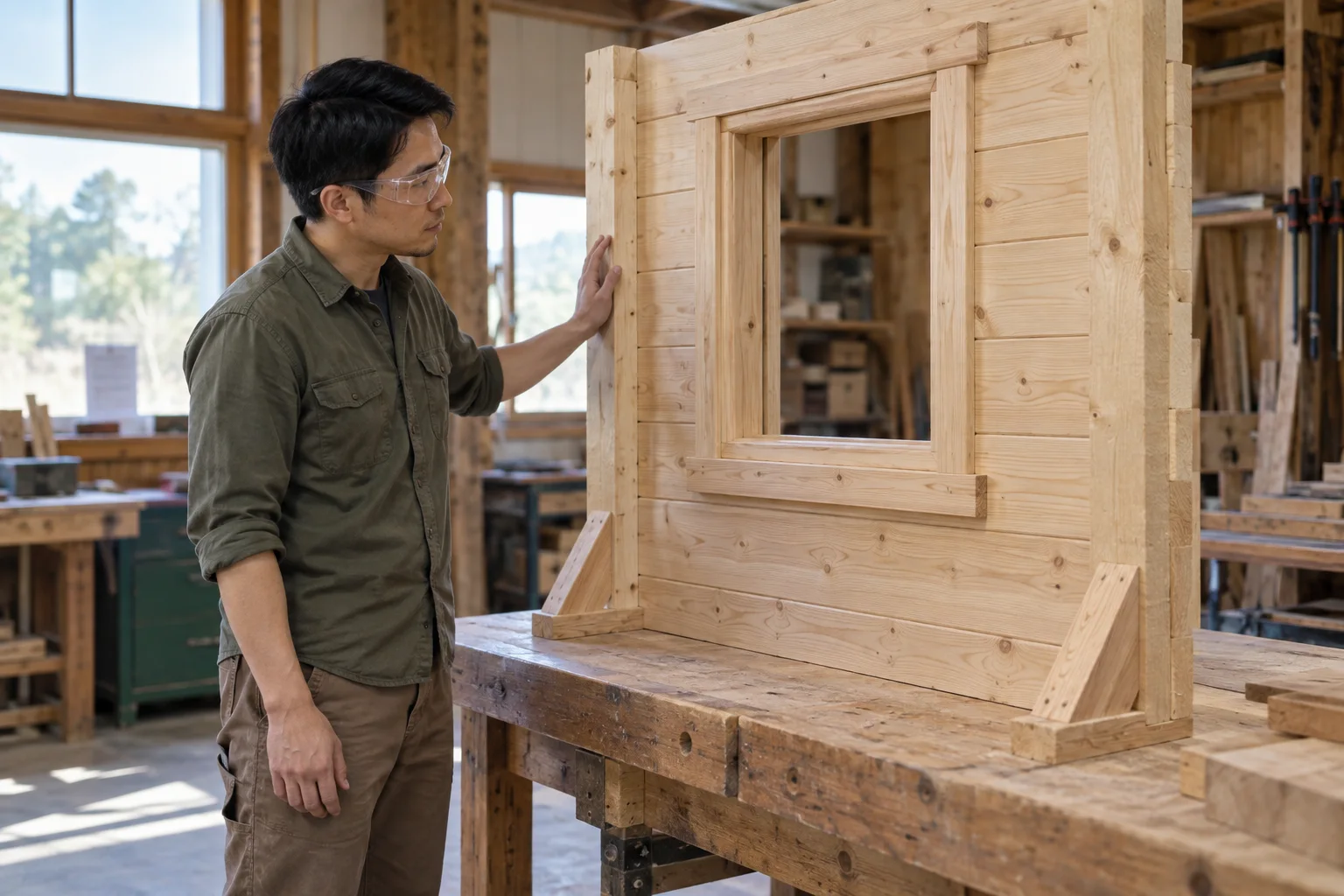
Compare the identified options with engineering effort, lead time, handling, protection and maintenance needs. Avoid an unsupported claim that either material is always cheaper or more sustainable. A technically suitable alternative can still create additional connection or approval work. Keep the comparison tied to the documented component and project, and approve substitutions before production rather than after the original items have already been cut.
Before approving this detail, request a substitution review covering design, connections, protection, appearance and supply consequences. Evidence should have a clear scope and a named reviewer, especially when the manufacturer and local installer perform different parts of the work. Record the accepted outcome and keep any conditional items open. This prevents a preliminary assumption from becoming a repeated production instruction without a deliberate decision.
The error to avoid is choosing a premium material label without comparing the complete installed scope. Resolve the gap before the adjoining work is purchased or concealed. Where two options look similar in the catalogue, compare the evidence, access for correction and effect on the rest of the package rather than treating the photograph as the specification.
A question to put in the buyer brief
What changes to documentation and adjacent work accompany this proposed material option?
Use a decision matrix to compare the complete proposal
A buyer can turn the questions above into a comparison sheet for engineered vs solid timber cabins. Keep the original requirement in one column and each supplier's proposed answer in another. Compare like-for-like scope first; then assess how convincing the supporting evidence is. A missing answer should appear as pending, not as a zero-cost inclusion or an assumed pass.
Use three practical statuses: accepted with evidence, accepted subject to a named condition, and unresolved. Conditional acceptance needs an owner and a deadline before the affected work begins. It may be sensible to proceed with unrelated work while a detail is developed, but the team should explicitly identify the boundary. That is different from letting an unresolved detail silently spread across a multi-unit order.
Further reading: Related CabinWild buyer guide; Related CabinWild buyer guide; Browse cabin options; Discuss a project.
| Review item | Evidence to compare | Question that closes the gap |
|---|---|---|
| Compare identified products at component level | A component map identifying product type, manufacturer and structural or decorative role | Which identified timber product is proposed for each load-bearing component? |
| Use design values and grading evidence | Grade or product-specific design documentation assessed by the destination structural reviewer | What recognized design information supports this member in the proposed assembly? |
| Review exposure and moisture conditions | Product instructions stating permitted service conditions and temporary exposure precautions | Which exposure conditions are permitted for this product during transport, assembly and use? |
| Coordinate dimensions and connections | Revised member and connection drawings including permitted cuts, holes and bearing conditions | What connection or cutting instructions change if this member is substituted? |
| Separate visible finish from structural acceptance | Representative exposed-face samples and an agreed visual acceptance description | Which visible characteristics are normal, and what finish sample governs the exposed members? |
| Evaluate the complete installed consequence | A substitution review covering design, connections, protection, appearance and supply consequences | What changes to documentation and adjacent work accompany this proposed material option? |
Worked buyer scenario: an illustrative decision sequence
In an illustrative cabin project, a buyer requests a wider living-room opening. The supplier offers an engineered beam instead of the previously specified solid member. The buyer first asks for exact product identification rather than accepting engineered wood as a sufficient description. A destination engineer reviews the proposed design information and bearing arrangement.
The review shows that the beam depth and connector details differ from the earlier design. The supplier updates the opening section and adjoining finish schedule. The buyer also asks how the exposed laminations will appear, using a representative sample that is separate from the structural acceptance record.
Transport and temporary exposure instructions are added to the receiving plan. The team compares the complete revised package rather than the beam price alone. This hypothetical scenario describes a review sequence; it does not establish the capacity, availability or approval of any CabinWild beam or product.
Separate factory checks, delivery condition and the installed result
For this product application, identify which decisions can be confirmed from the accepted brief and which require physical evidence. Factory testing, if specified and actually performed, should have a defined method, sample and acceptance criterion. A supplier's demonstration is not automatically an independent test, and a component result does not prove the installed cabin's performance. Ask for the scope before putting any test wording in a purchase order.
At shipment inspection, compare the supplied items with the evidence list below. The purpose is to confirm the agreed package and condition at the stated stage, not to predict every destination outcome. Installation preparation should identify access, responsible trades and any hold point needed before an interface is covered. A gap found at that stage is often easier to correct than one found after a finished room has been furnished.
For repeated cabins, use an identified first unit or agreed representative sample before authorizing repetition of a new detail. Record what was checked, who checked it and what remains for site verification. Do not call the whole batch approved merely because one attractive unit has been photographed. Equally, do not impose unrelated checks that add delay without resolving the specific customer requirements.
- A component map identifying product type, manufacturer and structural or decorative role.
- Grade or product-specific design documentation assessed by the destination structural reviewer.
- Product instructions stating permitted service conditions and temporary exposure precautions.
- Revised member and connection drawings including permitted cuts, holes and bearing conditions.
- Representative exposed-face samples and an agreed visual acceptance description.
- A substitution review covering design, connections, protection, appearance and supply consequences.
Frequently asked questions
Is engineered timber better than solid wood for cabins?
Neither is universally better. Compare the component role, identified product, accepted design information, exposure and connections. Different parts of the same cabin may appropriately use different timber products.
Can glulam replace a solid timber beam directly?
Only after competent review of the design and connections. Dimensions, bearing, fasteners, exposure and approval documentation may change. Similar appearance or nominal size is insufficient to establish interchangeability.
Is LVL the same as glulam?
No. They are distinct engineered product families with different construction and product documentation. Specify the identified product and assess its instructions and design information instead of treating the labels as synonyms.
Can engineered timber be exposed outdoors?
Suitability depends on the particular product and permitted service conditions. Review temporary exposure and long-term protection with the manufacturer and designer. Do not infer weather resistance from the presence of adhesive.
Should a buyer request appearance samples?
Yes, where members remain visible. Keep the finish sample and visual acceptance standard separate from structural grading or product evidence. A representative sample helps the buyer anticipate grain, joints and lamination lines.
Conclusion: approve the product and its interfaces
A meaningful timber comparison starts with identified components and accepted evidence. Review exposure, connections and appearance together, then compare the complete installed consequence. General material preferences become useful only when they are translated into an actual specification.
Send CabinWild your destination, intended use, quantity, drawing stage and the questions that remain open. Include the evidence you need in the quotation rather than asking only for a model price. Contact info@CabinWild.com to discuss the proposed cabin supply boundary and supporting documents. Local design, installation and approval responsibilities should be agreed with the destination professionals.
Discuss engineered vs solid timber cabins
Send your destination, quantity, intended use and this specification question. Ask for a clearly bounded quotation and document list.
Prepared with AI assistance for CabinWild Editorial using the linked public sources. Examples are illustrative, not customer results or verified CabinWild test data. Project-specific design and local requirements need review by the appropriate professionals.