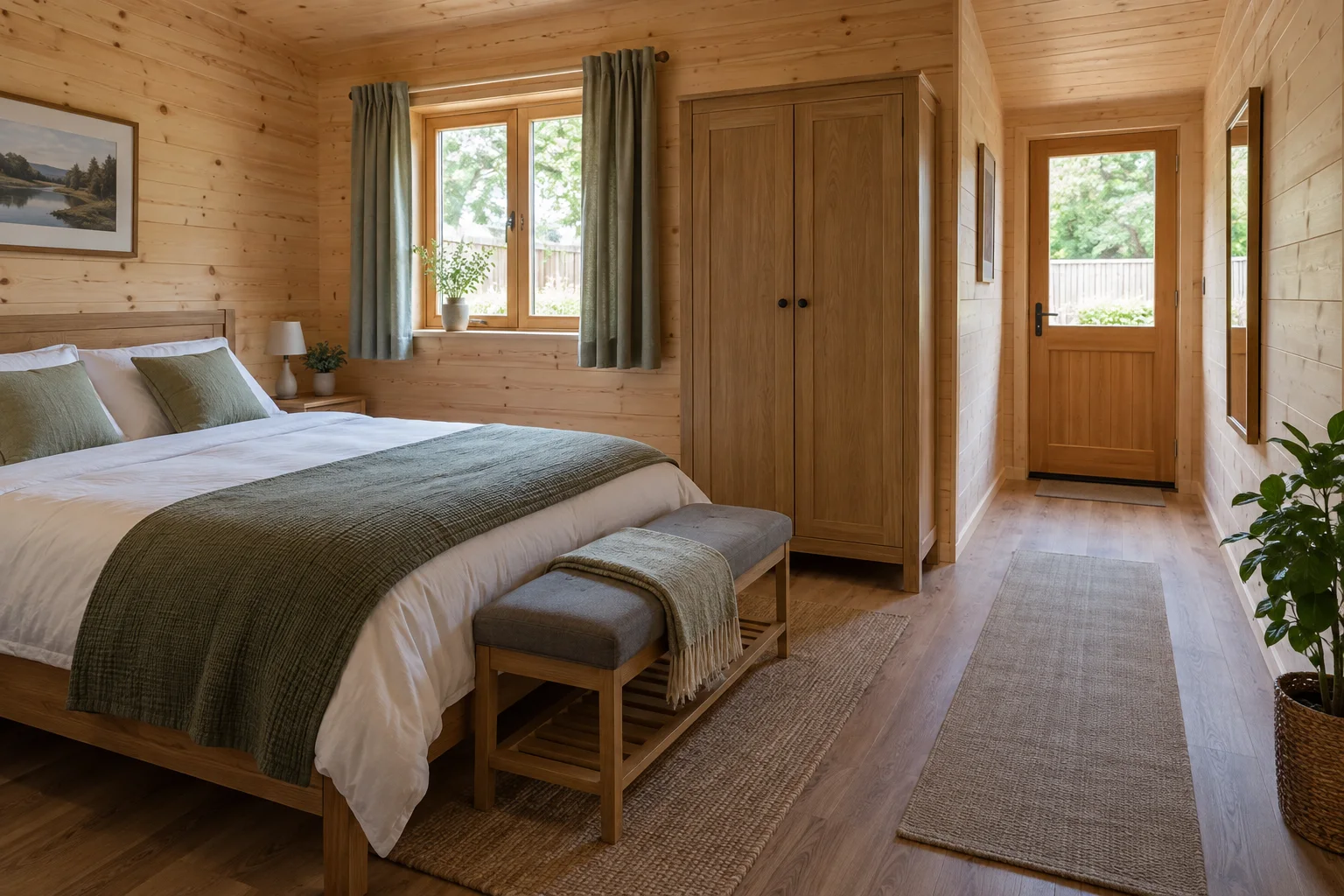
Pet-friendly cabin specification should prioritize cleanable, repairable surfaces, sensible entry storage and a clear operating policy. Review finish compatibility, wet-foot traffic, scratching and access for cleaning without promising a scratch-proof or allergen-free building. The material choice works best when it supports how staff actually turn over the room.
Introduction: define the pet-use policy and real wear pattern
Allowing dogs changes how guests use entrances, floors and furniture. A attractive cabin interior may have delicate finishes or inaccessible corners that are difficult to maintain. Buyers can make the accommodation easier to operate by treating pet use as a real customer requirement in the layout and finish brief rather than adding the label after opening.
Pet-friendly cabin specification should prioritize cleanable, repairable surfaces, sensible entry storage and a clear operating policy. Review finish compatibility, wet-foot traffic, scratching and access for cleaning without promising a scratch-proof or allergen-free building. The material choice works best when it supports how staff actually turn over the room.
This guide is written for rental operators planning pet-accepting cabins and repeatable refurbishment materials. Its examples are hypothetical purchasing and operating situations. Use the checks to prepare a precise brief for the cabin supplier and destination team; they do not establish that an unspecified cabin meets a particular performance level or local approval route.
Further reading: EPA: identifying greener cleaning products.
1. Define the pet-use policy and real wear pattern
Set out whether pets are allowed in all units, only selected units or specific parts of the accommodation. Identify likely wet-foot traffic, muddy arrivals and cleaning between stays. The policy should inform furniture and material decisions instead of implying that any cabin can absorb unlimited wear. Include storage for cleaning equipment and a procedure for damage reporting. Avoid promises that the environment is suitable for every allergy or animal.
A useful starting record is an operator brief defining permitted use, cleaning responsibilities and anticipated wear zones. Ask the person producing it to identify the cabin model, affected component and drawing revision. A document describing a different construction system may explain a principle, but it cannot establish acceptance of this package. Keep the answer with the quotation so that purchasing and technical reviewers are working from the same basis.
The error to avoid is adding a pet-friendly label without changing the finish and cleaning brief. Resolve the gap before the adjoining work is purchased or concealed. Where two options look similar in the catalogue, compare the evidence, access for correction and effect on the rest of the package rather than treating the photograph as the specification.
A question to put in the buyer brief
Which pet-use scenarios and operating rules must the cabin interior support?
2. Compare floor systems by cleanability and repair
Review the identified floor product, cleaning instructions, wetting limits and how damaged areas can be replaced. Hardness or a textured finish does not prove resistance to every claw or spill. Consider joints, thresholds and access under furnishings. Ask for a representative sample and a controlled comparison with the intended cleaning method. A documented product limitation is more useful than an unqualified scratch-proof claim.
Compare the proposed approach using floor samples with identified cleaning limits and a replacement method for damaged areas. The important question is not whether a supplier can send more photographs; it is whether the information resolves this decision. Identify what can be checked before an order and what requires a site observation. If there is a limitation, record it alongside the proposal rather than hiding it in a later email.
The error to avoid is treating a durable product label as a guarantee against every scratch and stain. Resolve the gap before the adjoining work is purchased or concealed. Where two options look similar in the catalogue, compare the evidence, access for correction and effect on the rest of the package rather than treating the photograph as the specification.
Further reading: EPA: moisture control guidance.
A question to put in the buyer brief
How can a damaged section be repaired, and which cleaning methods are permitted?
3. Choose wall and joinery finishes for touch and cleaning
Lower walls, door edges and furniture legs may experience frequent contact. Specify a finish suitable for the identified substrate and cleaning routine, and consider replaceable protection where appropriate. Do not coat natural timber indiscriminately with an incompatible product to make it washable. Agree the appearance of repair work and retain product identities. A simple repeatable finish can be operationally better than a complex custom effect that cannot be reproduced.
Before approving this detail, request identified wall and joinery finish samples with cleaning and local repair instructions. Evidence should have a clear scope and a named reviewer, especially when the manufacturer and local installer perform different parts of the work. Record the accepted outcome and keep any conditional items open. This prevents a preliminary assumption from becoming a repeated production instruction without a deliberate decision.
The error to avoid is specifying a decorative effect that cannot be repaired consistently between bookings. Resolve the gap before the adjoining work is purchased or concealed. Where two options look similar in the catalogue, compare the evidence, access for correction and effect on the rest of the package rather than treating the photograph as the specification.
A question to put in the buyer brief
Which contact areas need protection, and how will small finish repairs match the accepted sample?
4. Manage dirt and drying at the entrance
Plan where guests place wet footwear, leads, towels and pet equipment. An entry arrangement should avoid blocking the doorway or required access route. Outdoor washing or drying facilities require their own drainage and service review. Protect the cabin envelope from repeated uncontrolled wetting. The aim is a practical transition zone, not an assumption that staff will compensate for missing storage by piling supplies in the living space.
A useful starting record is an entry plan showing storage, drying and cleaning without obstructing the access route. Ask the person producing it to identify the cabin model, affected component and drawing revision. A document describing a different construction system may explain a principle, but it cannot establish acceptance of this package. Keep the answer with the quotation so that purchasing and technical reviewers are working from the same basis.
The error to avoid is letting wet equipment accumulate against timber surfaces or inside the door clearance. Resolve the gap before the adjoining work is purchased or concealed. Where two options look similar in the catalogue, compare the evidence, access for correction and effect on the rest of the package rather than treating the photograph as the specification.
A question to put in the buyer brief
Where will wet and dirty items be stored and dried without damaging the interior?
Turn these questions into a project brief
Send your destination, quantity, intended use and this specification question. Ask for a clearly bounded quotation and document list.
5. Make cleaning products compatible with the surfaces
Use product instructions to define cleaning chemicals, dilution and contact conditions. EPA guidance can support selection of greener cleaning products, but a label does not prove compatibility with every timber coating or suitability for every pet exposure. Review safety and cleaning needs with the operator and relevant product advisers. Test proposed routines on representative spare samples before repeating them across installed surfaces.
Compare the proposed approach using an approved cleaning-product list checked against finish and flooring instructions. The important question is not whether a supplier can send more photographs; it is whether the information resolves this decision. Identify what can be checked before an order and what requires a site observation. If there is a limitation, record it alongside the proposal rather than hiding it in a later email.
The error to avoid is assuming a safer-ingredient label means a cleaner suits every coating and use. Resolve the gap before the adjoining work is purchased or concealed. Where two options look similar in the catalogue, compare the evidence, access for correction and effect on the rest of the package rather than treating the photograph as the specification.
Further reading: EPA: moisture control guidance.
A question to put in the buyer brief
Which products and methods are approved for each identified surface?
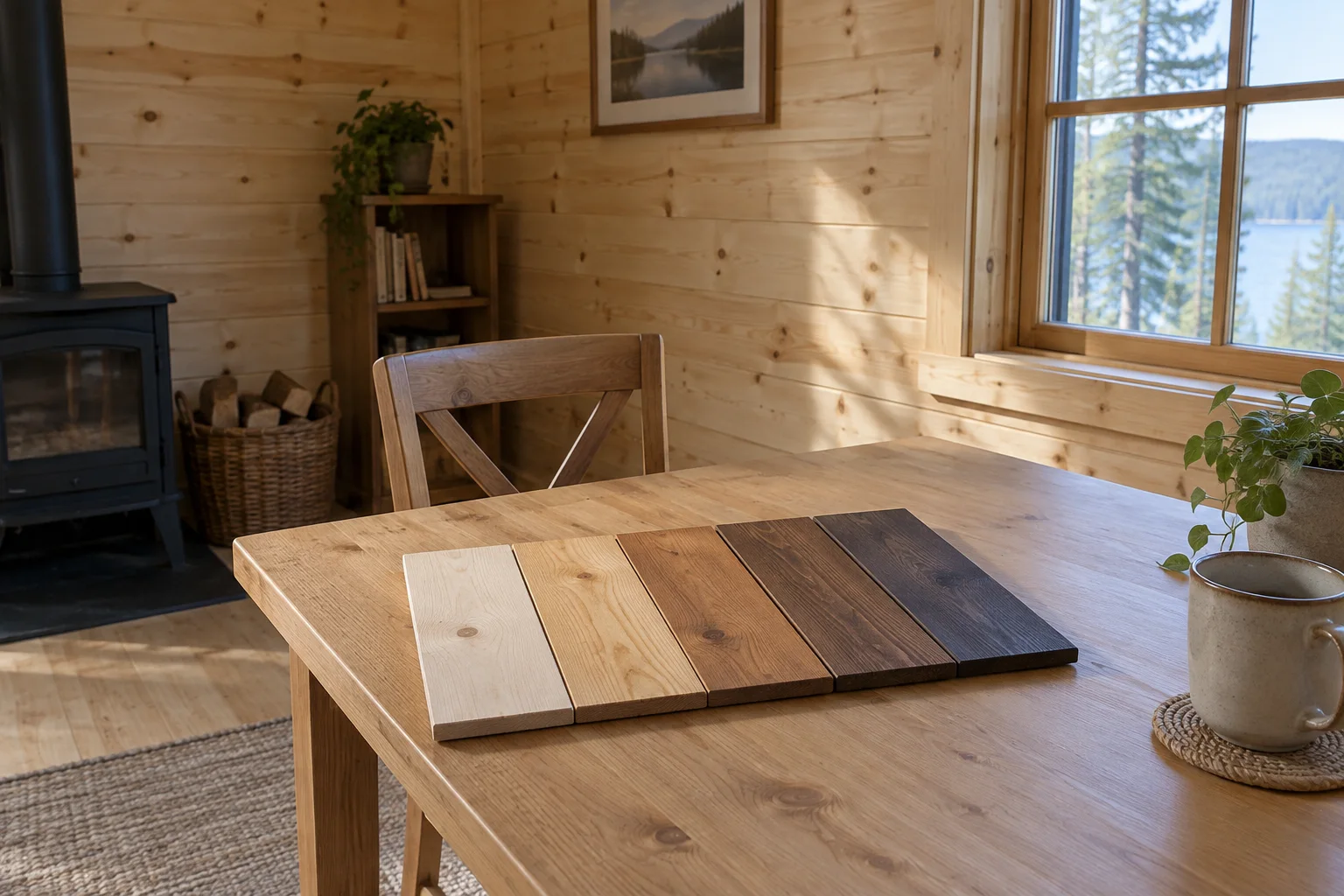
6. Keep spares and the operating claim realistic
Retain finish references and appropriate replacement components so routine damage does not require full-room refurbishment. State the pet policy clearly to guests and distinguish cleanability from disinfection or allergen claims. Staff should record recurring damage patterns and adjust the specification for future units. Do not market ordinary cabin materials as indestructible, permanently odour-free or universally safe for all animals without relevant evidence.
Before approving this detail, request a spare-material schedule and guest policy aligned with the accepted cleaning method. Evidence should have a clear scope and a named reviewer, especially when the manufacturer and local installer perform different parts of the work. Record the accepted outcome and keep any conditional items open. This prevents a preliminary assumption from becoming a repeated production instruction without a deliberate decision.
The error to avoid is promising an allergen-free or damage-proof cabin from ordinary material selections. Resolve the gap before the adjoining work is purchased or concealed. Where two options look similar in the catalogue, compare the evidence, access for correction and effect on the rest of the package rather than treating the photograph as the specification.
A question to put in the buyer brief
What spare materials and records support repeatable repairs during rental operation?
Use a decision matrix to compare the complete proposal
A buyer can turn the questions above into a comparison sheet for pet friendly rental cabin materials. Keep the original requirement in one column and each supplier's proposed answer in another. Compare like-for-like scope first; then assess how convincing the supporting evidence is. A missing answer should appear as pending, not as a zero-cost inclusion or an assumed pass.
Use three practical statuses: accepted with evidence, accepted subject to a named condition, and unresolved. Conditional acceptance needs an owner and a deadline before the affected work begins. It may be sensible to proceed with unrelated work while a detail is developed, but the team should explicitly identify the boundary. That is different from letting an unresolved detail silently spread across a multi-unit order.
Further reading: Related CabinWild buyer guide; Related CabinWild buyer guide; Browse cabin options; Discuss a project.
| Review item | Evidence to compare | Question that closes the gap |
|---|---|---|
| Define the pet-use policy and real wear pattern | An operator brief defining permitted use, cleaning responsibilities and anticipated wear zones | Which pet-use scenarios and operating rules must the cabin interior support? |
| Compare floor systems by cleanability and repair | Floor samples with identified cleaning limits and a replacement method for damaged areas | How can a damaged section be repaired, and which cleaning methods are permitted? |
| Choose wall and joinery finishes for touch and cleaning | Identified wall and joinery finish samples with cleaning and local repair instructions | Which contact areas need protection, and how will small finish repairs match the accepted sample? |
| Manage dirt and drying at the entrance | An entry plan showing storage, drying and cleaning without obstructing the access route | Where will wet and dirty items be stored and dried without damaging the interior? |
| Make cleaning products compatible with the surfaces | An approved cleaning-product list checked against finish and flooring instructions | Which products and methods are approved for each identified surface? |
| Keep spares and the operating claim realistic | A spare-material schedule and guest policy aligned with the accepted cleaning method | What spare materials and records support repeatable repairs during rental operation? |
Worked buyer scenario: an illustrative decision sequence
Imagine a hypothetical operator converting selected rental cabins to pet-accepting accommodation. The first proposal adds a sign but keeps a delicate floor finish and no drying space. The operator instead reviews entry traffic, cleaning access and repairability with the finish supplier before ordering the next units.
Representative samples are checked using the proposed cleaning routine within product instructions. The team selects a repair approach and records the finish identity. A small entry storage area is arranged without blocking the access route. Cleaning staff help identify awkward furniture gaps that would otherwise slow turnover.
The guest policy sets use boundaries and makes no allergen-free or damage-proof claim. This example describes operating choices rather than a CabinWild customer result or material test. It gives no guaranteed cleaning time, wear life or animal-safety conclusion.
Separate factory checks, delivery condition and the installed result
For this product application, identify which decisions can be confirmed from the accepted brief and which require physical evidence. Factory testing, if specified and actually performed, should have a defined method, sample and acceptance criterion. A supplier's demonstration is not automatically an independent test, and a component result does not prove the installed cabin's performance. Ask for the scope before putting any test wording in a purchase order.
At shipment inspection, compare the supplied items with the evidence list below. The purpose is to confirm the agreed package and condition at the stated stage, not to predict every destination outcome. Installation preparation should identify access, responsible trades and any hold point needed before an interface is covered. A gap found at that stage is often easier to correct than one found after a finished room has been furnished.
For repeated cabins, use an identified first unit or agreed representative sample before authorizing repetition of a new detail. Record what was checked, who checked it and what remains for site verification. Do not call the whole batch approved merely because one attractive unit has been photographed. Equally, do not impose unrelated checks that add delay without resolving the specific customer requirements.
- An operator brief defining permitted use, cleaning responsibilities and anticipated wear zones.
- Floor samples with identified cleaning limits and a replacement method for damaged areas.
- Identified wall and joinery finish samples with cleaning and local repair instructions.
- An entry plan showing storage, drying and cleaning without obstructing the access route.
- An approved cleaning-product list checked against finish and flooring instructions.
- A spare-material schedule and guest policy aligned with the accepted cleaning method.
Frequently asked questions
What is the best cabin flooring for dogs?
Compare identified products against the actual wear, wetting, cleaning and repair requirements. No surface is universally best or scratch-proof. Samples and product instructions help evaluate the proposed routine before ordering.
Can timber interiors be used in pet-friendly rentals?
They may be suitable with appropriate finish, contact protection and maintenance. Review the specific coating and substrate instructions. A timber appearance alone says little about permitted cleaning or repairability.
Should pet cabins have a separate entrance zone?
A practical transition area can help organize wet and dirty items. It should preserve the access route and protect timber from persistent wetting. The exact layout depends on cabin size and the operating policy.
Do safer cleaning labels prove coating compatibility?
No. They address their own criteria, not every surface or animal-use situation. Check the identified cleaner against floor and finish instructions and relevant safety requirements before adopting the routine.
Can I advertise an allergen-free pet cabin?
Do not make that claim without appropriate evidence. A pet-use policy and cleanable finishes do not establish removal of every allergen. Describe the actual accommodation and cleaning approach in a bounded, truthful way.
Conclusion: design for cleaning and repair before adding the label
Pet-friendly operation works better when surfaces, entry storage and maintenance records support the real use. Compare product limits, plan replaceable wear areas and involve cleaning staff in the brief. Keep the guest promise aligned with what the specification can actually demonstrate.
Send CabinWild your destination, intended use, quantity, drawing stage and the questions that remain open. Include the evidence you need in the quotation rather than asking only for a model price. Contact info@CabinWild.com to discuss the proposed cabin supply boundary and supporting documents. Local design, installation and approval responsibilities should be agreed with the destination professionals.
Discuss pet friendly rental cabin materials
Send your destination, quantity, intended use and this specification question. Ask for a clearly bounded quotation and document list.
Prepared with AI assistance for CabinWild Editorial using the linked public sources. Examples are illustrative, not customer results or verified CabinWild test data. Project-specific design and local requirements need review by the appropriate professionals.