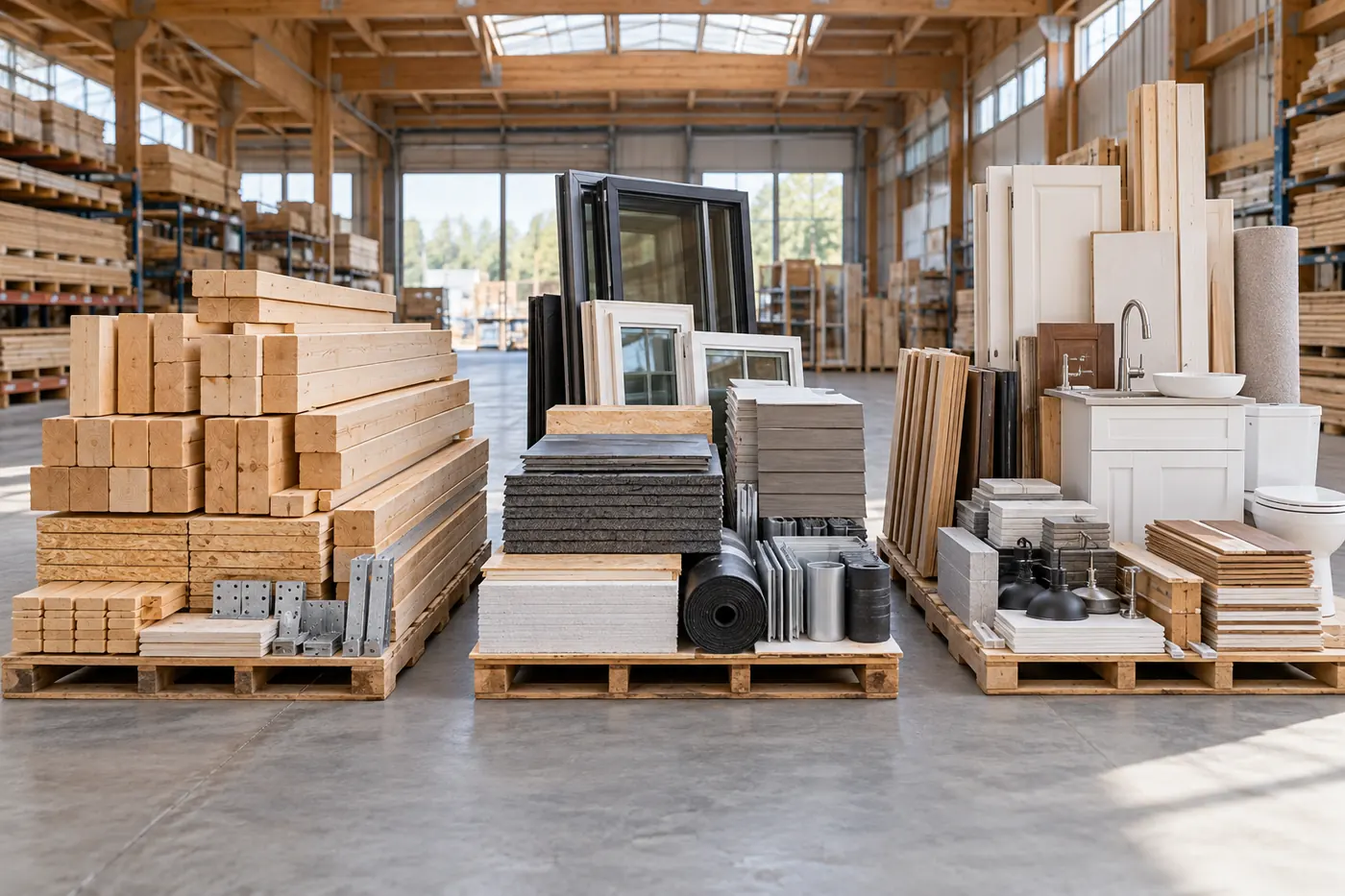
Cabin kit prices are comparable only after the buyer aligns the design revision, dimensions, material grades, enclosure layers, windows, doors, fixings, finishes, packing, freight and site responsibilities. Keep taxes, foundations, labor, equipment and services outside the supplier package visible. Use current itemized quotations; do not convert an advertised starting price into a completed-project promise.
Introduction: compare the complete purchasing decision
Cabin kit prices are comparable only after the buyer aligns the design revision, dimensions, material grades, enclosure layers, windows, doors, fixings, finishes, packing, freight and site responsibilities. Keep taxes, foundations, labor, equipment and services outside the supplier package visible. Use current itemized quotations; do not convert an advertised starting price into a completed-project promise. This article is a procurement framework for overseas buyers. It is not a product quotation, code opinion, engineering design or customs ruling.
For wood cabin kits with prices, introduction: compare the complete purchasing decision, checkpoint 1: search results and catalogues can help create a shortlist, but they rarely contain the site, contract and operating detail needed for approval. Use the exact configuration, current supplier documents and advice from the responsible destination professionals before committing funds.
For wood cabin kits with prices, introduction: compare the complete purchasing decision, checkpoint 2: examples below are hypothetical decision exercises. They do not describe a CabinWild factory test, customer delivery or verified project result. The aim is to show the questions, evidence and responsibility boundaries a buyer can record.
Further reading: Review cabin kit inclusions in detail.
1. Freeze the comparison design
Use the same floor plan, external dimensions, wall and roof concept, opening schedule and intended use when asking for offers. Record drawing revisions. A price tied to a compact shell cannot be compared directly with a later layout containing a bathroom, larger glazing and additional partitions.
Where sellers propose different construction systems, define the required outcomes and let each explain its method. Do not force unlike systems into identical component language. The objective is equivalent buyer requirements and transparent deviations, not artificial sameness.
For the comparison record, capture design revision, dimensions, intended use and permitted deviations. Link every answer to a dated drawing, quotation, inspection note or professional response. If the evidence is unavailable, mark the issue unresolved and assign an owner rather than replacing it with a sales assumption.
For wood cabin kits with prices, freeze the comparison design, checkpoint 3: review this point against the actual customer requirements and product application. The same answer may change with climate, occupancy, route, local rules or installer capability. Preserve those conditions so a later reviewer can understand why the decision was made and when it needs to be reopened.
2. Split the package into functional groups
Organize inclusions under structure, floor, walls, roof, openings, weathering layers, insulation, internal finishes, fixings and accessories. Identify quantity and specification where the decision depends on them. A tick beside roof included is too vague to show covering, membrane, flashings, drainage or site installation.
For log cabin kits with prices, ask whether boards, seals, connectors and allowance for system-specific movement are documented. The word log can cover different profiles and assembly methods. Compare the exact supplied configuration rather than transferring assumptions from another kit.
For the comparison record, capture functional group, quantity, specification and installation boundary. Link every answer to a dated drawing, quotation, inspection note or professional response. If the evidence is unavailable, mark the issue unresolved and assign an owner rather than replacing it with a sales assumption.
Review this point against the actual customer requirements and product application.
3. Distinguish materials from completed outcomes
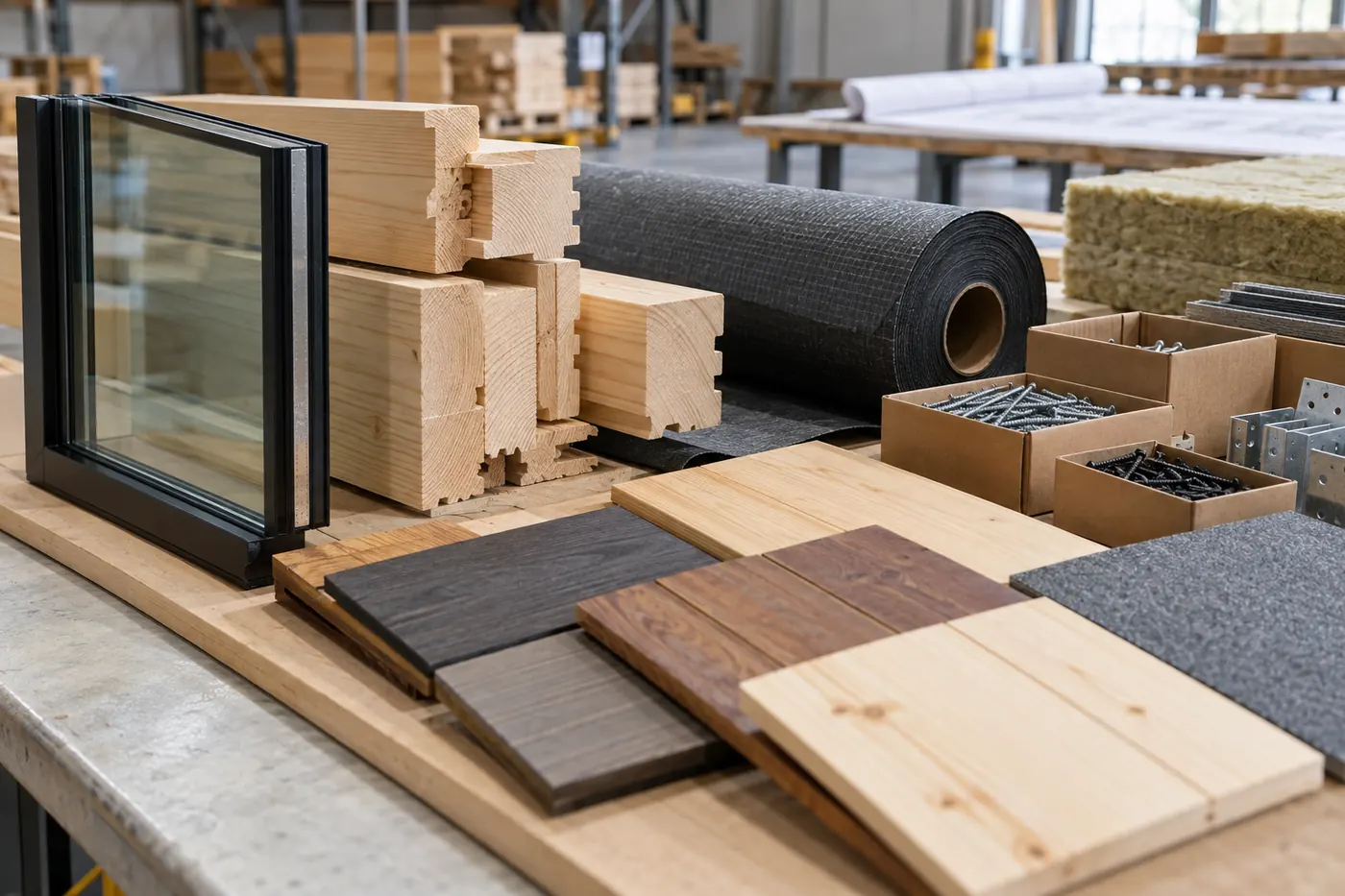
A supplied window is not the same scope as a fitted, flashed and tested opening. A roll of roof membrane is not a completed weather-tight roof. For each material group, identify design, supply, handling, installation, inspection and maintenance-information responsibilities.
This distinction is especially important when wood cabin kits with prices are marketed using finished-building photographs. Ask which visible items belong to the standard package, optional package or site works. Retain the response with the quotation so later drawings do not silently redefine the price.
For the comparison record, capture material, installed outcome, responsible party and evidence. Link every answer to a dated drawing, quotation, inspection note or professional response. If the evidence is unavailable, mark the issue unresolved and assign an owner rather than replacing it with a sales assumption.
For wood cabin kits with prices, distinguish materials from completed outcomes, checkpoint 4: review this point against the actual customer requirements and product application. The same answer may change with climate, occupancy, route, local rules or installer capability. Preserve those conditions so a later reviewer can understand why the decision was made and when it needs to be reopened.
| Comparison line | Evidence | Common hidden gap |
|---|---|---|
| Design | Revision-controlled drawings | Different dimensions or opening schedule |
| Materials | Itemized inclusion schedule | Visible finish shown but optional |
| Logistics | Packing data and named delivery basis | Destination handling or unloading excluded |
| Site work | Installer and contractor quotations | Equipment and temporary protection omitted |
| Handover | Tests, records and maintenance list | Delivery treated as completed acceptance |
4. Check product evidence and destination review
Request the performance information relevant to the quoted components and intended use. Evidence should identify the product or assembly, test or assessment basis, limitations and applicable configuration. Do not convert a material data sheet into proof of the whole cabin's destination compliance.
EU CPR information can help compare declared performance for products within its scope, while Member States and project teams still determine requirements for the works. Other regions have different systems. Ask the local designer what is needed before paying for an imported package.
For the comparison record, capture product identity, declared performance, limitation and local requirement. Link every answer to a dated drawing, quotation, inspection note or professional response. If the evidence is unavailable, mark the issue unresolved and assign an owner rather than replacing it with a sales assumption.
For wood cabin kits with prices, check product evidence and destination review, checkpoint 5: review this point against the actual customer requirements and product application. The same answer may change with climate, occupancy, route, local rules or installer capability. Preserve those conditions so a later reviewer can understand why the decision was made and when it needs to be reopened.
5. Add freight and delivery on a named basis
Request packing volume, package dimensions, masses and dispatch location before comparing freight. State whether price includes export packing, inland transport, terminal charges, main carriage, destination charges, final delivery or unloading. A delivered-sounding headline may end at a port or curb.
Use the appropriate Incoterms rule, version and named place in the contract. Record quotation validity and fuel, currency or capacity assumptions where suppliers identify them. Do not use the rule as a substitute for defining damage evidence, package quality or the site handover.
For the comparison record, capture packing data, Incoterms term, named place and excluded charges. Link every answer to a dated drawing, quotation, inspection note or professional response. If the evidence is unavailable, mark the issue unresolved and assign an owner rather than replacing it with a sales assumption.
For wood cabin kits with prices, add freight and delivery on a named basis, checkpoint 6: review this point against the actual customer requirements and product application. The same answer may change with climate, occupancy, route, local rules or installer capability. Preserve those conditions so a later reviewer can understand why the decision was made and when it needs to be reopened.
Further reading: Compare prices against plans and scope.
Turn these questions into a project brief
Send the destination, use, layout and expected completion level. Ask for a revision-controlled inclusion schedule and clearly stated exclusions.
6. Price site work and equipment separately
Ask the intended installer to review package information and quote assembly labor, access equipment, temporary protection and consumables. Foundations, lifting, scaffolding, waste handling and accommodation for the team may sit outside both kit and labor proposals unless the buyer requests them.
Use actual destination rates and project assumptions. This article does not provide a per-square-metre multiplier because labor productivity depends on package design, site, weather, crew and required finish. Keep unquoted tasks visible as allowances with a named owner.
For the comparison record, capture local labor, equipment, temporary works and unquoted tasks. Link every answer to a dated drawing, quotation, inspection note or professional response. If the evidence is unavailable, mark the issue unresolved and assign an owner rather than replacing it with a sales assumption.
Review this point against the actual customer requirements and product application.
7. Normalize services and fitout
List electrical, plumbing, ventilation, heating and communications requirements even when the kit is a shell. Identify whether chases, openings or mounting provisions are factory prepared. Local trades should review routes and interfaces before the package is fixed, because later cutting may affect several assemblies.
A bathroom or kitchenette creates work beyond the visible fixtures. Include water, wastewater, electrical capacity, ventilation, waterproofing, access and commissioning as applicable. Compare the cost of the required usable building, not the lowest shell after essential customer requirements have been removed.
For the comparison record, capture service requirement, prepared interface, local completion and commissioning. Link every answer to a dated drawing, quotation, inspection note or professional response. If the evidence is unavailable, mark the issue unresolved and assign an owner rather than replacing it with a sales assumption.
For wood cabin kits with prices, normalize services and fitout, checkpoint 7: review this point against the actual customer requirements and product application. The same answer may change with climate, occupancy, route, local rules or installer capability. Preserve those conditions so a later reviewer can understand why the decision was made and when it needs to be reopened.
Further reading: ICC: Incoterms 2020; International Trade Administration: Common Export Documents.
8. Reconcile allowances, currency and changes
Keep firm quotations, provisional sums, allowances and contingency as separate categories. Record currency, exchange-rate basis, tax treatment and quotation expiry. A converted online number without date and scope should not be used as a procurement budget.
When a choice changes, update drawings, inclusion schedule and price together. Maintain a change log showing the reason, cost and programme effect. Small upgrades distributed across glazing, finishes and fixtures can materially alter cabin kit prices even when the footprint stays constant.
For the comparison record, capture amount type, currency, validity, tax advice and change status. Link every answer to a dated drawing, quotation, inspection note or professional response. If the evidence is unavailable, mark the issue unresolved and assign an owner rather than replacing it with a sales assumption.
For wood cabin kits with prices, reconcile allowances, currency and changes, checkpoint 8: review this point against the actual customer requirements and product application. The same answer may change with climate, occupancy, route, local rules or installer capability. Preserve those conditions so a later reviewer can understand why the decision was made and when it needs to be reopened.
9. Compare handover value, not only acquisition cost
Ask what assembly support, defect response, spare identification, maintenance information and final records are included. Do not invent a service-life saving, but recognize that usable documents can reduce uncertainty during installation and ownership. A cheaper package with unidentified replacement components may transfer future work to the buyer.
At the final review, show confirmed package price, all external quotes, allowances, exclusions and unresolved decisions. Recommend only after the buyer sees the expected route to a usable cabin. Preserve the distinction between a supplier quotation and the project budget.
For the comparison record, capture handover deliverables, support boundary and complete budget status. Link every answer to a dated drawing, quotation, inspection note or professional response. If the evidence is unavailable, mark the issue unresolved and assign an owner rather than replacing it with a sales assumption.
For wood cabin kits with prices, compare handover value, not only acquisition cost, checkpoint 9: review this point against the actual customer requirements and product application. The same answer may change with climate, occupancy, route, local rules or installer capability. Preserve those conditions so a later reviewer can understand why the decision was made and when it needs to be reopened.
Further reading: European Commission: Construction Products Regulation; Control contract milestones for a cabin kit.
Practical procurement workshop
Prepare a one-page decision sheet
For wood cabin kits with prices, practical procurement workshop, checkpoint 10: put the intended use, destination, site constraints, selected configuration and required operating date at the top. Below them, list the package boundary, local work, evidence, quotation validity and open decisions. This sheet should point to controlled source documents rather than trying to reproduce every technical detail.
For wood cabin kits with prices, practical procurement workshop, checkpoint 11: use a simple status of confirmed, conditional, unresolved or not applicable. A conditional answer must state the condition. A hypothetical option can remain under review without being presented as a supplier commitment. The discipline is especially useful when several people join the buying process at different times.
Run the installation-preparation review
For wood cabin kits with prices, practical procurement workshop, checkpoint 12: before shipment or site mobilization, bring together the current drawings, package data, access plan, foundation readiness, service interfaces, protection method and installer questions. Confirm which revisions everyone is using. Installation preparation should close coordination gaps while changes are still controllable.
For wood cabin kits with prices, practical procurement workshop, checkpoint 13: record the scope of factory testing and shipment inspection separately. Factory testing can verify stated criteria at the manufacturing stage; shipment inspection can record identity, count and accessible condition. Neither automatically establishes final site performance, local approval or suitability for an unreviewed use.
Use a stop rule for missing evidence
Agree which unanswered questions prevent design release, payment, production, dispatch or occupation.
For wood cabin kits with prices, practical procurement workshop, checkpoint 14: if information changes, update the decision sheet and the relevant contract or drawing record. Do not leave a critical instruction only in an email thread or meeting memory. Traceability supports fair clarification with the supplier and helps local teams distinguish accepted information from earlier options.
FAQ: Cabin Kit Prices: Compare Inclusions Before Comparing the Number
Why do log cabin kit prices vary so much?
Offers can differ in design, timber profile, wall and roof build-up, glazing, finishes, packing, freight and site responsibility. Compare revision-controlled inclusions and the same intended outcome. A price difference alone does not show which kit is better or which completed project will cost less.
Should I compare cabin kit prices per square metre?
A unit rate can be a screening aid only when area definition and scope are consistent. Fixed logistics, openings, services and project tasks do not scale directly with floor area. Use the complete inclusion schedule and destination budget before making a purchasing decision.
Are foundations included in cabin kits with prices?
Only if the offer explicitly defines their design, materials, installation and site assumptions. Many kits provide cabin interface information while the buyer arranges site-specific foundations. Ask local qualified professionals to review ground conditions and coordinate the actual support design.
How should optional upgrades be compared?
Keep a stable baseline and request each option as a separate, documented change. Record affected drawings, package items, local work, price and schedule. Accept or reject the option before updating the baseline; do not mix standard and upgraded figures across competing offers.
What is the most useful quotation format?
Use an itemized response aligned with the buyer's requirement schedule. It should identify included, excluded, provisional and by-others items, plus drawing revisions, delivery basis, validity and document deliverables. Missing information should remain an open clarification rather than an assumed inclusion.
Conclusion: make the package boundary visible
Cabin kit prices are comparable only after the buyer aligns the design revision, dimensions, material grades, enclosure layers, windows, doors, fixings, finishes, packing, freight and site responsibilities. Keep taxes, foundations, labor, equipment and services outside the supplier package visible. Use current itemized quotations; do not convert an advertised starting price into a completed-project promise. The useful output is a dated decision supported by drawings, scope, quotations and responsible reviews, not a label or headline figure.
For wood cabin kits with prices, conclusion: make the package boundary visible, checkpoint 15: send CabinWild the destination, intended use, layout priorities, access information and expected supply boundary. Ask for a configuration-specific response, then coordinate it with qualified destination advisers, logistics providers and installers before ordering.
Request an itemized cabin kit quotation
Send the destination, use, layout and expected completion level. Ask for a revision-controlled inclusion schedule and clearly stated exclusions.
Prepared with AI assistance for CabinWild Editorial using the linked public sources. Examples are illustrative, not customer results or verified CabinWild test data. Project-specific design and local requirements need review by the appropriate professionals.