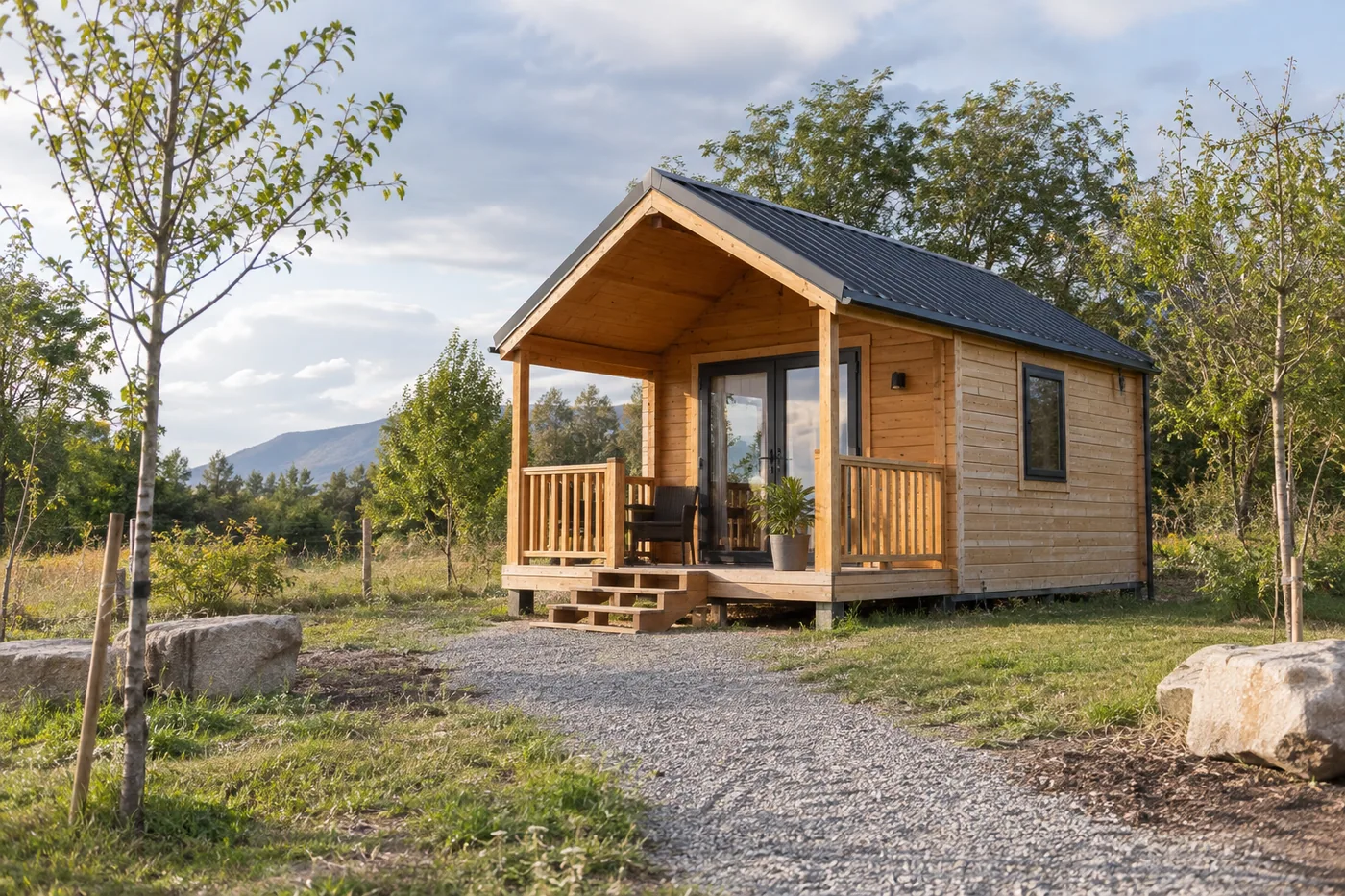
Use a prepared glamping cabin to rehearse specific operating tasks before opening. Record the actual configuration, trial conditions, observations, actions and retests. A rehearsal can identify practical issues with storage, guest flow, cleaning and maintenance, but does not establish legal readiness, future demand or year-round performance. Keep task-level learning separate from the commercial choice between a pilot and bulk order.
Introduction: rehearse the working day before opening
An operator can spend considerable time comparing glamping cabin plans without discovering how the selected unit behaves during a real working day. A drawing does not show every housekeeping task, the route of wet luggage or the difficulty of identifying a replacement component. A pilot creates a structured opportunity to observe those details.
For a buyer asking what is a glamping cabin, the simplest useful definition is accommodation intended to offer a more equipped camping experience. The label does not specify services, legal classification or quality. A pilot must therefore represent the operator's actual proposed offer, not an undefined idea of luxury camping.
This guide describes an operational evaluation after appropriate installation and readiness checks. It is different from a factory prototype review. It does not authorize occupancy, prescribe engineering tests or report an actual CabinWild customer project. Obtain the necessary professional and authority reviews before any trial that involves occupation or use of services.
1. Define the task decision before the rehearsal starts
Write down what the pilot is meant to change about the next decision. The question might be whether the selected room arrangement supports the cleaning model, whether supplied storage suits the intended stays or whether service access is workable. A trial without a decision can accumulate interesting observations without producing a usable purchasing conclusion.
Choose a limited set of priorities and name their owners. Operations should define the service tasks, maintenance should identify routine access needs and the design team should identify matters requiring professional assessment. Procurement should record which findings could change the order. This avoids asking one person to make judgments outside their competence.
Separate commercial assumptions from observed facts. An attractive pilot cabin does not establish an achievable nightly rate, occupancy or return on investment. Keep market research and financial projections in their own model, with their evidence and uncertainty. The pilot can inform the physical and operational inputs without being presented as proof of demand.
Further reading: Compare a pilot order with a bulk commitment as a separate buying decision.
2. Record exactly what has been installed
Give the pilot a configuration record: drawings, finishes, furniture, equipment, services and any departures from the intended repeat units. Record who supplied each item and whether it is temporary. Otherwise, the team may approve a storage solution that is not included in the future package or criticize equipment that was never part of the proposal.
Include the site conditions relevant to the observations. A sheltered demonstration plot cannot represent every exposed destination. A trial in one season cannot establish year-round comfort. Record the limits plainly so that the next project team can understand what evidence transfers and what remains to be investigated.
Keep the accepted baseline accessible during the trial. When something changes, update the record with a new revision rather than silently overwriting the first configuration. The point of a pilot is learning through changes, but those changes are useful only if the team can tell which arrangement produced which result.
3. Establish readiness before operational observations
Confirm which installation, service and professional checks must be complete before the trial. Do not use an operational pilot as a substitute for safe commissioning or required authorization. If a system has not been released for use by the responsible parties, exclude it from the trial and record the limitation.
The U.S. Department of Energy's federal commissioning process separates planning, investigation, implementation and handoff. That offers a useful process reference, not a rule imposed on a private cabin project. Adapt the idea proportionately: identify issues, assign action, verify the response and retain the resulting information.
Make the trial boundary visible to everyone involved. A supervised furniture walk-through may be possible under conditions that do not permit overnight accommodation. A planned opening date should not turn an incomplete technical review into assumed readiness. The competent local team determines which activities are appropriate.
Further reading: DOE: commissioning process for federal facilities; Define operational handover for ensuite cabins.
4. Observe tasks rather than asking whether the cabin feels good
Translate the operating brief into ordinary tasks: arriving with luggage, finding storage, making a drink, changing bedding and removing waste. Specify the represented number of people and the actual equipment used. A broad satisfaction question can miss a repeated inconvenience that becomes expensive across several cabins.
Use a consistent observation form. Record the task, conditions, what happened and the proposed response. Distinguish a person's preference from a recurring operational problem. Both may matter, but they support different decisions. Avoid assigning a precise numerical score unless the team has agreed what the score means and how it will be used.
Do not invent measured cleaning times or water consumption. If the operator chooses to collect such data, define the method and retain the actual observations. Record unusual conditions rather than discarding them merely because they make the result less flattering. A pilot is valuable when it reveals inconvenient facts early.
5. Keep a pilot log that leads to actions
The following proposed log is an editorial procurement tool, not a mandatory industry form. Use it to connect an observation to a decision. A record that ends with needs improvement is incomplete because it does not show who will assess the change or how its effect will be checked.
Group repeated observations without losing the original context. A storage problem during arrival may have a different cause from the same cabinet obstructing housekeeping. Review the underlying tasks before ordering a larger cabinet that could make circulation worse.
| Log field | What to record | Why it matters |
|---|---|---|
| Configuration | Unit and drawing revision | Identifies the arrangement actually observed |
| Scenario | Task, equipment and represented use | Prevents vague claims about all guests |
| Observation | What happened, with relevant evidence | Separates facts from interpretation |
| Proposed response | Change, owner and review needed | Makes the next action explicit |
| Retest | Conditions and observed outcome | Checks whether the change answered the question |
| Repeat-order decision | Accept, revise or investigate further | Connects learning to procurement |
Turn these questions into a project brief
Send the intended guest offer, operating tasks and cabin configuration. Ask for product information that helps your team prepare a bounded pre-opening rehearsal.
6. Test the reset between stays
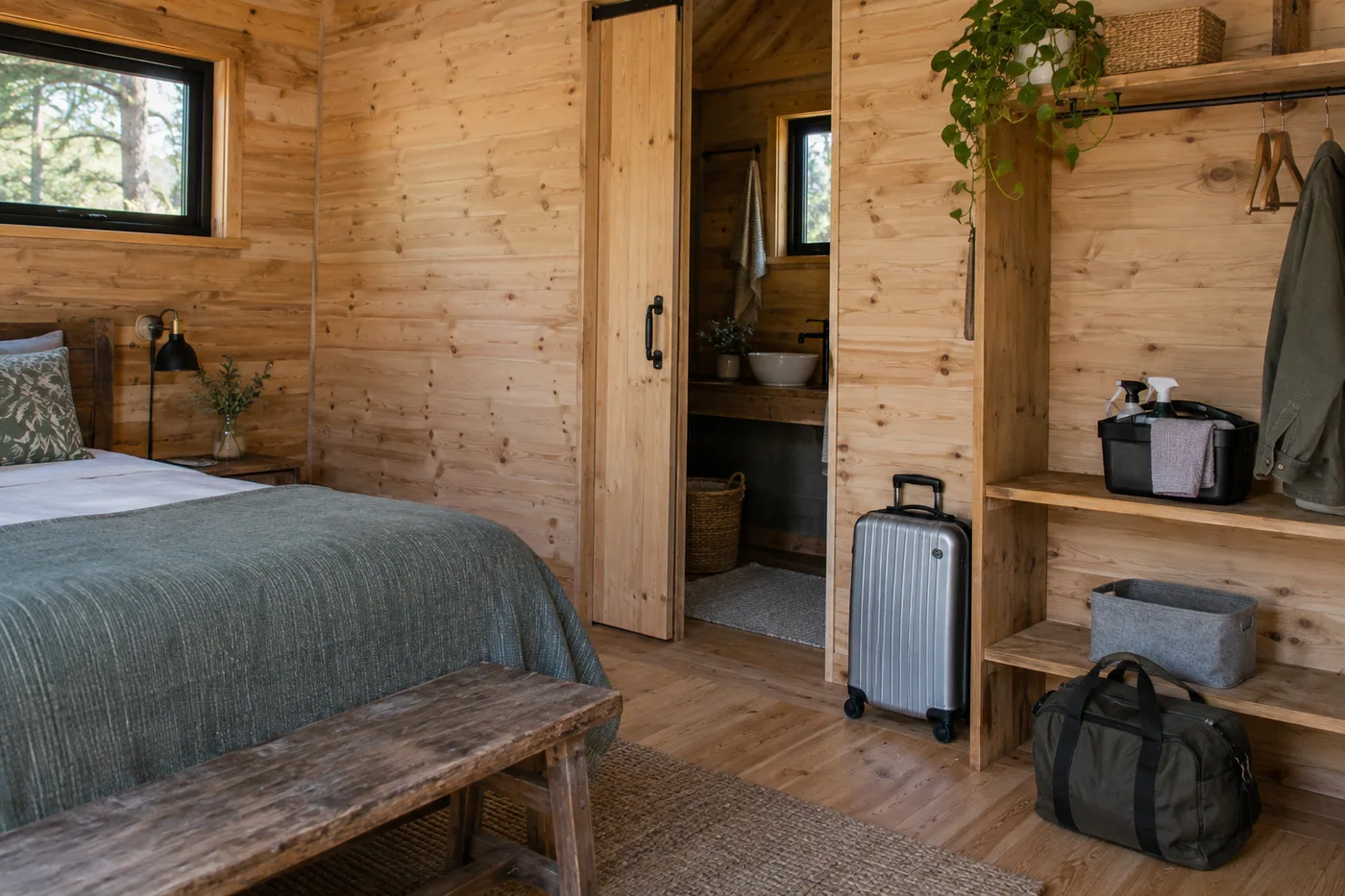
A cabin can be comfortable to occupy yet awkward to reset. Ask the housekeeping team to review the agreed bedding, surfaces, storage and waste route. Use the actual proposed furnishings where possible. A temporary demonstration mattress or a missing dining table can make the space appear easier to service than the finished offer.
Record where cleaning requires moving furniture, reaching an inaccessible surface or carrying supplies through a narrow route. Have competent people assess any safety concern. Do not ask staff to demonstrate an unsafe workaround simply to complete the checklist. An inaccessible detail is a design or operating question, not an invitation to improvise.
Separate product changes from service changes. A different storage arrangement may help, but so may a revised replenishment method. Evaluate both before changing the cabin specification. The best response is the one that supports the actual operation with acceptable cost and effort, not necessarily the response that adds more equipment.
7. Review utility use and maintenance without promising savings
Ask the appropriate team how water and energy information could be observed reliably if it is relevant to the decision. Record the equipment, operating conditions and measurement limits. A short trial cannot establish a guaranteed annual running cost, especially when weather and guest behavior are not representative.
EPA WaterSense's commercial best-management guidance includes monitoring and maintenance practices. Use it as a source of questions for the operator's water-management plan, not evidence that a particular pilot saves a stated percentage. Any performance claim would need its own appropriate measurements and comparison basis.
Inspect the usability of the maintenance information. Can the operator find the equipment model, access instructions and responsible service contact? Does the installed arrangement allow the qualified maintainer to carry out the intended work? A complete-looking manual pack is not useful if it does not correspond to the actual unit.
Further reading: EPA WaterSense: commercial best-management practices.
8. Collect feedback without overclaiming what it represents
Staff observations
Staff can identify recurring tasks and practical constraints, but their observations should still be recorded with context. Someone familiar with the trial unit may find a concealed control quickly while a new user cannot. Use that difference to examine clarity and operating instructions rather than treating one observer as universally representative.
Keep the discussion specific and respectful. Record the task that caused difficulty and the proposed response. Do not turn personal preference into a claim that every future guest will behave the same way. Where observations conflict, design a focused follow-up trial that can answer the actual question.
Guest or volunteer feedback
If lawful and appropriately approved occupation is part of the pilot, explain the trial and collect only information needed for the evaluation. Obtain appropriate consent before retaining identifiable feedback or publishing photographs. Do not invent testimonials or describe a staff walk-through as a verified guest study.
A small group can reveal issues without establishing market-wide preferences. Report the sample and conditions honestly. The useful result may be a question to investigate, not a percentage suitable for marketing. Keep promotional language separate from the internal learning record.
9. Retest changes before including them in every unit
When a change is proposed, identify the original problem and the expected effect. Check whether the change affects drawings, services, manufacturing or local review. A cabinet moved to improve luggage storage may obstruct a maintenance panel. A pilot can expose such interactions only if the team looks beyond the first benefit.
Retest under conditions relevant to the original observation. Do not declare the issue solved merely because the revised component has arrived. Record whether the task can now be completed and whether new problems appeared. Where technical performance is involved, use the appropriate professional review or testing rather than an informal impression.
Send accepted changes through the supplier's controlled process. The pilot's physical arrangement, drawing revision and component schedule should agree before the repeat order is released. Keep rejected suggestions too, with a short reason, so a later team does not unknowingly reopen a decision without the evidence that informed it.
10. Hypothetical pilot: separate a storage issue from a demand forecast
Suppose an operator installs one cabin before committing to a larger group. During a housekeeping trial, the linen cupboard cannot be used without moving a chair. During an arrival trial, luggage blocks the same route. The team records both observations against the actual furniture arrangement rather than describing the cabin as generally too small.
The first proposed change is a larger cabinet. A review shows that it would worsen the route, so the team instead tests a different storage location and a revised furniture position. The accepted arrangement is recorded in the component and layout schedule. The supplier confirms the implications before the repeat quotation is updated.
The operator also likes the appearance and predicts stronger bookings. That prediction remains a commercial assumption, not a pilot result. The trial provides evidence about storage and circulation; it does not establish demand. Keeping those conclusions separate makes the project decision more credible and prevents the learning exercise from becoming a sales story.
11. Include the cost of learning in the procurement plan
The glamping cabin cost for a pilot may include review work, temporary arrangements and changes that do not recur in every unit. Separate those items from the repeat-unit price. Otherwise, the buyer may assume the pilot's total cost is either a normal unit price or an unnecessary premium without understanding what it purchased.
Record which changes improve the repeated specification and which are site-specific. A delivery solution used for the first plot may not suit later plots. A particular glamping cabin build sequence may depend on temporary access that will disappear as the site develops. Review the expansion conditions before copying the pilot plan unchanged.
Close the pilot with a decision note: accepted configuration, remaining limits, required actions and the proposed repeat-order boundary. There is no universal pass score. The decision should follow the operator's stated priorities and the competent reviews needed for the actual site.
Further reading: Compare glamping procurement fundamentals.
Use a task card with an explicit evidence limit
Consider a hypothetical luggage-arrival rehearsal in a cabin that has received the necessary readiness review. Staff use ordinary clean props to represent the intended arrival task; no paying guest or private information is needed. The team observes whether the planned storage and circulation support that task without changing safety controls or improvising service use.
The observation should describe what happened before interpreting why. If a bag blocks an intended route, record its position, the furnished configuration and the task conditions. Then refer any proposed layout change to the appropriate reviewers and repeat the same bounded task after an accepted change. Do not turn one successful repetition into a claim that every guest or every cabin will behave identically.
| Task-card field | Hypothetical entry |
|---|---|
| Conditions | Identified unit, current furnished layout and approved rehearsal scope |
| Task | Represent the intended luggage-arrival sequence |
| Observation | Record actual locations and interruptions without inferred causes |
| Interpretation | Operator and relevant reviewers assess the finding |
| Action | Accepted layout or operating response with an owner |
| Retest | Repeat the defined task after the accepted change |
| Evidence limit | One task and configuration; not occupancy approval or market proof |
Frequently asked questions
Must a pilot cabin host paying guests?
No. Some useful trials concern staff tasks, furniture and maintenance information without guest occupation. Define the appropriate activity with the responsible local team and respect the unit's readiness and approval limits. A supervised walk-through should not be described as evidence from a completed commercial accommodation operation.
Can one pilot prove year-round comfort?
Not by itself. Its evidence is limited by the configuration, weather, duration and method of observation. Use the pilot to identify questions and obtain the appropriate technical review or measurements. Do not turn a comfortable short visit into a guarantee for different seasons or destinations.
How many observations are enough?
There is no universal number for every procurement decision. Identify the consequence of an unresolved issue and agree a proportionate method with the relevant team. Repeated tasks may need repeated observation, while engineering questions require professional evidence. Record the limits instead of inventing a statistical confidence claim.
Should pilot changes automatically apply to all future units?
Only after checking their consequences and relevance. A change may solve a local operating issue while affecting manufacturing, service access or another site. Update the controlled configuration, retest the relevant task and confirm the repeat-order scope. Preserve any conditions under which the change was accepted.
What is the most useful pilot deliverable?
A decision record linking observed tasks to accepted changes, retests and the final configuration. Photographs can support that record but should not replace it. The next purchasing team should be able to identify what was learned, what remains uncertain and which documents govern the repeat units.
Conclusion: expand from a documented operating brief
A pilot gives glamping cabin plans a practical test through actual tasks and recorded decisions. Its value lies in discovering and resolving issues before they are repeated. Keep technical readiness, operating observations and market forecasts separate, and carry accepted changes into the controlled purchase scope.
Share your intended location, accommodation model and expansion plan with CabinWild. Ask for the configuration and documentation needed for a focused first-unit evaluation, with any sample, review or testing services confirmed in the quotation rather than assumed.
Plan a useful operational rehearsal
Send the intended guest offer, operating tasks and cabin configuration. Ask for product information that helps your team prepare a bounded pre-opening rehearsal.
Prepared with AI assistance for CabinWild Editorial using the linked public sources. Examples are illustrative, not customer results or verified CabinWild test data. Project-specific design and local requirements need review by the appropriate professionals.