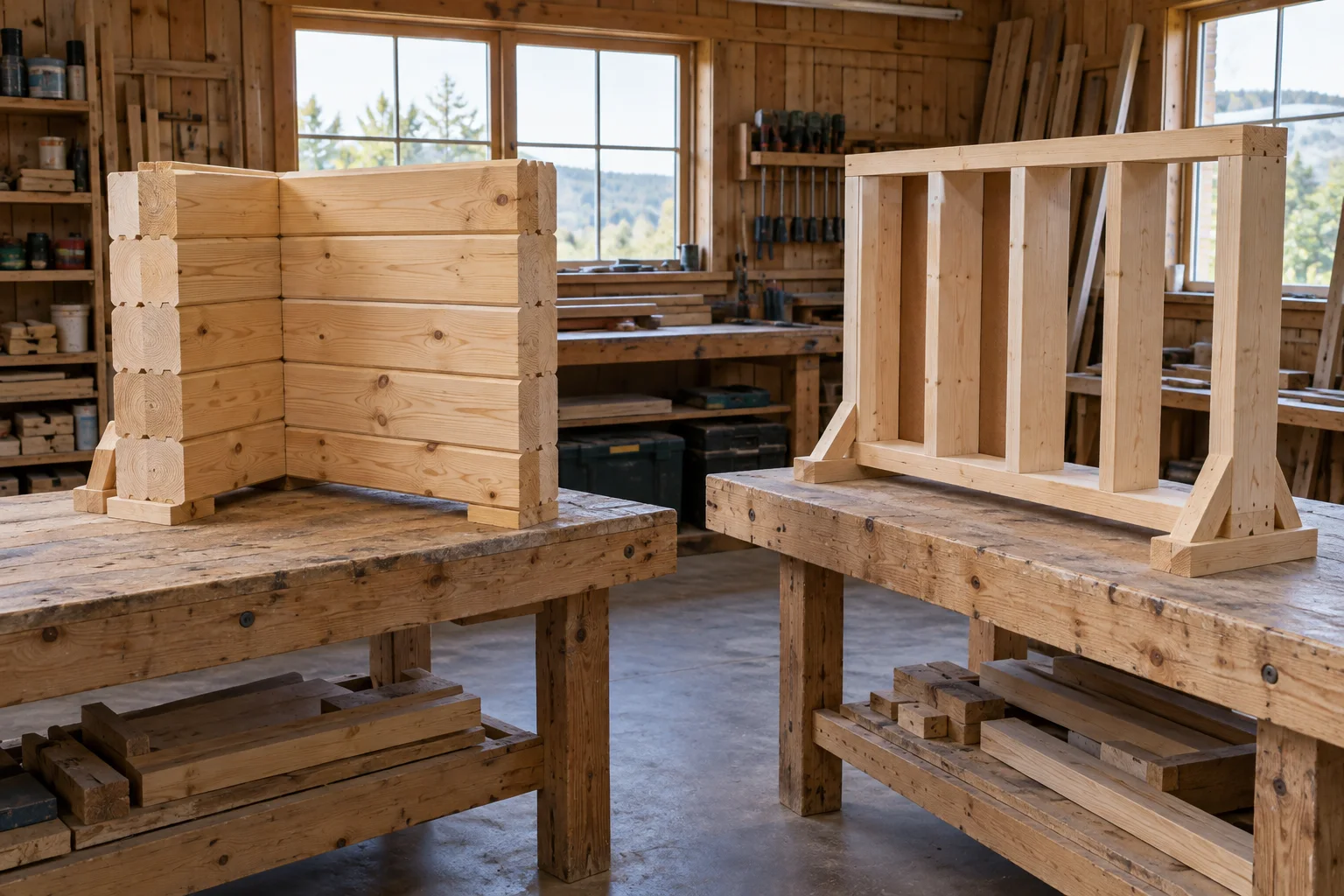
The cost to build a log cabin depends on the defined package, destination, site, performance requirements and completion standard. Compare quotations with the same inclusion schedule and keep site work visible. Do not convert an online shell price into a complete-project estimate without current evidence.
Introduction: define the price stage
Buyers asking for a build price need a scope model before they need a single number. Otherwise the lowest-looking quote may simply stop earliest.
The cost to build a log cabin depends on the defined package, destination, site, performance requirements and completion standard. Compare quotations with the same inclusion schedule and keep site work visible. Do not convert an online shell price into a complete-project estimate without current evidence.
This guide is written for international cabin buyers and developers preparing an initial cost plan. Its examples are hypothetical purchasing and operating situations. Use the checks to prepare a precise brief for the cabin supplier and destination team; they do not establish that an unspecified cabin meets a particular performance level or local approval route.
Further reading: USDA Forest Products Laboratory: Wood Handbook.
1. Define the price stage
Choose factory package, delivered package, installed shell or fitted completion. Convert the requirement into a written buyer input before choosing a model or accepting a price. The supplier should identify the proposed scope and available evidence, while the destination team retains responsibility for local design, approvals and site work.
Turn this requirement into a review item using a price-stage definition and exclusions list. Start with the actual intended activity and identify the information that could change the room or package choice. If the purchaser and supplier use different assumptions, compare them explicitly before discussing upgrades. Keep the baseline visible so a later request can be recognized as a change in scope rather than a missing original inclusion.
A common failure is calling a material price a build price. Check the consequence against the stated customer requirements rather than adding a generic premium feature. If the answer remains uncertain, preserve it as an open item with a responsible reviewer. The next purchase decision should use the accepted scope, not an optimistic assumption borrowed from another product application.
A question to put in the buyer brief
What completed stage does the figure represent?
2. Quantify the exact configuration
Fix footprint, wall system, openings, roof, finishes and fitted items. Convert the requirement into a written buyer input before choosing a model or accepting a price. The supplier should identify the proposed scope and available evidence, while the destination team retains responsibility for local design, approvals and site work.
Use a priced configuration schedule to assess the proposed arrangement. Ask the reviewer to distinguish what is shown on a concept plan from what is specified for manufacture. A realistic review includes the occupied or working condition, not only an empty presentation image. Where a supplier proposes an alternative, record how it answers the same requirement and whether any operational limitation remains.
A common failure is comparing different sizes and specifications as one model. Check the consequence against the stated customer requirements rather than adding a generic premium feature. If the answer remains uncertain, preserve it as an open item with a responsible reviewer. The next purchase decision should use the accepted scope, not an optimistic assumption borrowed from another product application.
Further reading: IPPC: regulation of wood packaging material.
A question to put in the buyer brief
Which configuration is the price tied to?
3. Estimate foundations from site evidence
Use local ground and design inputs rather than a generic slab allowance. Convert the requirement into a written buyer input before choosing a model or accepting a price. The supplier should identify the proposed scope and available evidence, while the destination team retains responsibility for local design, approvals and site work.
The next evidence item is a site-specific foundation brief and local estimate. Check its relationship to the adjoining work before approving it. In a small building, an adjustment to one detail can affect another activity, service route or maintenance task. Do not judge this item in isolation simply because it can be purchased separately. Identify which team member coordinates its interfaces and which supplier information they still need.
A common failure is assuming one base suits every soil and climate. Check the consequence against the stated customer requirements rather than adding a generic premium feature. If the answer remains uncertain, preserve it as an open item with a responsible reviewer. The next purchase decision should use the accepted scope, not an optimistic assumption borrowed from another product application.
A question to put in the buyer brief
What foundation information is still missing?
4. Expose installation labor assumptions
State crew scope, duration, equipment, accommodation and supervision. Convert the requirement into a written buyer input before choosing a model or accepting a price. The supplier should identify the proposed scope and available evidence, while the destination team retains responsibility for local design, approvals and site work.
Discuss an installation labor and plant quotation with the people who will install and operate the cabin. Ask them to walk through a normal use sequence and point out where the proposal depends on an unstated assumption. Keep a distinction between a design requirement, a manufacturer's instruction and an operating preference. That distinction helps the quotation remain precise without presenting every preference as a verified technical result.
A common failure is using an assembly-day claim as a fixed labor price. Check the consequence against the stated customer requirements rather than adding a generic premium feature. If the answer remains uncertain, preserve it as an open item with a responsible reviewer. The next purchase decision should use the accepted scope, not an optimistic assumption borrowed from another product application.
A question to put in the buyer brief
Which tasks and conditions are included?
Turn these questions into a project brief
Send your destination, quantity, intended use and this specification question. Ask for a clearly bounded quotation and document list.
5. Include logistics and storage
Price packing, international transport, inland route, unloading and protected storage. Convert the requirement into a written buyer input before choosing a model or accepting a price. The supplier should identify the proposed scope and available evidence, while the destination team retains responsibility for local design, approvals and site work.
Before choosing an upgrade, compare a logistics route and handling plan. Assess how the proposed detail will be reached, cleaned and corrected after furniture or equipment is in place. A lower initial price may leave a costly access problem, while a more expensive feature may solve no relevant operational issue. Review the exact configuration and the practical upkeep task rather than assigning a benefit from appearance alone.
A common failure is omitting storage when the foundation date is uncertain. Check the consequence against the stated customer requirements rather than adding a generic premium feature. If the answer remains uncertain, preserve it as an open item with a responsible reviewer. The next purchase decision should use the accepted scope, not an optimistic assumption borrowed from another product application.
Further reading: IPPC: regulation of wood packaging material.
A question to put in the buyer brief
Where can the package wait safely?
6. Maintain a change-control reserve
Track selections and unresolved items with their budget effect. Convert the requirement into a written buyer input before choosing a model or accepting a price. The supplier should identify the proposed scope and available evidence, while the destination team retains responsibility for local design, approvals and site work.
Close this decision with a costed change and contingency register. Identify the remaining work at the destination and keep its owner visible in the purchase comparison. A delivered component, a completed building interface and an operating facility are different stages. The buyer should be able to explain which stage the supplier price reaches and what additional evidence is needed before the intended use begins.
A common failure is letting upgrades accumulate outside the approved budget. Check the consequence against the stated customer requirements rather than adding a generic premium feature. If the answer remains uncertain, preserve it as an open item with a responsible reviewer. The next purchase decision should use the accepted scope, not an optimistic assumption borrowed from another product application.
A question to put in the buyer brief
Who authorizes budget changes?
Use a decision matrix to compare the complete proposal
A buyer can turn the questions above into a comparison sheet for log cabin prices to build. Keep the original requirement in one column and each supplier's proposed answer in another. Compare like-for-like scope first; then assess how convincing the supporting evidence is. A missing answer should appear as pending, not as a zero-cost inclusion or an assumed pass.
For log cabin prices to build, use three practical statuses: accepted with evidence, accepted subject to a named condition, and unresolved. Conditional acceptance needs an owner and a deadline before the affected work begins. It may be sensible to proceed with unrelated work while a detail is developed, but the team should explicitly identify the boundary. That is different from letting an unresolved detail silently spread across a multi-unit order.
Further reading: Related CabinWild buyer guide; Related CabinWild buyer guide; Browse cabin options; Discuss a project.
| Review item | Evidence to compare | Question that closes the gap |
|---|---|---|
| Define the price stage | A price-stage definition and exclusions list | What completed stage does the figure represent? |
| Quantify the exact configuration | A priced configuration schedule | Which configuration is the price tied to? |
| Estimate foundations from site evidence | A site-specific foundation brief and local estimate | What foundation information is still missing? |
| Expose installation labor assumptions | An installation labor and plant quotation | Which tasks and conditions are included? |
| Include logistics and storage | A logistics route and handling plan | Where can the package wait safely? |
| Maintain a change-control reserve | A costed change and contingency register | Who authorizes budget changes? |
Worked buyer scenario: an illustrative decision sequence
In an illustrative procurement exercise, the buyer starts with a price-stage definition and exclusions list. The first comparison exposes a risk: calling a material price a build price. The issue remains open until the responsible reviewer accepts a documented answer.
The revised inquiry adds a site-specific foundation brief and local estimate and a logistics route and handling plan. Bidders can then separate factory scope, shipment inspection and installation preparation instead of relying on a product label.
This log cabin prices to build scenario is hypothetical. It is not a CabinWild delivery record, certified test result, customer testimonial or promise of approval in any destination.
Translate the application brief into factory, shipment and site checks
Factory testing should be requested only for a defined question and with an agreed method. For log cabin prices to build, begin by confirming which proposed details are factory-completed and which are installed locally. Ask for an identified configuration, conditions and acceptance criterion where a test is specified. An attractive demonstration does not verify loads, acoustic privacy, regulatory suitability or the complete occupied result.
Shipment inspection for log cabin prices to build should compare the delivered scope against the accepted application brief. Review the component references and condition needed to support the decisions above. Photograph any discrepancy with its package or unit identification. The inspection does not create evidence for a feature that was never specified, and it should not be described as destination approval of locally connected systems.
Installation preparation needs to preserve the accepted operating arrangement. Give the local team the drawings and information behind define the price stage. Check the interfaces before they are concealed, and return proposed changes to the responsible reviewer. Keep the actual equipment, furniture or use requirements available instead of asking installers to reconstruct them from a promotional image.
At handover, walk through the intended use and maintenance tasks with the operator. Pay particular attention to include logistics and storage and maintain a change-control reserve. Confirm instructions, remaining specialist checks and replacement information. A completed checklist should describe its scope and limitations; it should not convert a short demonstration into an unsupported long-term performance promise.
- A price-stage definition and exclusions list.
- A priced configuration schedule.
- A site-specific foundation brief and local estimate.
- An installation labor and plant quotation.
- A logistics route and handling plan.
- A costed change and contingency register.
RFQ handoff: six questions to send with the site plan
A useful request for quotation for log cabin prices to build should include the intended use, destination and actual equipment or stock. Ask each supplier to distinguish included work, local specialist work and exclusions. Keep open decisions visible when comparing different layouts.
- Define the price stage: attach a price-stage definition and exclusions list. Ask: What completed stage does the figure represent? Mark the answer, owner and remaining site work.
- Quantify the exact configuration: attach a priced configuration schedule. Ask: Which configuration is the price tied to? Mark the answer, owner and remaining site work.
- Estimate foundations from site evidence: attach a site-specific foundation brief and local estimate. Ask: What foundation information is still missing? Mark the answer, owner and remaining site work.
- Expose installation labor assumptions: attach an installation labor and plant quotation. Ask: Which tasks and conditions are included? Mark the answer, owner and remaining site work.
- Include logistics and storage: attach a logistics route and handling plan. Ask: Where can the package wait safely? Mark the answer, owner and remaining site work.
- Maintain a change-control reserve: attach a costed change and contingency register. Ask: Who authorizes budget changes? Mark the answer, owner and remaining site work.
Frequently asked questions
What completed stage does the figure represent?
Choose factory package, delivered package, installed shell or fitted completion. Compare the documented answer against the intended use and destination before release.
Which configuration is the price tied to?
Fix footprint, wall system, openings, roof, finishes and fitted items. Compare the documented answer against the intended use and destination before release.
What foundation information is still missing?
Use local ground and design inputs rather than a generic slab allowance. Compare the documented answer against the intended use and destination before release.
Which tasks and conditions are included?
State crew scope, duration, equipment, accommodation and supervision. Compare the documented answer against the intended use and destination before release.
Where can the package wait safely?
Price packing, international transport, inland route, unloading and protected storage. Compare the documented answer against the intended use and destination before release.
Conclusion: Close the define the price stage decision before ordering
A reliable log cabin prices to build purchase connects the quoted package to the intended use, site interfaces, inspection evidence and named responsibilities. Keep unresolved items visible instead of converting them into assumed inclusions.
For log cabin prices to build, send CabinWild your destination, intended use, quantity, drawing stage and the questions that remain open. Include the evidence you need in the quotation rather than asking only for a model price. Contact info@CabinWild.com to discuss the proposed cabin supply boundary and supporting documents. Local design, installation and approval responsibilities should be agreed with the destination professionals.
Discuss log cabin prices to build
Send your destination, quantity, intended use and this specification question. Ask for a clearly bounded quotation and document list.
Prepared with AI assistance for CabinWild Editorial using the linked public sources. Examples are illustrative, not customer results or verified CabinWild test data. Project-specific design and local requirements need review by the appropriate professionals.