
Manage log cabin condensation during vacancy through an agreed building and service plan, regular observations and a clear response owner. Record symptoms and conditions, distinguish suspected condensation from leakage and have the relevant providers assess unresolved issues. A humidity monitor, open window or empty cabin alone does not establish that moisture risks are controlled.
Introduction: an empty cabin still needs an operating owner
A cabin can remain vacant for weeks between bookings, during a phased opening or while ownership changes. The absence of guests reduces some moisture activities, but it does not stop weather exposure, service changes or hidden leaks. A locked door and an occasional glance through the window are not a complete vacancy plan.
This guide focuses on monitoring and response during an extended empty period. It complements winter shutdown instructions without replacing the specialist procedures for individual services. The aim is to connect observations with a responsible decision process before small concerns become unrecorded recurring problems.
The examples are hypothetical and do not describe verified CabinWild performance. This is not a mold-remediation procedure, ventilation design or medical assessment. Use the appropriate building, service and health guidance and competent local providers for the actual property and condition.
1. Describe the vacancy period and site resources
Record why the cabin is empty, the anticipated duration and which services remain in operation. Identify whether staff can visit, how access is arranged and who receives reports. An unstaffed remote unit and a cabin beside a working reception need different practical arrangements even if their building specification is identical.
Keep assumptions visible. If the next occupation date is uncertain, the plan should include review rather than rely on a short closure becoming permanent. Ask relevant service providers how the proposed operation or shutdown affects their equipment and what checks are necessary before returning it to use.
Assign a decision owner and a backup contact. A logger alarm or maintenance note is only useful if someone can interpret it within the agreed process and obtain the appropriate help. The owner should know what information requires routine recording and what needs escalation to a competent specialist.
2. Establish a baseline before the empty period
Record the known building condition, unresolved defects and relevant recent work. Include context photographs and the accepted configuration where useful. A baseline helps the team distinguish a new observation from an old stain or a documented repair, without pretending that photographs establish every concealed condition.
Ask the responsible providers to confirm the relevant heating, ventilation and service arrangements. A vacancy setting should be an accepted operating decision for the actual system, not an improvised combination of turning everything off and opening a vent. Record which instructions apply and who can authorize later changes.
Keep furnishings and stored materials consistent with the agreed inspection and operating plan. Ask the appropriate team how access to relevant areas should be maintained. Staff need to be able to observe a concern and reach the authorized service points without moving undocumented storage or disturbing an assembly.
Further reading: Plan seasonal cabin service shutdown and reopening.
3. Distinguish observations from a moisture diagnosis
Describe visible condensation, staining, odors or water without assuming they share one cause. A roof or plumbing leak, indoor moisture and an enclosure problem can require different responses. Ask the competent provider to assess the actual pattern and relevant interfaces where the evidence does not establish the source.
The EPA's mold guidance for schools and commercial buildings identifies moisture control as central to prevention and response. That is useful background, not a diagnosis or remediation plan for an individual log cabin. The actual condition and affected materials need the appropriate assessment and work scope.
Keep the wording in the record factual. An entry such as droplets observed on the inside of the north window at the visit is more useful than a broad statement that the cabin is damp. Add the date, relevant conditions and available system information so the provider can evaluate the report.
Further reading: EPA: moisture-control context in commercial-building mold guidance.
| Observation | What to record | Appropriate next question |
|---|---|---|
| Window condensation | Location, timing and relevant conditions | What pattern and operating factors need assessment? |
| Stain or visible water | Context, chronology and nearby services | Is a leakage investigation needed? |
| Odor or suspected growth | Observed area without unqualified identification | Which competent assessment and access controls apply? |
| Monitor change | Device, location and recording conditions | Is the result reliable and what other evidence is needed? |
| Recurring concern | Previous reports and authorized actions | Has the underlying cause been resolved? |
4. Use monitoring as evidence, not a diagnosis
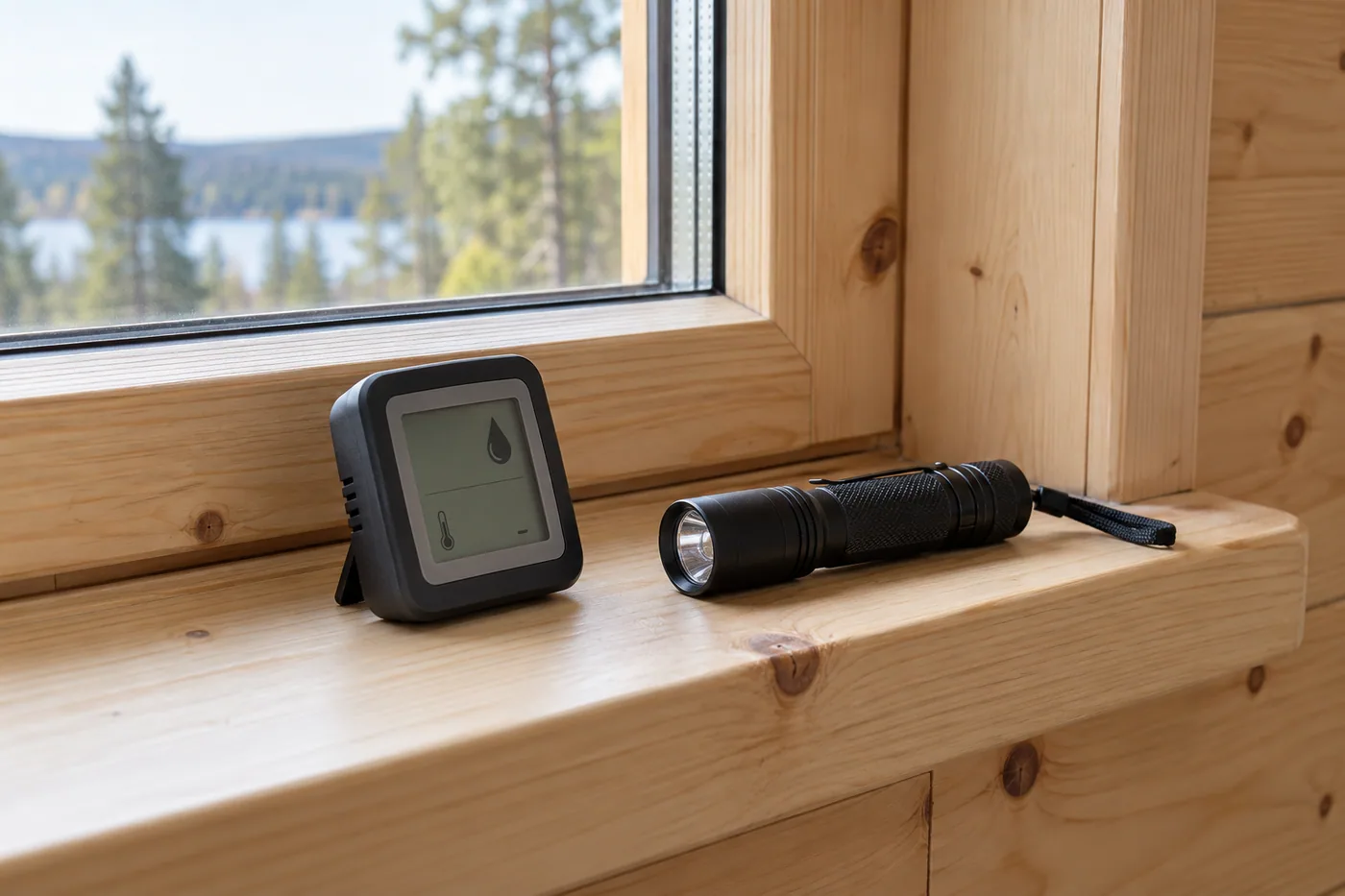
If monitoring equipment forms part of the plan, identify the device, location, relevant instructions and person responsible for reviewing results. A reading depends on where and how it is obtained. Keep that context so changes can be interpreted rather than comparing unrelated numbers from different positions or devices.
Ask the competent team what monitoring approach and response criteria suit the actual building and services. This article does not prescribe a universal humidity target or alarm value. The useful system connects observations to a defined action rather than generating data nobody reviews.
Plan for equipment or communication failure. If a device relies on power, a network or an account, record what happens when that dependency is unavailable. A remote screen showing an old value can create false confidence. The operator needs a way to identify missing data and obtain the appropriate site check.
5. Keep ventilation and heating decisions coordinated
Buyers asking how to vent a cabin should start with the actual design, use and equipment instructions. An empty cabin may have a different moisture pattern from an occupied one, but that does not make an improvised opening or disabled system appropriate. Ask the relevant provider how the accepted arrangement should operate during vacancy.
Coordinate any changed heating arrangement with the building and service team. A decision made solely to reduce energy use can affect the conditions assumed by another system or product. The responsible parties should explain the implications and define an appropriate plan for the actual property.
Record settings or operating changes at the level useful to the authorized team, without publishing credentials or sensitive control access. If a later staff member changes the arrangement, preserve the date and reason. Otherwise the owner may compare observations without realizing that the building has been operated differently between visits.
Further reading: Review cabin ventilation and indoor-air questions.
Turn these questions into a project brief
Send the destination, expected vacancy periods and intended service arrangements. Ask CabinWild which supplied-system and maintenance information can support your local operating review.
6. Design an inspection that the team can perform
Agree the relevant locations, observations and reporting route with the responsible providers. The inspection should fit staff competence and safe access. Do not assign untrained staff to diagnose hidden defects, disturb suspected contamination or perform technical service work as part of an ordinary visit.
Use a short repeatable record that identifies the cabin and date. Note relevant differences from the baseline and preserve original photographs where appropriate. A consistent route can help staff notice change, while the record should leave room for unexpected observations rather than reducing every visit to checked boxes.
Set the frequency and triggers through the actual site plan and competent advice. Weather events, reported faults or changed service conditions may prompt additional review. Avoid describing one generic visit interval as sufficient for every climate, building system or vacancy duration.
7. Give observations a clear response path
Report the condition accurately
The first report should identify the unit, area, timing and direct observations. Add relevant baseline or service information without declaring an unverified cause. The receiving contact can then determine which competent provider should assess the issue and what additional evidence is needed.
Record authorized action
Keep instructions, access restrictions and relevant work decisions with the report. If temporary measures are advised, preserve their limits and review date. A short-term response should not disappear into the maintenance history as a completed permanent repair when the underlying question remains unresolved.
Confirm closure and follow-up
Ask the responsible specialist what evidence is needed to close the issue and whether follow-up observations apply. Record the actual outcome and any remaining limitations. Repeatedly cleaning or adjusting something without an assessed cause should not be described as a verified solution simply because the visible symptom is temporarily absent.
8. Connect vacancy planning to the cabin purchase
State expected empty periods in the customer requirements when ordering a new cabin. Ask the supplier which supplied-system instructions and operating information are available. The intended product application should be known early enough for the local team to review services and maintenance responsibilities.
Factory testing can address agreed components and functions, not guarantee the future moisture condition of an empty site building. Preserve the exact method and scope of supplied records. A marketing statement about year-round use does not define the operator's vacancy procedure or response resources.
Shipment inspection and installation preparation should identify the relevant components, manuals and unresolved issues before handover. Keep local completion records connected to the supplied package. The operator needs an accurate starting point for wood cabin maintenance rather than a generic instruction to keep the cabin dry.
9. Review readiness before occupation resumes
Use the relevant providers' reopening instructions and the site's accepted process. Review outstanding observations, authorized repairs and service status. A building can look tidy while an unresolved water or equipment question remains open, so the decision should draw on the records rather than appearance alone.
Update the log cabin maintenance checklist with confirmed changes to components, instructions or inspection needs. If the intended occupancy or use changes, ask the appropriate team what needs reassessment. The previous vacancy plan should not be treated as a general approval for a different operating model.
Keep the lessons specific. A particular observation or repair can improve the next empty-period plan, but it should not become an unsupported claim that the same measure works for every unit. A useful maintenance system preserves actual conditions, decisions and outcomes so the owner can review them over time.
Connect each observation to an event log
Record relevant changes such as a service setting adjustment, maintenance visit or reported water event beside the observation history. This does not prove cause, but it gives the competent reviewer context. A graph or photograph becomes easier to interpret when the team knows what else changed in the building.
Keep the record specific to the unit. A site-wide instruction may have been applied differently or not yet completed in one cabin. Ask the responsible person to confirm the actual status rather than assume every unit shares the same conditions because it appears on a common closure checklist.
Use the log to review the next vacancy period. Identify which observations led to useful action, which information was missing and whether responsibility was clear. The result should be an improved project-specific plan, not a universal claim that the same setting or visit pattern prevents moisture problems in every cabin or climate.
Hypothetical decision worksheet: Extended Vacancy Monitoring Worksheet
A hypothetical operator will leave timber cabins unoccupied for several weeks outside the main season. One unit previously developed a musty smell after reopening, but no record shows whether it had a roof leak, indoor condensation or damp stored items. The worksheet begins with a baseline condition record and response ownership, so later observations can be compared with something more useful than recollection.
Compare periodic in-person inspection, remote environmental logging supported by visits and a more actively maintained occupied-ready condition. Visits can observe visible damage and equipment conditions but leave gaps between checks. Logging can show trends while missing localized leaks or sensor failures. Active conditioning can introduce operating and equipment dependencies that require competent assessment. The owner should choose a workable approach for the site, building and available staff.
Record the pre-vacancy condition of openings, roof symptoms, furniture positions and known moisture concerns. Identify the intended monitoring locations and who reads or collects the information. Ask the responsible adviser what equipment and operating arrangements are appropriate, rather than selecting a universal humidity setpoint. Include a check for water entry after relevant weather and a way to record odors, staining and changing conditions without prematurely declaring their cause.
The unresolved decision is what observation should trigger a visit or professional investigation, and who has authority to act. A rising reading may deserve attention but does not independently diagnose condensation. A stable logger may miss water entering elsewhere. The operator should connect monitoring to practical response: access arrangements, contact availability, protecting contents and arranging competent evaluation when hidden damage or persistent dampness is suspected.
Defer reopening if there are unresolved moisture sources, visible concerns requiring assessment or an unexplained persistent odor. Reject a plan that depends on unattended equipment without considering installation, maintenance and response arrangements. Release the vacancy plan when inspection tasks and escalation responsibilities are realistic. Release guest use separately after the condition has been reviewed and any necessary work is complete; a downloaded log alone is not a reopening certificate.
Frequently asked questions
Does an empty cabin create less moisture risk?
Some occupant-related moisture activity may stop, but weather exposure, leaks and service conditions still need review. Define the vacancy arrangement for the actual building and retain an inspection and response owner. The absence of guests does not establish that the cabin can be left without relevant monitoring or maintenance.
Is one humidity reading enough to diagnose condensation?
No single reading establishes the cause of a reported problem. Record the device, location, conditions and observed pattern, then obtain the appropriate assessment. Monitoring can support a defined investigation or operating plan, but it does not independently distinguish every leakage, enclosure or indoor-moisture issue.
Should windows be left open during vacancy?
The appropriate arrangement depends on the actual building, services, exposure and relevant instructions. Ask the responsible providers to define the vacancy plan rather than adopting a universal rule. Security, weather and other operational considerations also need coordination with the intended ventilation approach.
What should an operator record during visits?
Identify the cabin, date, relevant conditions and direct observations, with context photographs where useful and safe. Compare with the baseline, note authorized changes and assign follow-up. Staff should report concerns within their competence and use the appropriate specialist route rather than perform an unqualified diagnosis.
Conclusion: manage the empty period as a real operating condition
Log cabin condensation during vacancy should be addressed through a coordinated plan, factual observations and a responsible response process. Preserve the baseline, service arrangement and outcomes, then review readiness before reoccupation. That gives the owner a practical record for how to maintain a log cabin when nobody is staying in it.
Define your seasonal cabin operating brief
Send the destination, expected vacancy periods and intended service arrangements. Ask CabinWild which supplied-system and maintenance information can support your local operating review.
Prepared with AI assistance for CabinWild Editorial using the linked public sources. Examples are illustrative, not customer results or verified CabinWild test data. Project-specific design and local requirements need review by the appropriate professionals.