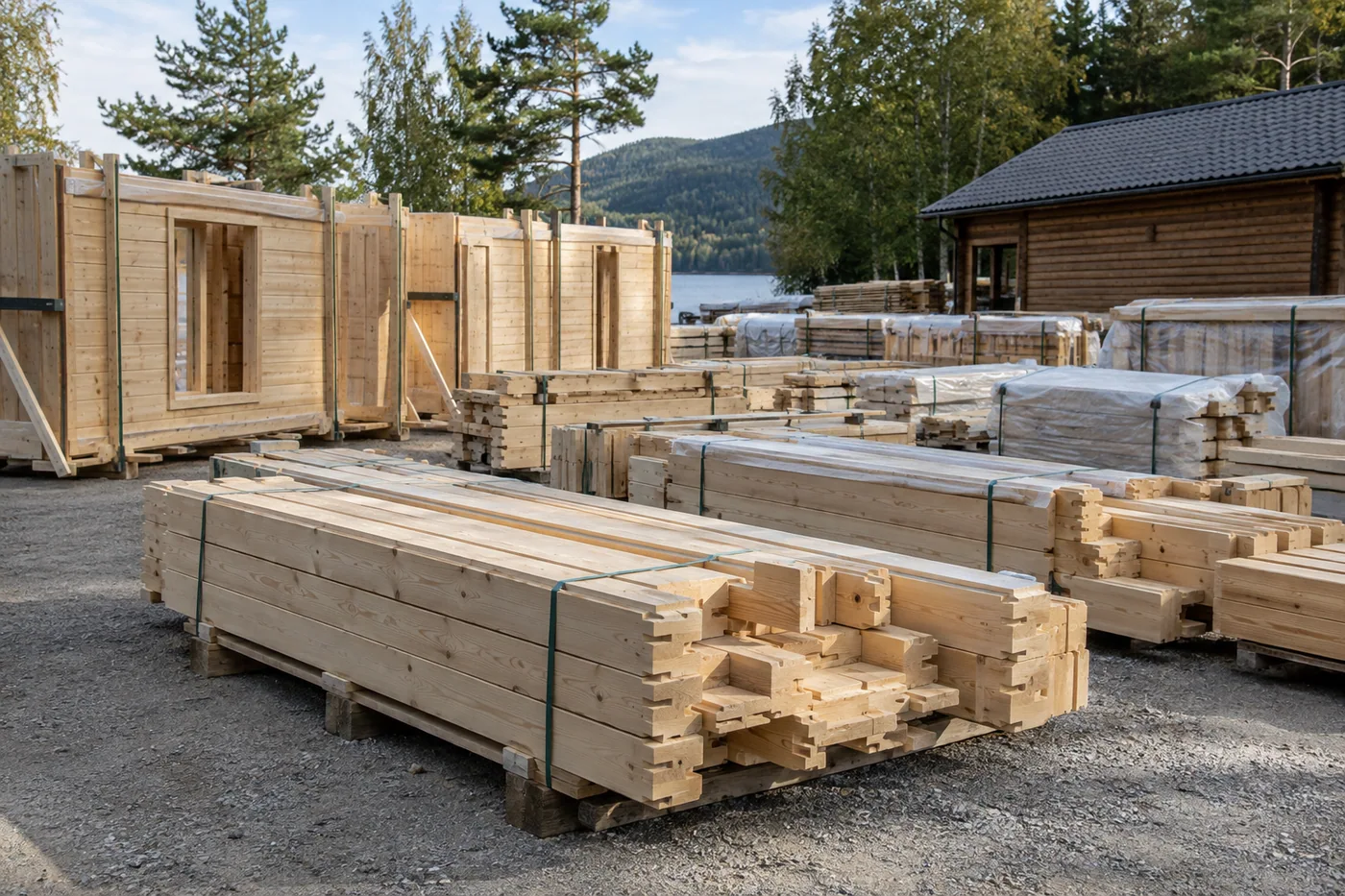
Before buying a log cabin kit already in stock, verify what configuration exists, how it has been stored, whether it is complete and whether missing or unsuitable parts can be replaced. Match drawings and assembly information to that specific kit. Warehouse availability does not establish condition, destination suitability or readiness for installation. Make unresolved identity, condition and support questions visible before committing.
Introduction: buying what already exists changes the questions
Many cabin kits are made against a defined order, but buyers may also encounter warehouse stock, discontinued models or cancelled customer orders. Those offers can be worth investigating. The difference is that the buyer must evaluate a configuration that already exists, including its history and available support, rather than simply specify a new package.
This article provides a pre-purchase review for that situation. It does not claim that CabinWild holds clearance stock, quote discounts or establish the condition of any actual kit. Legal title, warranties and sale terms require appropriate commercial and legal review. Physical and technical suitability need competent assessment for the destination and intended use.
The distinctive question is recoverability: if information or components are missing, can the package be brought to a usable, documented state on acceptable terms? A kit can be present in a warehouse and still depend on unavailable drawings, uncertain parts or unresolved design information. Availability and readiness are not the same milestone.
Establish the identity of the physical package
Request the original model, configuration, production or order references and relevant drawing revision. Connect those records to the actual bundles and component identifiers. A general catalogue name may describe several revisions or options. The buyer needs to know which of those exists, not which one is currently shown on the seller's website.
Check whether the stock originated as a standard package, a customized order or a mixture assembled later. A cancelled order may include choices made for another site. Those choices are not automatically unsuitable, but they need to be identified before the buyer assumes the kit matches a current standard offer.
Keep a list of unresolved identity questions. If the seller cannot connect the physical package to a reliable component schedule, a statement that everything should be there is not equivalent evidence. Determine what inspection or documentation could close the gap and whether that work is feasible before the commercial decision.
| Review area | Evidence requested | Decision question |
|---|---|---|
| Identity | Order, model, revision and bundle references | Can documents be matched to these goods? |
| History | Known storage and movement information | What conditions need further assessment? |
| Completeness | Configuration-specific component reconciliation | What is missing, uncertain or substituted? |
| Condition | Competent assessment of relevant items | What can be accepted, repaired or replaced? |
| Recoverability | Replacement references, lead times and support | Can the actual package be completed? |
| Destination fit | Local professional review of the existing configuration | Is adaptation feasible and properly documented? |
Ask about history without using age as a verdict
Age alone does not establish that a timber kit is defective, and new-looking packaging does not establish that it is sound. Request the known storage period, locations, packaging changes and relevant incidents. Distinguish documented history from estimates or gaps. The competent assessor can then decide what observations or tests are appropriate.
The USDA Wood Handbook chapter on drying and dimensional change explains the relationship between wood moisture, surrounding conditions and dimensional behaviour. That supports asking about exposure and storage history. It does not provide a universal acceptance moisture value for every cabin component or prove that a particular bundle has been stored adequately.
If the kit contains engineered products such as I-joists or LVL, consult the actual product information and relevant material-specific guidance. APA's handling and storage note addresses those products, not every log profile or accessory in a cabin kit. Avoid applying one material's instructions to the entire package without review.
Further reading: USDA Wood Handbook: drying and control of dimensional changes; APA: storage and handling of I-joists and LVL.
Reconcile completeness against the correct configuration
Use the relevant component schedule and packing records rather than counting bundles alone. One intact bundle can contain several types of parts, while a customized order may have a different schedule from a standard kit. Record what was actually checked and which items remain concealed or unverified.
Separate absent items from optional items never included. Windows, roofing, fixings, finishes and services can be included or excluded differently between offers. The buyer should understand the complete intended purchase outcome and what must be sourced elsewhere. A claim of a complete kit is only useful when the underlying scope is defined.
Where a component has been substituted, request its identity and the basis for acceptance in the particular design. A similar appearance does not establish interchangeability. Do not accept a collection of spare parts as proof that every required interface can be completed. Record the exact missing or uncertain item and its proposed resolution.
Further reading: Define the scope of a wooden cabin kit.
Distinguish an inspection limitation from a passed check
If packaging remains unopened, state what the inspection could and could not establish. The seller and buyer should agree any further review needed through the appropriate contract and professional advice. Do not label concealed components inspected simply because the outside of the package appeared orderly.
Assess condition with appropriate expertise
Ask the competent assessor to consider the actual materials, relevant exposure and intended use. Visible damage, staining, deformation or packaging deterioration may prompt further investigation, but an image alone does not establish cause or acceptability. This guide does not provide a pass-or-fail visual grading system for structural components.
Keep original factory testing and inspection records distinct from a current stock assessment. A genuine historical record may be relevant to production, but it does not describe everything that happened during later storage or handling. Similarly, a current shipment inspection must state its scope and limitations rather than implying a guarantee of future performance.
Where repair is proposed, obtain an appropriate reviewed method and clarify who performs, checks and documents it. A commercial discount does not constitute technical acceptance. The buyer should understand whether a condition is accepted as supplied, corrected before shipment or left for separately contracted work, with the implications properly reviewed.
Turn these questions into a project brief
Send your intended use and destination. Ask for package identity, included documents, condition information and replacement-part responsibilities.
Test whether missing parts are genuinely recoverable
Request a replacement plan for every critical missing or unsuitable item. Identify the exact component, compatible source, relevant drawing information, availability and responsibility. A verbal statement that timber is easy to replace does not resolve a shaped, connected or otherwise specific component. The actual design must determine what can substitute.
Current-model parts may differ from older revisions. Ask the responsible supplier or designer whether the proposed replacement matches the relevant interfaces and requirements. If adaptation is needed, identify who designs and documents it. Do not create a hybrid kit by assuming that the latest catalogue part is an upgrade in every context.
Include documentation in the recoverability review. A missing assembly manual or unavailable detail can be as consequential as a missing physical component. Determine whether the necessary information can be legitimately obtained and matched to the kit. Installation preparation should not depend on copying instructions from a merely similar product.
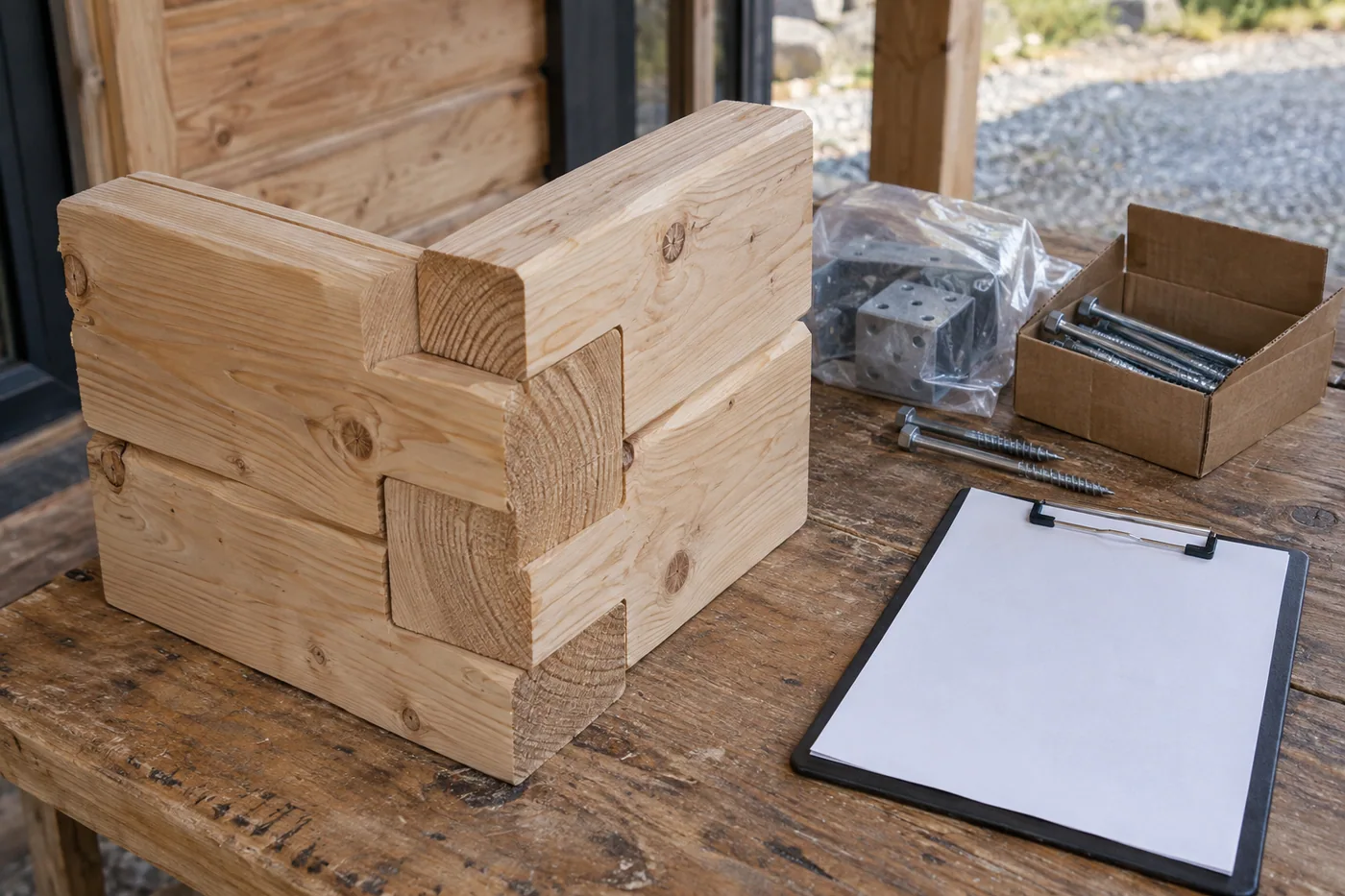
Review accessories with their own storage and use requirements
A stock package can include coatings, sealants, membranes, hardware or other accessories with requirements different from the timber. Record product identity, relevant dates and known storage information. Consult the actual manufacturer's instructions and appropriate advisers about suitability. Do not invent a universal shelf life for all consumables.
An accessory that appears inexpensive can still affect the complete system if it has a specified compatibility role. Replacing it with a convenient alternative may require review. Include the replacement's effect on instructions, installation sequence and relevant evidence, not only its purchase price.
If accessory condition or identity cannot be established, show that uncertainty in the purchase assessment. It may be possible to source an approved replacement, but feasibility and responsibility must be confirmed. Do not let the phrase small missing items conceal a dependency that prevents a properly documented installation.
Keep loose materials linked to the same stock offer
Where accessories are stored separately, verify that the proposed sale includes the identified items and records. A warehouse visit can otherwise create a false impression that nearby stock belongs to the package. The accepted schedule should say what transfers with the kit and what remains a separate purchase.
Review the existing configuration for the intended destination
A kit produced for another buyer or destination may reflect different assumptions. Provide the actual available information to the relevant local professionals before purchase. They should determine what requirements apply and what additional evidence or changes are needed. The fact that a model is currently marketed elsewhere does not establish suitability at this site.
Keep intended product application explicit. A package originally described for occasional use should not be assumed suitable for permanent occupation or a commercial guest operation. This guide makes no classification decision. Local professional and authority review must address the actual use and building, including any proposed adaptations.
Evaluate the documentation gap before relying on a fast purchase. A kit with readily available drawings and compatible replacements may be easier to review than one with a low asking price but unclear identity. The purchasing comparison should include the work needed to establish suitability, not simply the warehouse release date.
Further reading: Build a site-first cabin shortlist.
Compare the route to usable readiness, not the word in stock
Build a schedule that includes inspection, missing information, replacement parts, agreed corrections, transport and local readiness. Identify dependencies and who can close them. A kit cannot deliver a meaningful time advantage if a necessary component or document has an unknown lead time. Do not advertise a completion date from warehouse presence alone.
Separate the purchase decision from later site storage planning. Once a kit is accepted, receiving and protection at the buyer's site need their own arrangements. This article focuses on whether to buy the pre-existing package; it does not replace the handling and storage method for the eventual delivery.
Document the decision as accept, accept subject to named conditions, or do not proceed under the present offer. Conditions should be specific enough to verify. A broad reservation such as buyer to satisfy themselves does little to explain which information remains missing or what must happen before installation can be planned.
Further reading: Plan storage after a cabin kit reaches the site.
- Match physical stock to a specific configuration.
- Record known history and inspection limitations.
- Reconcile required components and accessories.
- Confirm recovery of missing information and parts.
- Obtain the relevant destination and use review.
- Compare the documented route to installation readiness.
Hypothetical example: a cancelled order with one obsolete window opening
Imagine a hypothetical cancelled-order kit that appears complete except for one window assembly. The current model's window has a similar description, but its interface information differs. The seller proposes to include it at no additional price. That offer resolves a price question, not necessarily the design question.
The buyer asks the responsible parties to establish compatibility or a properly reviewed adaptation before treating the kit as recoverable. The outcome may be an accepted replacement, a different source or a decision that the remaining work is not attractive. The example does not prescribe changing an opening or installing a particular window.
The purchase assessment records both the physical component and the supporting documentation needed to use it. That is the purpose of the stock review: understand the complete route from existing inventory to a suitable project, rather than let an apparent bargain hide an unresolved technical dependency.
Agree access to the evidence before agreeing the purchase timetable
A stock review depends on practical access to goods and records. Ask how the competent assessor can identify bundles, inspect relevant items and review documents, and what limitations the seller places on opening or moving packages. Those limitations may be reasonable, but their effect on the conclusions should be understood before a purchase deadline is accepted.
Where only representative items can be examined, record the selection method and limits of inference through the appropriate assessor. Do not describe a sample observation as a complete inspection of every component. The buyer should understand which uncertainties remain and obtain suitable commercial advice about how they are addressed in the transaction.
If a seller proposes to complete missing records or repairs after purchase, identify the exact deliverables, responsible parties and acceptance process. Consider the consequence if they cannot be obtained. This is not a recommendation for a particular contract clause; it is a prompt to bring the dependency to the buyer's advisers before it becomes an obligation with no clear resolution.
A stock kit can still be an attractive option when its limitations are understood and recoverable. The review should neither presume that all older goods are unsuitable nor excuse missing evidence because the price looks favourable. Its purpose is a documented decision about the actual package offered.
Frequently asked questions
Is an unopened older kit equivalent to a new order?
Not automatically. Review identity, known storage and handling history, completeness, condition and supporting documentation. Unopened packaging limits what can be observed. Age alone is not a defect verdict, but sealed wrapping alone is not evidence that every component remains suitable.
Can I replace missing parts with current-model components?
Only after the responsible supplier or designer confirms suitability for the actual configuration and interfaces. Revisions may differ. Obtain an identified replacement or reviewed adaptation, with the necessary instructions, rather than assume that a similar catalogue name means interchangeability.
Are stock cabin kits always quicker to install?
No. Inspection, missing records, replacement parts, corrections and local approvals can affect the schedule. Compare the complete path to a documented, site-ready package. Immediate warehouse availability is only one milestone in that path.
What should I ask about a clearance kit's warranty?
Request the actual offered terms, responsible business, coverage scope and any conditions or exclusions. Obtain appropriate legal and commercial advice for the B2B purchase. Do not assume that a current new-order warranty or consumer protection automatically applies to a stock offer.
What makes a missing item critical?
Its significance depends on the design and the ability to obtain a suitable replacement or information. A small or inexpensive component can still control an important interface. Ask the responsible professionals to assess consequences rather than judging criticality solely by size or price.
Conclusion: buy a recoverable package, not just available bundles
Buying a log cabin kit from stock calls for configuration-specific evidence. Verify identity, investigate relevant condition and establish whether missing parts and information can be recovered. Compare the complete route to suitable installation, with legal and technical questions handled by the appropriate advisers.
Contact CabinWild with your intended use, destination and documentation requirements for a clearly identified kit proposal. Whether ordering new or assessing existing stock, insist that the offered package and its support scope are described in terms that can be checked.
Ask for a configuration-specific kit offer
Send your intended use and destination. Ask for package identity, included documents, condition information and replacement-part responsibilities.
Prepared with AI assistance for CabinWild Editorial using the linked public sources. Examples are illustrative, not customer results or verified CabinWild test data. Project-specific design and local requirements need review by the appropriate professionals.