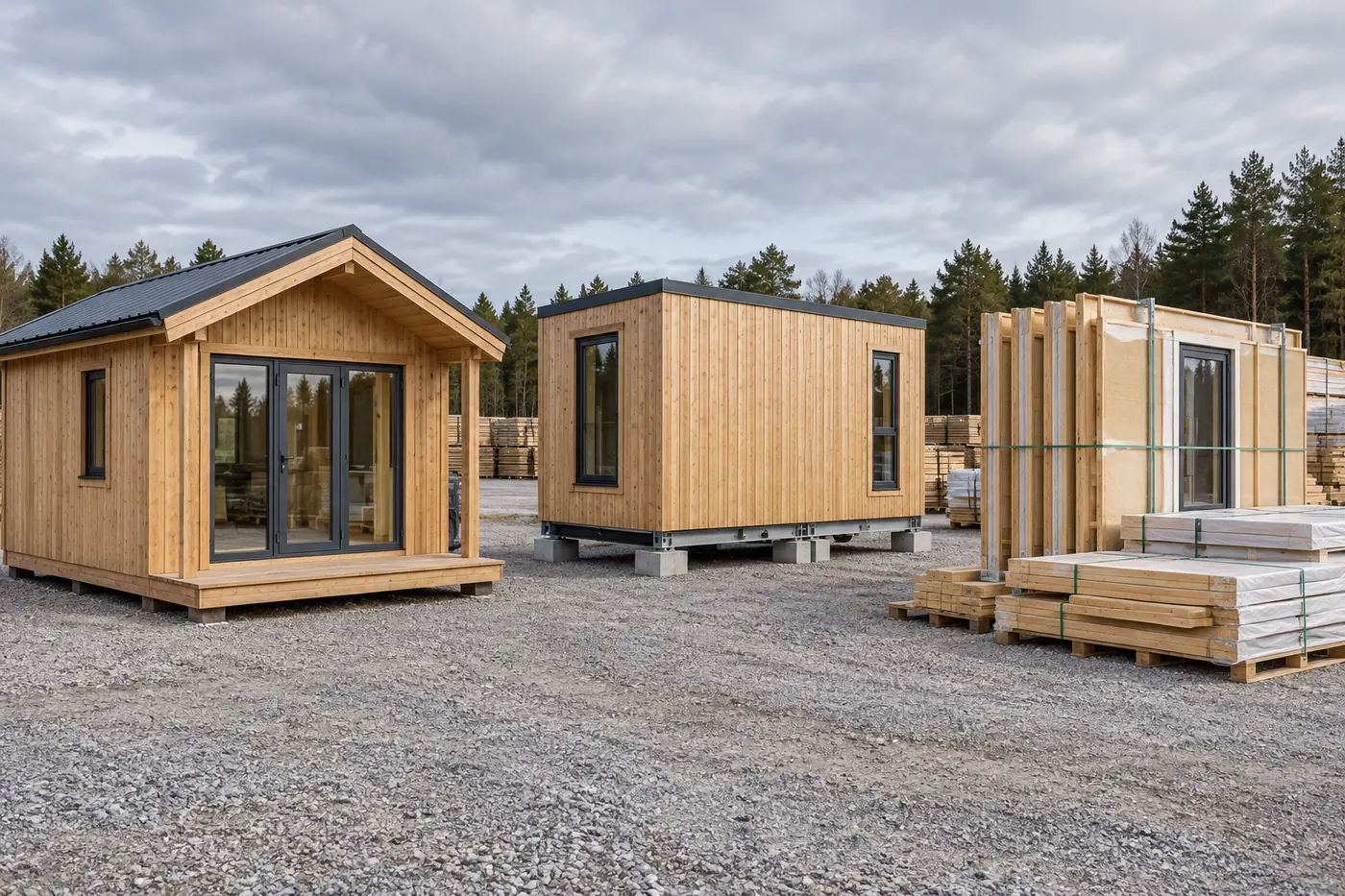
An EU cabin project needs both an EU-level product-market review and a member-state project pathway. Construction-product documentation, economic-operator duties, national building rules, planning, climate, fire, energy, accessibility, transport, installation, and language requirements must be mapped for the exact destination.
Illustrative AI-generated project image. Final products, factory evidence, specifications, and destination suitability require project-specific confirmation.
Buyer focusImporters & project teams
Product routeCPR scope review
Building rulesMember-state specific
DocumentationMarket and project specific
BUYER PRIORITIES
Separate EU product obligations from national building approval.
The Construction Products Regulation creates a common technical language for covered products, but EU countries retain rules for how products are used and installed in buildings. A cabin package can include multiple products with different documentation routes.
Product and economic-operator mapping
Identify each supplied product or kit, intended use, applicable harmonised technical specification or assessment route, declaration and marking obligations, manufacturer, importer, authorised representative where relevant, traceability, instructions, safety information, and required languages.
Product-by-product compliance matrix
Economic-operator responsibility map
Document, label and language register
Member-state project pathway
Confirm destination country and municipality, planning, building permit, structural and climate inputs, fire and energy rules, accessibility, sanitation, electrical requirements, professional appointments, inspections, and national technical evidence.
Country and authority brief
Local architect or engineer review
Permit and inspection milestones
Customs, transport and installation
Coordinate tariff classification, customs value, import VAT and duty advice, EORI and broker responsibilities where relevant, port route, road limits, unloading, site storage, foundations, utilities, local trades, commissioning, and handover.
Importer and broker plan
Landed-cost and route model
Installation responsibility schedule
PROJECT ENQUIRY
Planning a European Union prefab cabin project?
Share the destination, intended use, quantity, preferred configuration, target date, and any drawings. CabinWild will use the information to prepare the next project discussion.
WORKING METHOD
Turn the destination into a controlled project brief.
Confirm the address, use, local approval route, design inputs, import responsibilities, delivery constraints, site work, and evidence before production release.
01
Confirm location and use
Record the exact destination, operating model, occupancy, unit count, site constraints, programme, and local project team.
02
Map the local pathway
Identify planning, building-control, engineering, certification, import, inspection, and professional responsibilities without assuming one national route.
03
Coordinate the cabin package
Align drawings, materials, envelope inputs, services, factory scope, site interfaces, evidence, options, and exclusions with the local brief.
04
Plan import and delivery
Confirm Incoterm, customs and tax advice, packing, port route, inland transport, unloading, storage, installation access, and arrival inspection.
05
Approve and close out
Release only an agreed baseline, then retain factory records, shipment documents, site inspections, commissioning evidence, defects, and handover information.
BUYER NOTE
CE marking is not a blanket approval for a complete cabin project.
European Commission guidance explains that CPR obligations depend on the applicable harmonised technical route, while member states determine conditions for use and installation through their building rules. CabinWild can coordinate agreed factory and product information, but the EU importer and qualified local project team must confirm scope, documentation, declarations, marking, language, permits, design, installation, and authority acceptance. Confirm drawings, inclusions, material records, inspection criteria, packing details, and the responsibility split in the project quotation.
Review the complete supply as products and project interfaces
Confirm the destination member state before fixing evidence requirements
Do not use a CE mark as a substitute for planning or building approval
BUYER QUESTIONS
Frequently asked questions.
Clear starting answers for commercial buyers. Final scope and compliance remain project-specific.
Does every complete wooden cabin receive one CE mark?
Do not assume so. A cabin supply can contain products or kits with different routes, and obligations depend on applicable harmonised technical specifications or assessments. Obtain a product-by-product review from qualified EU advisers.
Does CE marking guarantee permission to install a cabin anywhere in the EU?
No. Product-market documentation and project approval are different. Member states and local authorities set planning, building, fire, energy, accessibility, installation, and inspection requirements for the destination project.
What should an EU buyer send for quotation?
Send the member state and site address, intended use, unit count, plans, project classification advice, climate and structural inputs, fire and energy brief, desired supply format, importer and economic-operator structure, document languages, transport constraints, and required evidence list.
Can CabinWild prepare EU market documents?
The required factory, product, label, declaration, instruction, and traceability documents can be discussed after the applicable route and responsibilities are identified. Availability and scope must be confirmed in writing for the exact products and destination.
OFFICIAL STARTING POINTS
Verify the current local pathway.
These external resources support early research. The applicable authority and qualified local professionals remain responsible for project-specific interpretation.