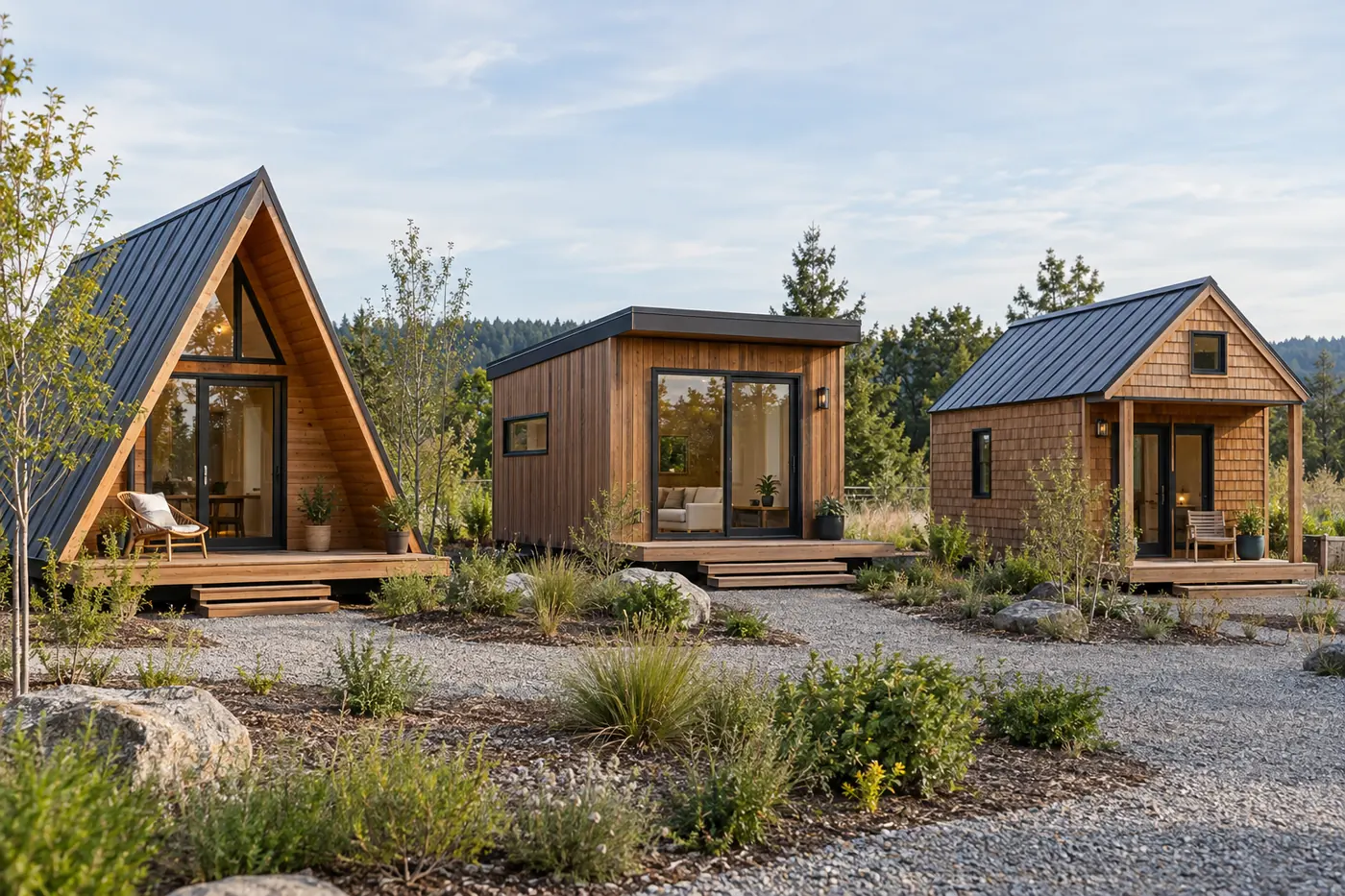
Control the product range, interfaces, production evidence, logistics and destination responsibilities for repeated prefab supply. Start with the intended use, destination, quantity and current project evidence. Separate factory scope from freight, site, installation and local professional responsibilities, and do not treat a sample, photograph or product label as universal proof.
Introduction: the decision behind prefab log cabins
Plan a factory-built prefab cabin order across small models, options and repeat quantities. For developers and distributors building a mixed prefab cabin range, the useful question is not whether a cabin looks suitable in a brochure. It is whether the proposed package, evidence, responsibilities and review gates match the actual destination and purchasing stage.
Control the product range, interfaces, production evidence, logistics and destination responsibilities for repeated prefab supply. Start with the intended use, destination, quantity and current project evidence. Separate factory scope from freight, site, installation and local professional responsibilities, and do not treat a sample, photograph or product label as universal proof.
This guide uses practical procurement patterns: customer requirements, drawing and document reviews, factory testing requests, shipment inspection, installation preparation, operation and handover records. Examples are hypothetical and do not describe a CabinWild customer, verified factory event, certification or measured product result. Regional legal, structural, fire, energy, customs, electrical, plumbing and planning matters require current review by competent destination professionals.
Further reading: ISO: ISO 9001 quality management systems; Australian Building Codes Board: prefabricated, modular and offsite construction handbook.
1. Define the building and use
State destination, intended use, occupancy pattern, quantity, size and completion boundary. For developers and distributors building a mixed prefab cabin range, this converts a broad prefab log cabins enquiry into a controlled starting point. The requirement should be dated, connected to the intended use and visible to every bidder.
Start with a dated prefab cabin requirements brief. Identify the project, model, revision, owner and date. Compare it with the quotation and intended application. If the answer remains conditional, record an owner and due date rather than silently treating the condition as included.
The failure to avoid is using the word prefab as if it defines one universal product. Ask “What exact building and use is the supplier being asked to quote?” and test the answer against the customer requirements. Do not replace a needed contract term, drawing or local review with an unsupported assurance.
Question to put in the buyer brief
What exact building and use is the supplier being asked to quote?
2. Choose the supply format
Compare panelized, kit, modular and hybrid formats against transport, site access and local labour. Review this after the initial brief because it can change the proposed package, local work and purchasing sequence. Keep the buyer requirement separate from the supplier response.
The working evidence should be a supply-format comparison schedule. Ask who prepares it, which configuration it covers and which adjoining decisions depend on it. Evidence from another cabin or market can explain a method, but it cannot release this project without an applicability review.
A common purchasing error is selecting a format without testing logistics and installation constraints. The question “Which supply format fits the route, site and project team?” should produce a named record or decision owner. Keep factory evidence separate from work that can only be checked after delivery or installation.
Question to put in the buyer brief
Which supply format fits the route, site and project team?
3. Freeze configuration and interfaces
Coordinate dimensions, openings, finishes, services, foundations and module or panel joints. This decision links technical scope to commercial comparison. State the assumption openly so that different suppliers answer the same question.
Place an approved configuration and interface schedule beside each supplier response. Separate confirmed scope, proposed alternatives and information still required from the buyer or destination professional. This makes cost and programme differences easier to trace.
The commercial risk is allowing scope gaps to sit between factory and site teams. Use “Which interfaces must be resolved before production?” to expose exclusions and dependencies. If factory testing is requested, define the method, sample and acceptance criterion rather than treating a demonstration as universal proof.
Further reading: Australian Building Codes Board: prefabricated, modular and offsite construction handbook.
Question to put in the buyer brief
Which interfaces must be resolved before production?
4. Evaluate manufacturing evidence
Request model-specific drawings, material records, inspection points and controlled changes. Discuss the interface with purchasing, technical, logistics and destination teams before production or shipment release. Each party should see where its responsibility ends.
Review a prefab production evidence plan with the people who will manufacture, receive, install, operate or maintain the cabin. Record limitations and their effect on cost, sequence, inspection and approval.
Avoid treating factory-built as an automatic performance or compliance claim. Ask “How will the buyer verify the proposed production scope?” before adjoining work is purchased or concealed. A supplier can describe available scope, but destination professionals retain decisions governed by the actual site and jurisdiction.
Question to put in the buyer brief
How will the buyer verify the proposed production scope?
Turn these questions into a project brief
Send your destination, quantity, intended use and current documents. Ask for a clearly bounded proposal and evidence list.
5. Plan packaging, delivery and assembly
Map package identity, freight, unloading, temporary protection, lifting and assembly supervision. Treat this as an evidence gate rather than a marketing feature. The reviewer should understand what is checked now and what remains for a later stage.
Before acceptance, obtain a delivery and assembly readiness plan. Link observations to a unit, package, location or drawing reference. Where sampling is used, state what was inspected and what remained outside the sample.
The quality risk is buying a factory package that the destination site cannot receive safely. The closing question is “What must the site and logistics team prepare before dispatch?” Shipment inspection can confirm agreed identity and visible condition, but it cannot create missing design evidence or predict the installed result.
Question to put in the buyer brief
What must the site and logistics team prepare before dispatch?

6. Close local review and handover
Assign destination design, approval, inspection, commissioning and as-built responsibilities. Close the point before repetition, dispatch or final handover. A clear answer keeps the accepted configuration and retained buyer work connected to one revision.
Close the decision with a local-review and handover register. If a pilot, shipment or site observation changes the answer, update affected drawings, schedules, quotations, packing information and checklists together.
Do not finish the review by assuming factory documents replace project-specific local review. Ask “Which destination approvals and handover records remain outstanding?” and record the accepted answer, remaining condition and next gate. Release should follow evidence, not schedule pressure or appearance alone.
Question to put in the buyer brief
Which destination approvals and handover records remain outstanding?
Use one decision matrix for scope, evidence and ownership
Create a comparison sheet with one row for each decision below. Keep the buyer requirement in the first column, the supplier answer in the second, the evidence reference in the third and remaining local work in the fourth. This lets a buyer compare prefab log cabins proposals without hiding gaps inside price, terminology or optional scope.
Use three statuses: accepted with evidence, accepted subject to a named condition, and unresolved. Conditional acceptance needs an owner and deadline before affected work begins. For repeated orders, link the approved outcome to the reference unit and current drawing revision so one correction does not remain disconnected from later production.
Further reading: Supporting CabinWild hub; Related CabinWild buyer guide; Related CabinWild buyer guide; Contact CabinWild.
| Decision | Evidence to request | Question that closes the gap |
|---|---|---|
| Define the building and use | a dated prefab cabin requirements brief | What exact building and use is the supplier being asked to quote? |
| Choose the supply format | a supply-format comparison schedule | Which supply format fits the route, site and project team? |
| Freeze configuration and interfaces | an approved configuration and interface schedule | Which interfaces must be resolved before production? |
| Evaluate manufacturing evidence | a prefab production evidence plan | How will the buyer verify the proposed production scope? |
| Plan packaging, delivery and assembly | a delivery and assembly readiness plan | What must the site and logistics team prepare before dispatch? |
| Close local review and handover | a local-review and handover register | Which destination approvals and handover records remain outstanding? |
Separate factory, shipment, installation and operating evidence
At factory stage, confirm which details are complete on the selected configuration. If testing or inspection is requested, define method, sample and acceptance criterion. A demonstration can answer a bounded manufacturing question; it cannot prove whole-building performance, local compliance or later site work.
At shipment stage, compare visible units, packages and documents with the accepted schedule. Check identity, count, condition and release records. A clean dispatch photograph cannot establish concealed work or destination connections.
During installation preparation, give the local team current drawings, package information and open decisions. During operation and maintenance, preserve product identity, findings and approved changes. At handover, distinguish receipt, installation completion, commissioning, defect closeout and readiness for use.
- Define the building and use: retain a dated prefab cabin requirements brief.
- Choose the supply format: retain a supply-format comparison schedule.
- Freeze configuration and interfaces: retain an approved configuration and interface schedule.
- Evaluate manufacturing evidence: retain a prefab production evidence plan.
- Plan packaging, delivery and assembly: retain a delivery and assembly readiness plan.
- Close local review and handover: retain a local-review and handover register.
Illustrative buyer scenario: move from enquiry to controlled release
Assume a buyer is preparing an overseas cabin enquiry involving prefab log cabins. The buyer begins with a dated prefab cabin requirements brief and asks, “What exact building and use is the supplier being asked to quote?” The initial proposal does not answer the question consistently, so the buyer keeps it open instead of adding a favourable assumption. This is a hypothetical scenario, not a CabinWild order or customer result.
The revised RFQ adds a supply-format comparison schedule and an approved configuration and interface schedule. Suppliers can now show where their scope stops, which information belongs to the destination team and which evidence will exist before production, shipment, installation or operation. The comparison becomes more useful even if the lowest headline price changes because omitted responsibilities become visible.
Before release, the buyer reviews a delivery and assembly readiness plan and a local-review and handover register. Every unresolved item receives an owner and closing date. If a pilot, shipment, installation or maintenance observation reveals a mismatch, the drawing, material schedule, package list, quotation and task record are updated together. The sequence reduces ambiguity; it does not certify a product or predict a project outcome.
RFQ and document checklist
Send intended use, destination, quantity, site stage, current drawings and selected completion boundary with the enquiry. Mark assumptions clearly. Ask each bidder to answer the same six questions below and identify evidence available at quotation, production, shipment, installation, handover and operation as applicable.
Do not request documents merely to enlarge the file. Every record should close a purchasing decision, support an inspection or identify a retained responsibility. Where regional requirements apply, let the responsible destination professional specify the current document rather than copying a checklist written for another country.
- What exact building and use is the supplier being asked to quote? Request a dated prefab cabin requirements brief.
- Which supply format fits the route, site and project team? Request a supply-format comparison schedule.
- Which interfaces must be resolved before production? Request an approved configuration and interface schedule.
- How will the buyer verify the proposed production scope? Request a prefab production evidence plan.
- What must the site and logistics team prepare before dispatch? Request a delivery and assembly readiness plan.
- Which destination approvals and handover records remain outstanding? Request a local-review and handover register.
Frequently asked questions
What exact building and use is the supplier being asked to quote?
State destination, intended use, occupancy pattern, quantity, size and completion boundary. Ask for a dated prefab cabin requirements brief and compare it with the current quotation, drawing revision and intended application. If the matter depends on regional rules or specialist design, retain it as destination review instead of asking for an unsupported universal claim.
Which supply format fits the route, site and project team?
Compare panelized, kit, modular and hybrid formats against transport, site access and local labour. Ask for a supply-format comparison schedule and compare it with the current quotation, drawing revision and intended application. If the matter depends on regional rules or specialist design, retain it as destination review instead of asking for an unsupported universal claim.
Which interfaces must be resolved before production?
Coordinate dimensions, openings, finishes, services, foundations and module or panel joints. Ask for an approved configuration and interface schedule and compare it with the current quotation, drawing revision and intended application. If the matter depends on regional rules or specialist design, retain it as destination review instead of asking for an unsupported universal claim.
How will the buyer verify the proposed production scope?
Request model-specific drawings, material records, inspection points and controlled changes. Ask for a prefab production evidence plan and compare it with the current quotation, drawing revision and intended application. If the matter depends on regional rules or specialist design, retain it as destination review instead of asking for an unsupported universal claim.
What must the site and logistics team prepare before dispatch?
Map package identity, freight, unloading, temporary protection, lifting and assembly supervision. Ask for a delivery and assembly readiness plan and compare it with the current quotation, drawing revision and intended application. If the matter depends on regional rules or specialist design, retain it as destination review instead of asking for an unsupported universal claim.
Which destination approvals and handover records remain outstanding?
Assign destination design, approval, inspection, commissioning and as-built responsibilities. Ask for a local-review and handover register and compare it with the current quotation, drawing revision and intended application. If the matter depends on regional rules or specialist design, retain it as destination review instead of asking for an unsupported universal claim. Record every remaining condition before repeat production, shipment, occupancy or final handover.
Conclusion and next step
Control the product range, interfaces, production evidence, logistics and destination responsibilities for repeated prefab supply. The strongest purchasing decision is documented rather than inferred from a model name, price line or photograph. Keep intended use, supply boundary, evidence and remaining destination work connected to the same revision throughout quotation, production, shipment, installation and operation.
To discuss prefab log cabins, send CabinWild your destination, intended use, quantity, current documents and unanswered questions at info@CabinWild.com. Ask for a clearly bounded quotation and evidence list. Local design, installation, customs, approval and operation responsibilities should be confirmed with the professionals responsible in the destination.
Request a Factory-Built Range Review
Send your destination, quantity, intended use and current documents. Ask for a clearly bounded proposal and evidence list.
Prepared with AI assistance for CabinWild Editorial using the linked public sources. Examples are illustrative, not customer results or verified CabinWild test data. Project-specific design and local requirements need review by the appropriate professionals.